

A flawless kitchen and fresh paint in a Langley or Surrey condo can easily mask an unbudgeted $50,000 special assessment hidden in the paperwork. When you're reviewing strata council meeting minutes, deciphering dense engineering notes and financial jargon under tight deadlines can feel completely overwhelming. You deserve to feel excited about your purchase, not terrified that an unrecorded plumbing leak or failing building envelope will drain your savings right after moving in.
This practical due diligence checklist shows you how to spot critical building defects, reserve fund shortfalls, and restrictive bylaws before your subject removal window closes. Here is your step-by-step roadmap to reading between the lines across Fraser Valley properties, so you can protect your hard-earned investment with total confidence.
Key Takeaways
- Scrutinize at least 24 consecutive months of records to establish an accurate operating history rather than relying on recent highlights alone.
- Master the art of reviewing strata council meeting minutes to uncover subtle red flags like recurrent plumbing failures, membrane aging, and soaring insurance deductibles.
- Learn how to differentiate routine cosmetic maintenance from major building envelope issues obscured by ambiguous council language.
- Protect your deposit by structuring airtight subject clauses that give you ample time to clarify vague records and assess potential levies with your advisory team.
Why Reviewing Strata Council Meeting Minutes Matters for BC Buyers
Strata minutes provide an uncensored look into a building's true operating reality. While a Form B shows legal balances and active lawsuits, the minutes record emerging maintenance patterns, unresolved owner conflicts, and early discussions about pending capital expenses. In the framework of strata title ownership, individual buyers share collective liability for the entire property; neglecting these records leaves you vulnerable to sudden financial shocks.
To see how these critical building records fit together during purchase due diligence, watch this practical walkthrough:
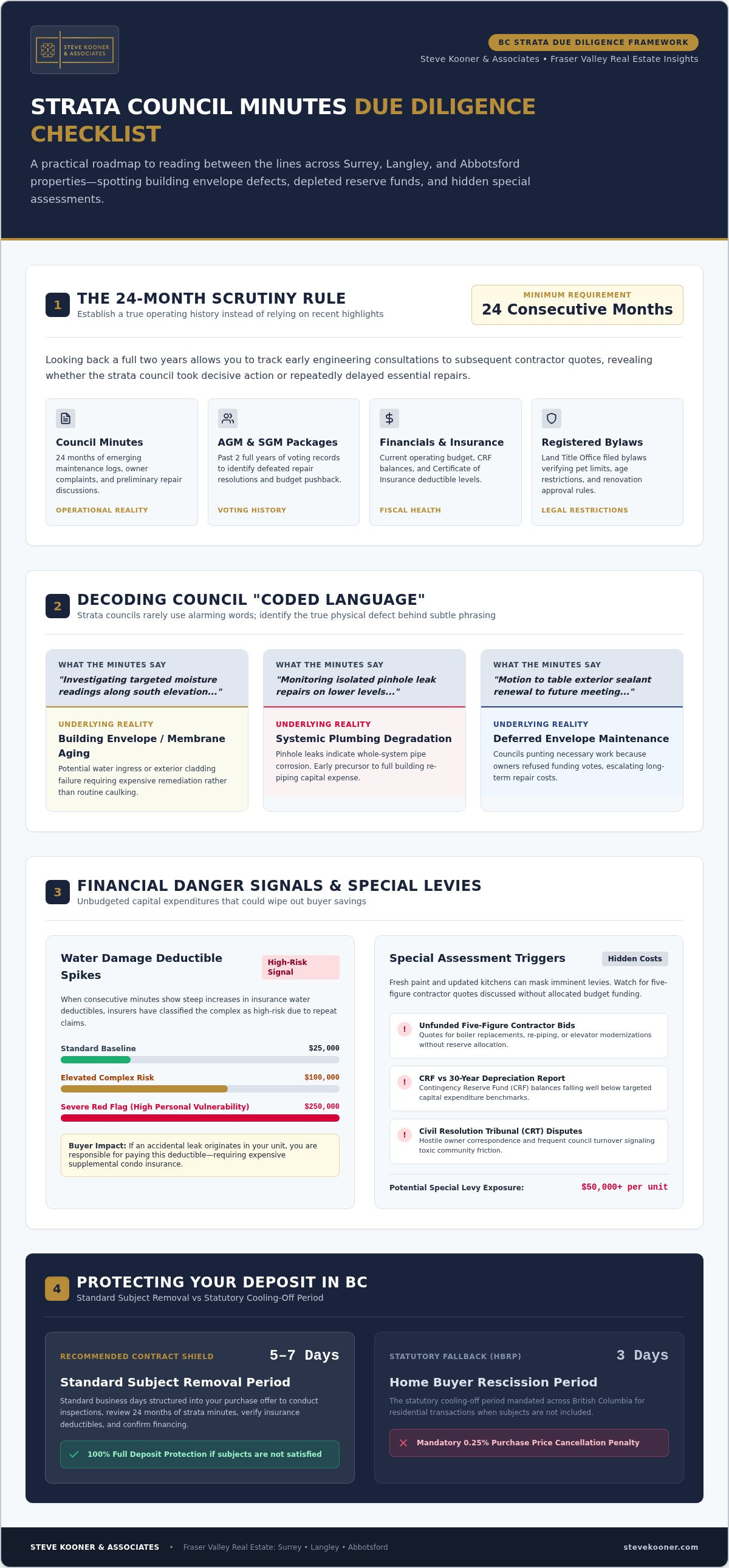
When reviewing strata council meeting minutes across Fraser Valley communities like Langley, Surrey, and Abbotsford, always request at least 24 consecutive months of records. Looking back two years helps you connect early engineer consultations to subsequent quotes, revealing whether councils took action or repeatedly delayed necessary repairs. Cross-referencing these discussions against the 30-year projections in the depreciation report confirms whether major projects, such as membrane restoration or re-piping, have adequate Contingency Reserve Fund backing.
Essential Documents to Request Alongside Council Minutes
Thorough due diligence requires analyzing the minutes directly alongside the broader strata record package. Ensure your document request contains:
- AGM and SGM Packages: Review agendas and voting results for the past two full years to uncover defeated repair resolutions.
- Financials and Insurance Cover: Scrutinize the current operating budget, CRF balances, and the certificate of insurance to confirm current water-damage deductibles.
- Registered Strata Bylaws: Check the registered Land Title Office filings to verify specific pet restrictions, age limitations, and renovation approval requirements.
The Due Diligence Checklist: Red Flags to Spot in Strata Minutes
Councils rarely advertise major physical defects using alarming words. Instead, you'll encounter muted language like "investigating targeted moisture readings" or "monitoring south elevation pinhole repairs." Tracking these recurring maintenance entries reveals whether an isolated repair is part of an ongoing system failure. Official provincial guidance on paperwork for strata buyers emphasizes vetting these records thoroughly before committing to a purchase.
Pay close attention to changes in insurance policies. If consecutive minutes show water-damage deductibles jumping from $25,000 to $100,000 or $250,000, insurers view the complex as high-risk. That spike leaves you vulnerable if an accidental overflow occurs in your unit, forcing you to purchase expensive supplemental coverage. Watch out for hostile correspondence, repeated council turnover, and mentions of Civil Resolution Tribunal disputes, which often signal toxic community friction.
Financial Warning Signs and Imminent Special Levies
When reviewing strata council meeting minutes, check whether the council keeps punting necessary work to future meetings. Typical financial danger signs include:
- Deferred Envelope Upgrades: Motions to delay roofing or sealant renewals because owners refused to approve required funding votes.
- Underfunded Reserves: A Contingency Reserve Fund balance sitting well below the targeted capital expenditure benchmarks laid out in recent engineering assessments.
- Preliminary Contractor Estimates: Council discussions recording five-figure bids for boiler replacements, repiping, or elevator modernizations without an allocated budget.
Spotting these red flags early keeps your budget intact. If you want a knowledgeable set of eyes to help parse complex logs across Surrey, Langley, or Abbotsford properties, our experienced team provides hands-on contract and transaction support so you can make your next move with complete peace of mind.
Navigating the Subject Removal Period with Professional Guidance
In British Columbia, your contract subject removal period is your ultimate shield. Standard purchase offers typically include five to seven business days to review records, arrange financing, and conduct inspections. Unlike the statutory three-day cooling-off period under the Home Buyer Rescission Period, which penalizes you 0.25% of the purchase price to cancel, walking away under an unfulfilled strata document subject condition incurs zero financial penalty.
When reviewing strata council meeting minutes reveals ambiguous notes, prompt action is critical. Submit written questions immediately to the strata manager to confirm whether unresolved water ingress issues were fixed or if special levies are pending approval. Collaborating with an experienced local realtor ensures you interpret these responses accurately against Fraser Valley market conditions before removing your subjects.
Making the Final Decision to Proceed, Renegotiate, or Walk Away
Uncovering building liabilities doesn't automatically mean you have to abandon the deal. You have strategic choices:
- Expert Document Review: Bring in an independent strata review specialist or legal counsel if you encounter complex litigation or multi-phase developer disputes.
- Contract Renegotiation: Use documented maintenance deficits to negotiate price reductions, request repair credits, or establish holdbacks for upcoming levies.
- Exit Without Risk: Protect your deposit by collapsing the contract if the corporation carries unmanageable structural liabilities.
You don't have to tackle this high-stakes paperwork alone. Partnering with Steve Kooner & Associates gives you decisive contract and transaction support, ensuring your purchase across Surrey, Langley, or Abbotsford is backed by rigorous due diligence.
Protect Your Home Purchase With Informed Due Diligence
Diligence pays off when investing in Fraser Valley multi-family real estate. Diligently reviewing strata council meeting minutes helps you look past cosmetic staging, connect subtle maintenance notes, and verify that the contingency fund matches future building obligations. Backed by solid records, your subject removal window becomes a powerful decision-making tool rather than a source of stress.
Partnering with experienced local advisors ensures you never have to interpret dense disclosures alone. With deep roots across Langley, Surrey, and Abbotsford, our team brings clarity and confidence to every stage of your townhome or condominium purchase.
Connect with Steve Kooner & Associates
Your ideal home is out there, and taking the time to review the details will help you move forward with genuine excitement.
Frequently Asked Questions
How many years of strata council meeting minutes should I review before buying in BC?
You should review at least 24 consecutive months of council minutes, along with the two most recent AGM packages. While strata corporations must legally retain records for six years, two full years provide a clear timeline of emerging maintenance issues, seasonal leaks, and how quickly the council addresses recurring owner complaints.
What are the most critical red flags to look for when reviewing strata minutes?
The biggest red flags when reviewing strata council meeting minutes include repetitive mentions of water ingress, soaring water-damage insurance deductibles, and motions to defer necessary capital repairs. Frequent property management changes and active Civil Resolution Tribunal disputes also signal financial stress or poor governance that could affect your investment.
Can a buyer collapse a contract if they find issues in the strata minutes?
Yes, provided your purchase agreement includes a contractual condition for reviewing strata documents. If you discover unacceptable liabilities during your standard five- to seven-day subject period, you can safely collapse the deal and receive your full deposit back without paying the 0.25% fee tied to the statutory rescission period.
How do strata council minutes differ from AGM and SGM minutes?
Council minutes document monthly operational decisions, repair quotes, and building complaints handled by elected members. In contrast, Annual General Meeting (AGM) and Special General Meeting (SGM) minutes reflect decisions voted on by all unit owners, such as approving the annual operating budget, electing council members, and voting on 3/4-majority special levies.
Disclaimer
"Not intended to solicit buyers or sellers that are under current agency agreement" "Each RE/MAX office is independently owned and operated"


