
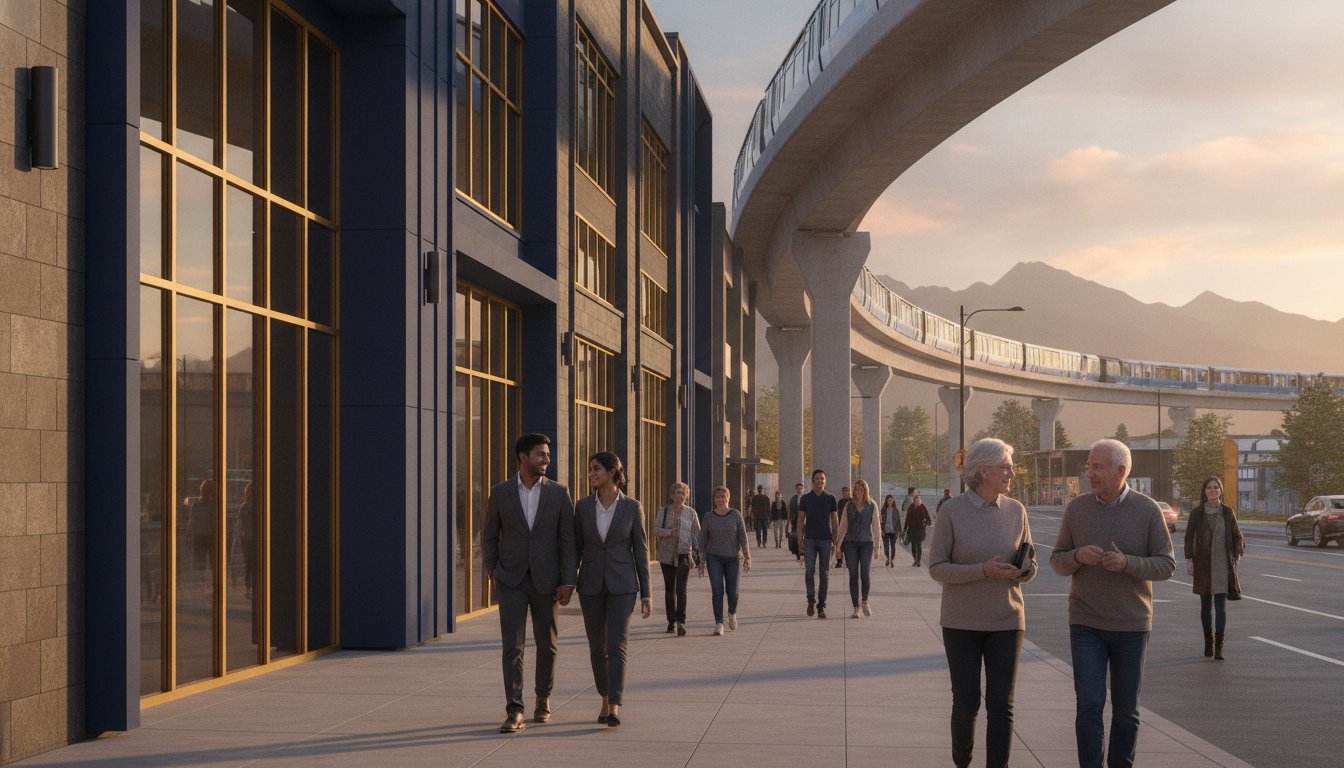
Did you know that Surrey is on track to become British Columbia's largest city, yet industrial vacancy rates remain among the lowest in the province? If you're looking at buying commercial property in Surrey BC right now, you're likely feeling both the excitement of the SkyTrain expansion and the stress of shifting regulations. It's a lot to manage, especially with the 2.6% property tax increase and the upcoming PST expansion on professional services starting October 1, 2026. We understand that finding an undervalued gem in such a fast-moving market often feels like a race against time.
We've put together this strategic guide to help you master the local market with confidence. You'll gain expert insights into the City's Official Community Plan and learn how to identify high-yield investment corridors that others might overlook. We'll walk through the complexities of municipal zoning bylaws and the long-term impact of transit-oriented densification so you can secure an asset that grows with the community. From understanding the 2026 utility rate shifts to navigating complex negotiations, we're here to ensure your next investment is your most profitable one yet.
Key Takeaways
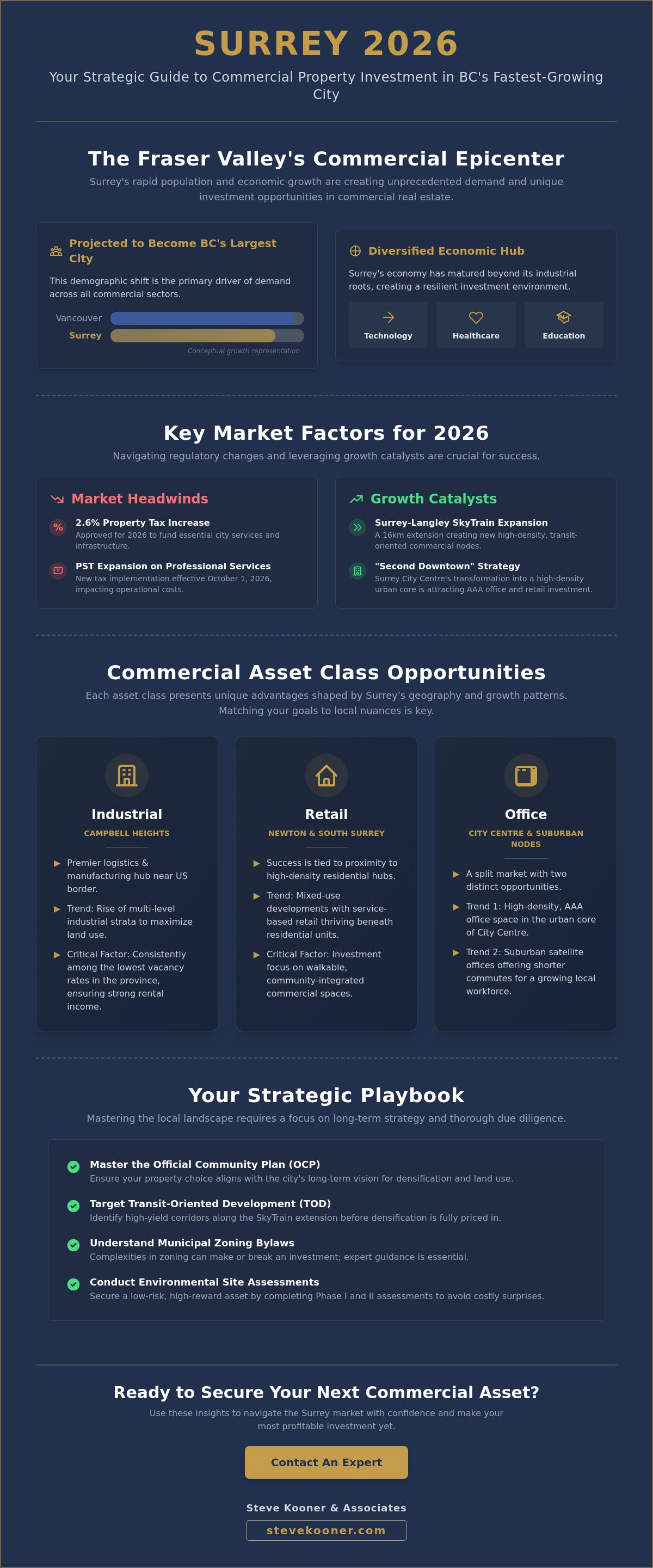
- Understand why Surrey is projected to become BC’s largest city and how this demographic shift is driving unprecedented demand for commercial space.
- Learn how to identify high-yield corridors by aligning your strategy for buying commercial property in Surrey BC with the Surrey-Langley SkyTrain extension.
- Discover the unique investment potential of mixed-use retail in Newton and the rising demand for multi-level industrial strata in Campbell Heights.
- Master the Official Community Plan (OCP) to ensure your property choice aligns with the city's long-term densification and zoning strategies.
- Navigate the essential due diligence steps, including Phase I and II Environmental Site Assessments, to secure a low-risk, high-reward asset.
Why Surrey is the Fraser Valley’s Commercial Epicenter in 2026
Surrey isn't just a suburb anymore; it's the engine of the Fraser Valley. By 2026, its trajectory toward becoming the most populous city in Surrey, British Columbia has completely reshaped investor demand. If you're considering buying commercial property in Surrey BC, you're tapping into a market fueled by a massive population influx and a strategic position as the gateway between Metro Vancouver, the US border, and the interior. It's a unique window of opportunity where growth is no longer a projection but a daily reality.
The local economy has matured rapidly. We've seen a shift from traditional industrial roots to a sophisticated hub for tech, healthcare, and education. This diversification provides a safety net for your investment. While the city approved a 2.6% property tax increase for 2026 to fund essential services, the sheer volume of infrastructure investment and municipal focus on job creation continues to drive asset values upward. If you want to see what's currently available, you can browse my listings to gauge the current market tempo.
To better understand how to price your entry into this market, watch this helpful video on commercial buying strategies:
The Surrey-Langley SkyTrain Expansion: A Commercial Catalyst
The 16km Surrey-Langley SkyTrain extension is the single biggest catalyst for growth we've seen in decades. It's creating entirely new commercial nodes in Fleetwood and Cloverdale, making these areas high-priority zones for 2026. In Surrey’s 2026 land-use strategy, Transit-Oriented Development (TOD) refers to high-density, mixed-use areas designed to maximize access to public transport and encourage vibrant, walkable commercial hubs. Buying near these planned stations allows you to secure land before the full weight of densification is priced in.
Surrey City Centre: The "Second Downtown" Strategy
Whalley's transformation into Surrey City Centre represents the "Second Downtown" strategy in full effect. It's now a high-density core where institutional strength meets commercial innovation. We're seeing a surge in AAA office space and retail podiums that cater to a growing professional class. For investors, this area offers the kind of urban stability usually found in Vancouver, but with more room for yield growth as the city continues to centralize its services and tech sectors here.
Evaluating Surrey Commercial Asset Classes: Retail, Office, and Industrial
Choosing the right asset class is about matching your investment goals with Surrey’s unique geography. The BCREA Commercial Leading Indicator provides a solid foundation for understanding provincial trends, but local nuances define your ROI. Buying commercial property in Surrey BC in 2026 requires looking beyond generic categories to see how these spaces interact with the community.
Retail is shifting toward mixed-use developments in Newton and South Surrey, where service-based shops thrive beneath residential units. Meanwhile, the office market is splitting. We see high-density hubs in the City Centre competing with suburban satellite offices that offer shorter commutes for a local workforce. Even commercial-zoned land is evolving, often serving as the foundation for future rental housing to meet the city's massive population growth.
Industrial Dominance in Campbell Heights
Campbell Heights remains the premier industrial destination in the Fraser Valley. Its strategic location near the US border provides a massive advantage for logistics and manufacturing businesses. Because land is so scarce, we're seeing a rise in multi-level industrial strata. This allows businesses to maximize their square footage in a zone where vacancy rates are consistently among the lowest in the province, keeping rental income reliable and property values strong.
Retail Trends: Proximity to High-Density Residential
Success in retail today means being exactly where the people are. We're seeing a direct correlation between successful retail acquisitions and proximity to new high-density residential hubs. To see where the next wave of customers will be living, you can explore upcoming presale projects in the region. Aligning your retail purchase with these residential developments ensures a built-in customer base from day one. If you're ready to narrow down your search, I can provide a personalized market analysis to help you identify the best opportunities for your portfolio.
Navigating the Surrey Commercial Purchase Process: From Zoning to Closing
The process of buying commercial property in Surrey BC requires more than just capital; it demands a deep dive into municipal policy. Surrey’s Official Community Plan (OCP) acts as your strategic roadmap. It tells you where the city wants to grow and which properties will benefit from future densification. For instance, Surrey's City Centre Plan specifically outlines the creation of a Central Business District, which directly influences the long-term value of nearby office and retail assets. Understanding these documents helps you stay ahead of the curve.
In industrial zones like Campbell Heights, due diligence goes beyond the building's physical structure. Phase I and Phase II Environmental Site Assessments (ESA) are non-negotiable. These reports protect you from future liability by ensuring the land isn't contaminated from previous uses. Financing also plays a different game here. Unlike residential deals, commercial lenders typically require lower Loan-to-Value (LTV) ratios, often ranging between 50% and 65%. This depends heavily on the specific asset class and your business's financial history.
Due Diligence Checklist for Surrey Buyers
- Review the property title: Look for restrictive covenants or easements that might limit your expansion plans or daily operations.
- Verify zoning: Confirm the current zoning versus your intended use. Moving from Light Industrial (IL) to High Impact Industrial (IH) requires specific municipal approvals that aren't always guaranteed.
- Calculate Total Occupancy Cost: Don't just look at the mortgage. You need to factor in the 2.6% property tax increase for 2026, utility rate hikes, and Common Area Maintenance (CAM) fees.
Partnering with Steve Kooner & Associates
We don't just find listings; we find opportunities. Many of the best high-yield assets never hit the public market. By leveraging our local market data and deep Fraser Valley connections, we help you secure "off-market" deals that align with your growth strategy. You can learn more about our commercial and residential expertise to see how our team supports your investment journey. It's also helpful to compare market dynamics with the Abbotsford housing market to see how Surrey's commercial growth stacks up against neighboring residential trends. Let's work together to take the stress out of your next acquisition.
Secure Your Foothold in Surrey’s Future
Surrey’s transformation into BC’s largest city is no longer a distant vision; it's happening right now. Success in this market comes down to more than just timing. It's about aligning your portfolio with the Surrey-Langley SkyTrain corridor and understanding the municipal densification strategies that drive long-term value. Whether you're targeting industrial strata in Campbell Heights or retail podiums in the City Centre, the window for securing high-yield assets is narrowing as the 2026 infrastructure milestones approach.
Buying commercial property in Surrey BC doesn't have to be a stressful hurdle. By partnering with Steve Kooner & Associates, you gain the backing of the Royal LePage Wolstencroft Realty brand authority and our deep-rooted local knowledge. We provide our partners with access to exclusive commercial and presale listings that aren't always available to the general public. We're here to help you navigate every zoning bylaw and negotiation with absolute confidence.
Ready to build your legacy in the Fraser Valley? Contact Steve Kooner & Associates for a Strategic Commercial Consultation today. Let’s turn these market insights into your next successful acquisition.
Frequently Asked Questions
What is the average price per square foot for industrial property in Surrey BC?
Prices for industrial space in Surrey fluctuate based on specific neighborhoods and the type of asset, such as strata units versus standalone warehouses. Because vacancy rates remain near record lows in 2026, competition for available square footage is fierce. It's best to request a Comparative Market Analysis (CMA) to see real-time data for the specific corridor you're targeting, as values in Campbell Heights often differ from those in Bridgeview.
How does Surrey’s Official Community Plan (OCP) affect commercial property values?
The OCP dictates the future density and permitted uses for every parcel in the city, directly impacting long-term valuation. When you're buying commercial property in Surrey BC, checking the OCP helps you see if a low-density site is slated for future high-rise development. This foresight allows you to buy into an area's potential growth before the market fully catches up, often leading to substantial equity gains as the city's densification strategy unfolds.
Can I change the zoning of a commercial property in Surrey?
Rezoning is possible but requires a formal application that proves your project fits the city's long-term vision. The City of Surrey evaluates these requests based on infrastructure capacity and community impact. It's a complex path involving public hearings and multiple council readings, so you shouldn't assume a change is guaranteed. We always suggest doing thorough due diligence on the existing "Surrey Zoning By-law, 1993, No. 12000" before committing to a purchase.
What are the GST implications when buying commercial real estate in BC?
Commercial transactions are generally subject to a 5% GST, unlike used residential homes. If you're a GST registrant buying commercial property in Surrey BC for business activities, you can usually claim back the full tax amount through an Input Tax Credit. Keep in mind that new PST rules effective October 1, 2026, will also apply to professional services like commissions. Always consult a tax professional to ensure your registration is active before you close.
Disclaimer
"Not intended to solicit buyers or sellers that are under current agency agreement" "Each RE/MAX office is independently owned and operated"


