

A note that says only “problem in kitchen” can be hard to act on later. Before possession, use this presale walkthrough checklist BC buyers can follow to inspect visible conditions methodically and record concerns clearly. The more specific your notes, the easier it is to identify each item during follow-up.
This checklist covers what to look at room by room and across accessible home systems, how to document observations, and how to keep track of follow-up with the builder. Walkthrough notes can support later conversations, but they don’t determine warranty coverage. Keeping observations, contract questions, and warranty questions separate helps you stay organized. Buyer representation can also help with transaction coordination.
Key Takeaways
- Use a presale walkthrough checklist BC buyers can follow to review visible finishes, doors, windows, fixtures, appliances, and accessible system controls.
- Treat the walkthrough as an opportunity to observe and record visible conditions, not as a technical inspection that can reveal concealed defects.
- Make each note specific: identify the location, describe what you observed, and keep supporting records together.
- Submit your observations through the agreed process, then track responses and unresolved items so follow-up stays organized.
What a BC Presale Walkthrough Can, and Cannot, Tell You
A presale walkthrough gives you an opportunity to look over your new home and record visible conditions before possession. You might notice a chipped countertop, a scratched window, uneven-looking paint, or an appliance listed in your purchase documents that isn’t present. Focus on what you can actually see and describe, rather than trying to diagnose how the home was built.
A walkthrough can record what was visible during the visit, but it can’t confirm the condition of concealed components or replace a technical inspection. A qualified home inspection has a different scope and purpose; this overview of what a home inspection covers provides general context. Don’t dismantle equipment or treat a quick check as proof that hidden systems are defect-free.
Use a presale walkthrough checklist BC buyers can follow to keep observations organized and distinguish visible workmanship concerns from operating questions or missing items. For example, write “scratch on bedroom window, facing courtyard” to describe visible damage, and “bedroom window latch feels difficult to operate” to record an operating concern. If something appears to be missing, name the item, note where you expected to find it, and refer to the relevant purchase documents.
Why a dated deficiency list matters before possession
Date your notes and identify the room or exact location for every entry. Take clear photos where permitted, including a close-up of the concern and a wider view that shows where it is. Match each photo to its written note. “Paint issue” is difficult to follow up on; “uneven paint beside the living-room closet, lower left corner” gives everyone a clearer reference. Keep workmanship observations, operating questions, and potentially missing items in separate entries.
Your contract and applicable BC new-home warranty rules may affect how concerns are handled and what steps apply. Keep the walkthrough record with your transaction documents and review the relevant terms rather than assuming every observation follows the same process. Buyer representation can help organize walkthrough notes and transaction follow-up, but it does not replace a construction inspection.
BC Presale Walkthrough Checklist: What to Check Room by Room
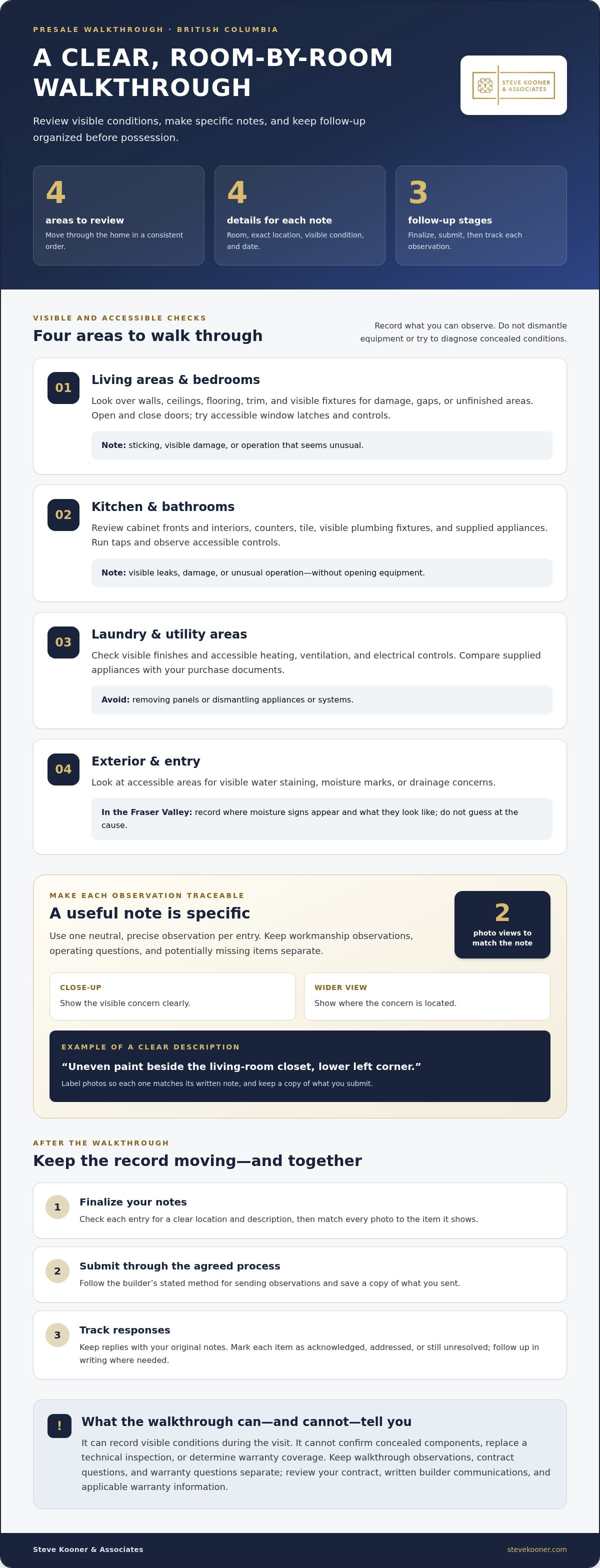
Move through the home in a consistent order, checking what’s visible and accessible. A presale walkthrough checklist BC buyers can use should cover finishes, openings, fixtures, supplied appliances, and basic system controls. Compare appliances and included items with your purchase documents, and note anything you can’t locate.
- Living areas and bedrooms: Look over walls, ceilings, flooring, trim, and visible fixtures for damage, gaps, or unfinished areas. Open and close doors, then try accessible window latches and controls. Record sticking, visible damage, or operation that seems unusual.
- Kitchen and bathrooms: Review cabinet fronts and interiors, counters, tile, visible plumbing fixtures, and supplied appliances. Run taps and observe accessible controls. Note visible leaks, damage, or unusual operation without opening equipment.
- Laundry and utility areas: Check visible finishes and accessible heating, ventilation, and electrical controls. Compare supplied appliances with your documents. Don’t remove panels or dismantle appliances or systems.
- Exterior and entry: Look at accessible areas for visible water staining, moisture marks, or drainage concerns. In the Fraser Valley, record the location and appearance of any moisture signs rather than guessing at the cause.
The Government of British Columbia’s BC Building Codes and Standards page offers background on provincial codes and standards. A walkthrough observation alone doesn’t determine whether a home complies.
How to record each observed deficiency clearly
For every item, write down the room, exact location, visible condition, and walkthrough date. Take a close-up photo and a wider photo that shows where the issue is, then label them so they match your notes. Use one observation per list entry, described neutrally and precisely. Keep a copy of what you submit and any responses together, so you can track each concern without mixing separate items.
Steve Kooner & Associates provides presale buyer guidance and transaction support. Learn about presale buyer guidance and how the team can support you through the purchase process.
After the Walkthrough: Document, Communicate, and Track Follow-Up
A careful record is useful when it reaches the right place and stays easy to find. After the walkthrough, use this sequence:
- Finalize your notes. Check that each entry has a clear location and description, and match every photo to the item it shows.
- Submit them through the agreed process. Follow the builder’s stated method for sending walkthrough observations, and save a copy of what you sent.
- Track responses. Keep replies with your original notes. Mark each item as acknowledged, addressed, or still unresolved, and follow up in writing where needed.
Keep your record factual and current. If an item remains open, refer to its original entry and request an update without assuming a particular repair date. Walkthrough follow-up can also connect to other transaction paperwork. This BC closing-problems checklist offers related context for keeping closing details organized.
Keep possession, contract, and warranty questions separate
Compare each observation with your purchase contract and written builder communications. A visible deficiency, a question about possession, and a question about warranty coverage may involve different terms or next steps, so record them separately. Use current authoritative BC guidance, including BC Housing information and your home warranty documents, to verify applicable coverage and timelines. Don’t assume a walkthrough note changes a contractual deadline or determines warranty eligibility.
A presale walkthrough checklist BC buyers can use helps keep observations and paperwork clear. Buyer representation can support transaction coordination and follow-up, but it is not a technical inspection or certification of workmanship.
Move Into Possession with a Clear Plan
Your walkthrough record can become a useful reference as you move from purchase to possession. Keep notes and related communications together, then use them to guide questions about the next steps in your transaction. A well-organized presale walkthrough checklist BC buyers can rely on supports that process, but it doesn’t replace reviewing your contract or getting technical advice when needed.
Steve Kooner & Associates provides presale development representation and local transaction and market guidance for buyers across Langley, Abbotsford, Chilliwack, Mission, Hope, Kent, Agassiz, Harrison Hot Springs, the Township of Langley, Surrey, North Delta, Maple Ridge, and Pitt Meadows. Talk with the team about your presale purchase and get support organizing the details as you prepare for possession.
Frequently Asked Questions
Is a presale walkthrough the same as a home inspection?
No. A presale walkthrough is a buyer’s opportunity to view the home and raise visible concerns, while a home inspection is a more technical assessment of accessible components and their condition. The walkthrough checklist helps you stay observant, but it can’t assess concealed areas or certify construction. Consider your contract and the scope of each process when deciding what technical assessment you need.
Can I bring someone with me to a presale walkthrough in BC?
The developer may limit how many people can attend, so follow the attendance instructions provided for your walkthrough. If only a small group is allowed, decide who will take notes and photos so you can focus on observing. This is useful for buyers across Langley, the Township of Langley, Surrey, Abbotsford, Chilliwack, Mission, Hope, Kent, Agassiz, Harrison Hot Springs, North Delta, Maple Ridge, and Pitt Meadows.
What should I do if the builder does not address a deficiency before possession?
Keep the concern in writing and preserve the original walkthrough submission, photos, and any replies. Compare the item with your purchase contract and written communications, then follow the process set out for outstanding concerns. Don’t assume an unresolved item automatically changes possession arrangements or has a specific repair deadline. If the issue could affect your contractual rights, get advice based on your documents before making a decision.
Are new homes in BC covered by a home warranty?
Yes. BC’s minimum mandatory new-home warranty is commonly described as 2-5-10 coverage: materials and labour, building envelope, and structural defects, with coverage details varying by period and home type. The warranty is separate from home insurance, which generally addresses unexpected events such as fire or theft. Review your warranty documents and current BC Housing guidance for applicable terms, exclusions, limits, and claim steps.
Disclaimer
"Not intended to solicit buyers or sellers that are under current agency agreement" "Each RE/MAX office is independently owned and operated"


