

What if a closing problem that delays your move starts with one missed document or an unready payment? Avoiding closing problems on a house purchase is less about luck than checking the right details in the right order. If you’re buying in British Columbia, dates, paperwork, mortgage funding, and the remaining tasks before possession can feel like a lot to manage.
This checklist helps you track key milestones, prepare your funds and documents, and flag property or contract concerns early. Use it to organize what needs attention, decide who to follow up with, and raise issues promptly. With a clear plan and timely communication, you can approach closing with greater confidence, whether you’re buying in Langley or elsewhere in the Fraser Valley.
Key Takeaways
- Start avoiding closing problems on a house purchase by mapping contract dates and responsibilities before deadlines approach.
- Prepare for the financial and paperwork steps in sequence, and clarify payment timing and accepted methods with your legal professional.
- Compare the property’s condition at handover with the contract and your previous walkthrough so discrepancies don’t go unnoticed.
- Raise concerns promptly through your real estate representative and legal professional to help keep the transaction on track.
Avoiding closing problems on a house purchase starts with the contract and timeline
Most closing snags are easier to address when you know who needs to do what, and by when. Start with the signed Contract of Purchase and Sale. Its dates and terms set the deadlines for your transaction. A general checklist can help you stay organized, but it doesn’t replace the obligations in your specific contract.
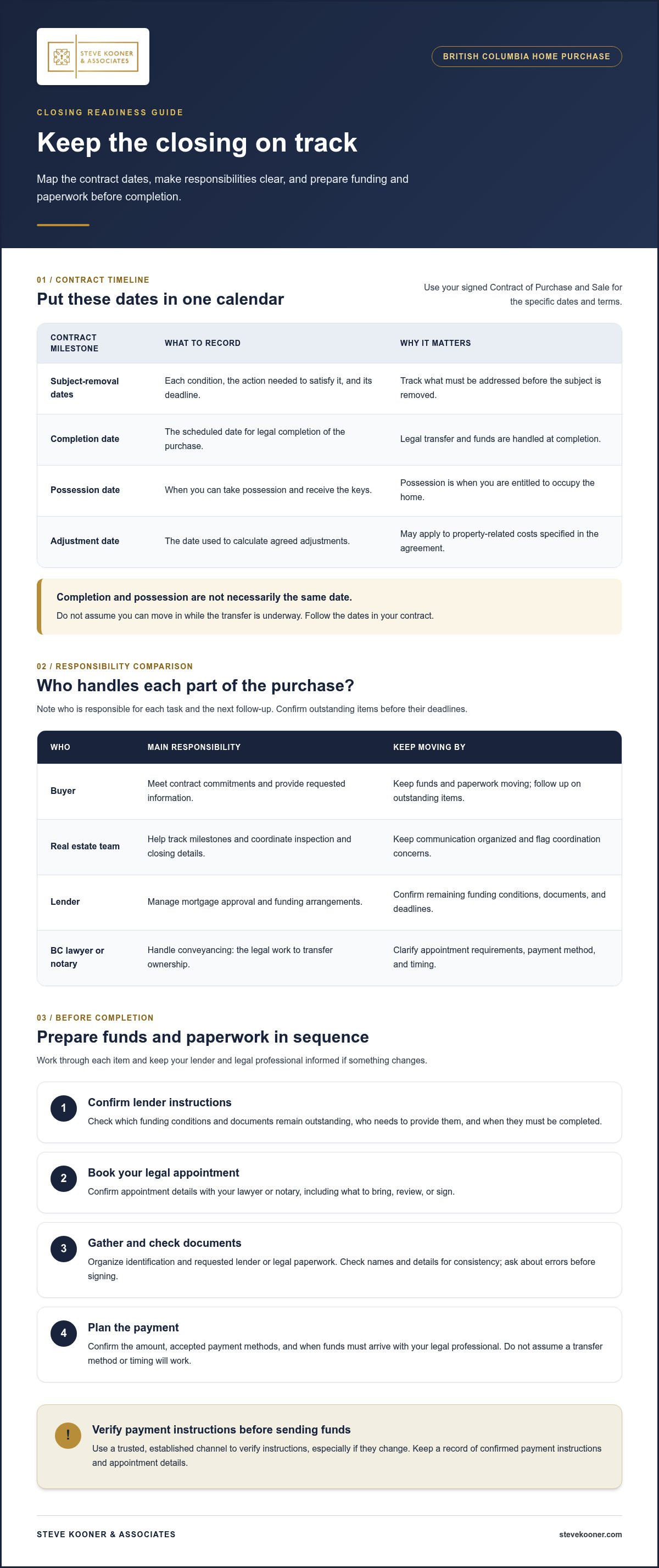
Put each key date in one calendar, then work backwards to leave time for tasks and follow-ups. For every date, note the person responsible and the next action. Check:
- Subject-removal dates: List each condition you need to satisfy, what you need to do to satisfy it, and the deadline for removing the subject.
- Completion date: Record when the purchase is scheduled to be legally completed.
- Possession date: Confirm when you can take possession and receive the keys.
- Adjustment date: Check the date used to calculate agreed adjustments, such as property-related costs.
Completion and possession aren’t necessarily the same date. Completion is when the legal transfer and funds are handled, while possession is when you’re entitled to occupy the home. Your contract specifies the dates, so don’t assume you can move in as soon as the transfer is underway. For a broader overview of the real estate closing process, keep in mind that roles and steps can vary by transaction.
Who handles each step in a British Columbia home purchase?
You’re responsible for meeting your contract commitments, providing requested information, and keeping funds and paperwork moving. Your real estate team can help track milestones, coordinate inspection and closing details, and keep communication organized. Your lender manages mortgage approval and funding arrangements, while a BC lawyer or notary handles conveyancing, the legal work to transfer ownership. Confirm who is handling each task, follow up on outstanding items before their deadlines, and raise any missed deadline or concern promptly with the relevant professional. This clear division of responsibilities is central to avoiding closing problems on a house purchase.
Pre-closing checklist to avoid funding and paperwork delays
Funding and paperwork are easier to manage when you confirm each requirement before completion week. Keep a short checklist with the task, the person responsible, and the date it needs to be done. Follow up early if anything is outstanding, rather than waiting for another party to notice a delay. This is a practical step toward avoiding closing problems on a house purchase, especially when lender, legal, and buyer tasks need to line up.
If you’re planning your budget, use the mortgage affordability calculator as a starting point. First-time buyers can also explore relevant BC programs and eligibility requirements during early planning.
How can buyers check that closing funds and documents are ready?
Work through these steps in order, and keep your lender and legal professional informed if something changes:
- Confirm lender instructions. Ask your lender which funding conditions and documents remain outstanding, who needs to provide them, and when they must be completed.
- Book your legal appointment. Confirm the appointment details with your lawyer or notary, including what you need to bring, review, or sign.
- Gather required documents. Organize identification and any lender or legal paperwork requested for your transaction. Check names and other details for consistency, and ask about errors before signing.
- Plan the payment. Ask your legal professional how much you need to provide, which payment methods are accepted, and when the funds must arrive. Don’t assume a transfer method or timing will work.
- Review outstanding lender paperwork and respond to requests promptly.
- Keep a record of confirmed payment instructions and appointment details.
- Set aside time to resolve questions before your scheduled completion.
Verify payment instructions through a trusted, established channel before sending funds, especially if instructions change. Your legal professional can clarify the required method and timing. Your real estate team can help track transaction milestones and flag coordination concerns. For tailored support with your purchase timeline, connect with our Fraser Valley real estate team.
Final property checks and handover: catch last-minute closing problems
A final walkthrough gives you a chance to compare the home with the purchase contract and the condition you observed previously. It isn’t a substitute for the contract or a guarantee that every issue will be apparent. Use the visit to spot changes that need attention before you take possession. Focus on agreed terms and observable differences, and record anything that needs follow-up.
Check the rooms and items identified in your agreement, including agreed inclusions. For example, note new damage, an item that was supposed to remain but is missing, or a home that isn’t accessible at the expected time. Clear notes help your transaction professionals understand what has changed and coordinate next steps.
What should you do if something changes before possession?
Stay calm, record what you found, and promptly alert your real estate representative and legal professional. Take dated photos where appropriate, describe the location and issue, and keep relevant messages and contract details together. Avoid making assumptions about the cause or outcome. Your legal professional can advise on legal questions, while your real estate representative can help communicate the concern and coordinate with the transaction team.
As part of avoiding closing problems on a house purchase, make a handover note of the keys, fobs, garage remotes, access codes, and other access items received. Confirm the agreed inclusions are present, and record anything outstanding or different from what you expected. If access is delayed, note the timing and notify the appropriate professionals promptly rather than trying to resolve a contract concern on your own.
Steve Kooner & Associates provides buyer guidance and transaction support, helping coordinate inspection and closing details and direct concerns to the right people. A careful final check and clear communication give you a useful record of the property’s condition, agreed items, and access arrangements as you approach handover.
Move toward closing with a clear plan
A home purchase has many moving parts, but you don’t have to manage every conversation alone. Avoiding closing problems on a house purchase starts with knowing what needs your attention and having a real estate partner to help keep the process organized. Steve Kooner & Associates supports buyers with offer drafting and coordination of inspection and closing details across Langley and the Fraser Valley.
Keep your transaction documents and key dates accessible, and raise questions as soon as they come up. A timely conversation can help you identify who should address a concern and what to do next, so you can focus on the home and the move ahead. Our team supports buyers across Langley, Abbotsford, Chilliwack, Mission, Hope, Kent, Agassiz, Harrison Hot Springs, the Township of Langley, Surrey, North Delta, Maple Ridge, and Pitt Meadows.
Your new home is closer. With thoughtful preparation and support from Steve Kooner & Associates, you can approach the next milestone with confidence.
Frequently Asked Questions
Can a house purchase closing be delayed in British Columbia?
Yes, a British Columbia home purchase closing can be delayed if financing, documents, funds, or agreed conditions remain unresolved. Issues can arise in Langley, Abbotsford, Chilliwack, Mission, Hope, Kent, Agassiz, Harrison Hot Springs, the Township of Langley, Surrey, North Delta, Maple Ridge, and Pitt Meadows. To avoid closing problems on a house purchase, discuss the specific issue promptly with your real estate representative and legal professional. Timing and options depend on the circumstances.
What should I do if my mortgage funds are not ready before closing?
Contact your lender and legal professional immediately. Don’t wait until the scheduled completion day. Ask the lender to identify exactly what remains outstanding and when the funds are expected, then share that timing accurately with your transaction team. Keep copies of updates and don’t assume the completion date can change. Your legal professional can explain what the situation means for your specific transaction.
Can I do a final walkthrough before possession in BC?
You may be able to arrange a final walkthrough, but review your contract and coordinate access with your real estate representative. Use the visit to observe the home’s condition and check agreed inclusions, such as appliances or other items specified in your agreement. A walkthrough is a practical check, not legal advice or a guarantee that every concern will be resolved.
What happens if the home is damaged before completion?
If you notice damage before completion, document what you observe and promptly notify your real estate representative and legal professional. Take clear photos and note when and where you saw the issue. The contract and circumstances matter, so don’t assume who is responsible, whether insurance applies, or what remedy may be available. Your legal professional can advise on your specific situation.
Disclaimer
"Not intended to solicit buyers or sellers that are under current agency agreement" "Each RE/MAX office is independently owned and operated"


