

A strong offer is more than a price; it also sets out what happens if a review uncovers a problem. A due diligence checklist when buying a home in BC should cover purchase agreement conditions, the home’s physical condition, maintenance and permit history, and strata records for a condo or townhome. During BC’s cooling-off period, buyers have three business days to withdraw, subject to a fee of 0.25% of the agreed purchase price.
It’s understandable to wonder whether you need a lawyer for due diligence. A legal review can clarify contract terms and closing steps, while inspections focus on the home’s condition. Each addresses different risks. This guide covers the protections, inspections and maintenance issues to consider, and how findings may affect your offer terms.
Key Takeaways
- Use purchase agreement conditions to set out which reviews must be completed before you commit to the deal.
- A visual home inspection can flag visible concerns, while signs of unpermitted electrical or gas work may call for a closer assessment.
- Turn inspection and document findings into specific offer terms, such as requesting repairs or revisiting the agreement.
- Market analysis and buying strategy can help you assess findings alongside the property and your priorities before deciding how to proceed.
Purchase agreement protections and closing conditions
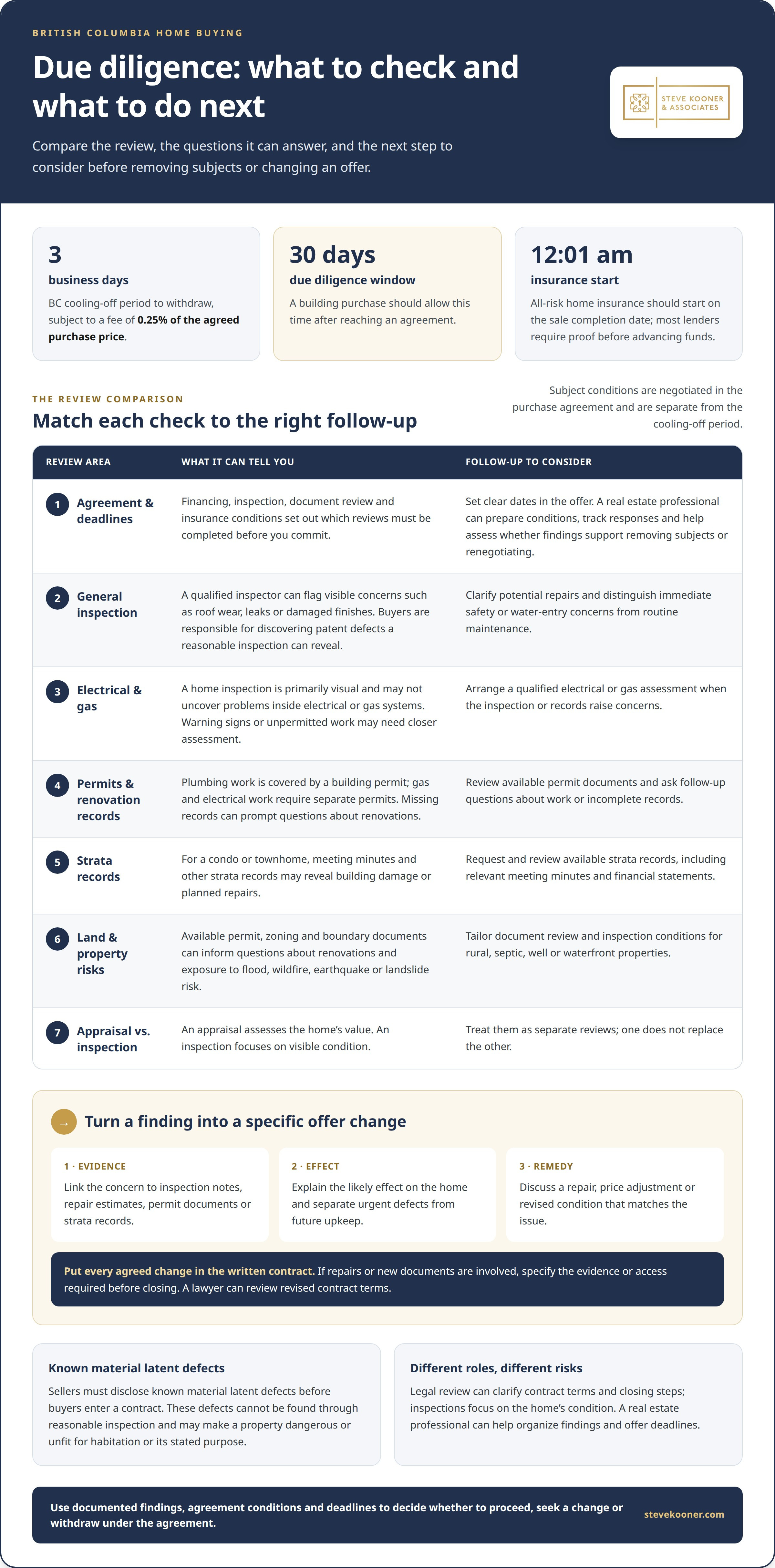
In British Columbia, buyers have a three-day cooling-off period, introduced January 1, 2023. Buyers who withdraw have three business days to exit the contract and must pay 0.25% of the agreed purchase price. This period is separate from subject conditions negotiated in the purchase agreement.
Set clear deadlines for financing, inspection, document review and insurance. A building purchase should allow 30 days for due diligence after reaching an agreement. A real estate professional prepares the offer with conditions and dates, tracks responses and helps buyers decide whether findings support removing subjects or renegotiating.
- Review the agreement and documents: A real estate professional can identify property disclosures, title concerns and missing records; a lawyer or notary can advise on legal terms.
- Confirm financing: Include a financing condition where appropriate, and discuss a Property No Disclosure Statement with the mortgage lender or broker because it may affect financing.
- Arrange insurance: All-risk home insurance should start at 12:01 am on the sale completion date; most lenders require proof before advancing funds.
- Account for taxes: Property transfer tax is payable when the transfer is registered. Include any applicable GST review and assess first-time buyer exemption eligibility against the buyer’s and property’s circumstances before closing.
- Review land and property risks: The professional can review available permit, zoning and boundary documents, and flag questions about renovations, flood, wildfire, earthquake or landslide exposure for further assessment.
- Add property-specific conditions: For rural, septic, well or waterfront homes, tailor document review and inspection conditions to those systems and the property’s setting.
Conditions turn discoveries into decisions. If documents or inspections reveal concerns, buyers can use the agreement’s terms and deadlines to decide whether to seek changes, proceed or withdraw.
Building inspections and deferred maintenance
Use the subject period to assess visible defects, deferred maintenance and records. In British Columbia, buyers are responsible for discovering patent defects that a reasonable inspection can reveal. A home inspection is primarily visual, so it may not uncover problems inside electrical or gas systems.
- Book a general inspection: A qualified inspector can identify visible concerns, such as roof wear, leaks or damaged finishes, and help clarify potential repairs.
- Follow up on system concerns: If the inspection shows warning signs or unpermitted work, arrange qualified inspections of electrical or gas systems.
- Review permits: Plumbing work is covered by a building permit, while gas and electrical work require separate permits. Missing records can prompt further questions about renovations.
- Read strata documents: For a condo or townhome, request meeting minutes and other strata records that may show building damage or planned repairs.
- Consider the appraisal separately: An appraisal assesses a home’s value, while an inspection focuses on visible condition; CMHC’s homebuying guide covers both in the Canadian purchase process.
A real estate professional can help coordinate inspections and organize findings around the offer’s subject deadlines. Legal advice can help interpret contract or disclosure concerns. Sellers must disclose known material latent defects before buyers enter a contract. These defects cannot be found through reasonable inspection and may make a property dangerous or unfit for habitation or its stated purpose.
Inspection costs depend on the property’s size, age, condition and the scope of specialist assessments, rather than a standard fee. If an inspector flags a concern, match the next assessment to the issue, such as an electrical review for questionable wiring.
For help weighing inspection findings alongside local market context, explore real estate market guidance.
Using due diligence findings to negotiate offer terms
A due diligence checklist when buying a home in BC can help turn findings into a clear, proportionate request. Link each concern to evidence, its likely effect on the home and a practical contract change. For example, a contractor’s estimate for roof repairs gives the seller a specific basis for discussing a price adjustment or repairs before closing.
- Separate urgent defects from future upkeep: Use inspection findings to distinguish immediate safety or water-entry concerns from routine maintenance, keeping requests focused.
- Support requests with records: Provide relevant inspection notes, repair estimates, permit documents or strata meeting minutes and financial statements.
- Match the remedy to the issue: Discuss a repair, price adjustment or revised condition instead of making a broad request based on uncertainty.
- Revisit financing: If repairs affect your budget or lender’s assessment, reconsider your mortgage assumptions, interest and closing costs before agreeing to new terms.
A real estate professional can organize findings and present proposed changes through offer writing and negotiation. Put every agreed change in the written contract; a conversation alone doesn’t amend its terms. If the seller provides new documents or completes work, specify in the agreement what evidence or access is required before closing.
Use a due diligence checklist when buying a home in BC to connect each concern with an appropriate next step. Ask a lawyer to review revised contracts, especially if a repair obligation, deadline or remedy could affect your rights. If the seller won’t address an issue, weigh the documented risk against your priorities, then decide whether to proceed under the agreement’s conditions or seek another change.
Steve Kooner & Associates: Market Analysis & Buying Strategy
Steve Kooner & Associates can help you weigh due diligence findings against your buying strategy and the local market. If an inspection identifies repairs or strata records point to planned work, market analysis can help put those findings in context as you consider your offer. The team also supports buyers of detached single-family homes, presales and new construction.
Turn to the team when you’re comparing a home’s condition, value and offer terms, or deciding how to respond to a seller’s proposed changes. Bring your priorities and the findings you want to discuss, and the team can help you consider the next step with a clear view of the transaction.
Contact Steve Kooner & Associates to discuss your home-buying strategy.
Make your next move with clarity
Let your priorities guide the next decision. A due diligence checklist when buying a home in BC is most useful when it connects property details to the life you want to build there. Before moving ahead, consider which trade-offs matter most: location, layout, future plans, or the time and attention a home may need. This perspective can help you focus on suitable properties instead of feeling pulled in several directions by competing details.
A clear buying strategy gives you a steady reference point as new opportunities arise. Bring your questions and priorities into a discussion about your next step, whether you’re beginning your search or weighing a specific home.
Move forward at a pace that feels right, with your priorities in view.
Frequently Asked Questions
Do I need a lawyer for due diligence in BC?
A lawyer or notary can provide legal advice on your purchase contract and closing documents. A real estate professional can help you understand transaction steps and organize questions, but that doesn’t replace legal review. For example, ask your lawyer to explain an unclear completion obligation or title-related term before you remove a condition.
How long does due diligence take in British Columbia?
It depends on the review deadlines in your purchase agreement and how quickly inspections, financing decisions and document reviews can be completed. For a building purchase, buyers should allow 30 days after reaching an agreement. A home’s needs may differ, so the offer should give enough time for its specific reviews.
How long is the due diligence period?
For a home purchase, the subject period runs until the deadline written into the agreement; there isn’t one standard length for every transaction. This negotiated review window is distinct from BC’s cooling-off period. Check the dates that apply to each condition, since a financing deadline and an inspection deadline may differ.
What documents can a real estate professional help review during due diligence?
A real estate professional can help organize and review the Property Disclosure Statement, strata meeting minutes, permit records and other documents provided for the home. For properties in Langley, Abbotsford, Chilliwack, Mission, Hope, Kent, Agassiz, Harrison Hot Springs, the Township of Langley, Surrey, North Delta, Maple Ridge and Pitt Meadows, relevant records depend on the property type and its history.
What can a real estate professional help you look for before signing a deal?
A real estate professional can help identify questions raised by the disclosure form, available records and the property’s visible condition. For example, a Property No Disclosure Statement can signal the need for closer investigation, while a voluntary Property Disclosure Statement may contain information about defects. A professional can help connect those findings to offer conditions and flag issues for legal advice.
Disclaimer
"Not intended to solicit buyers or sellers that are under current agency agreement" "Each RE/MAX office is independently owned and operated"


