

What if the home’s biggest oil-tank risk is buried before you even make an offer? Buying a house with an oil tank in BC calls for more than spotting a visible tank: sellers must disclose a known tank before contract if it’s leaking or causing property damage and may be a material latent defect.
It’s reasonable to want clear answers before you commit. A buried tank can be difficult to detect, cleanup responsibility may extend beyond the seller, and home insurance may exclude leakage or pollution.
A professional tank scan can help identify a buried tank, while seller disclosure duties and insurance terms affect your next steps. Offer conditions, such as an environmental inspection or a holdback, can address uncertainty before you remove subjects.
Key Takeaways
- A seller’s disclosure duties can apply when a known oil tank is leaking or causing property damage, so clarify tank history and responsibility in the purchase terms.
- Insurance decisions can depend on a tank’s location and condition, and some policies exclude leakage or pollution.
- Consider offer conditions for a professional tank investigation and a holdback to address potential cleanup or remediation.
- Market analysis and buying strategy can help you assess the property and negotiate tank-related terms with Steve Kooner & Associates.
What are the Seller’s obligations?
A known oil tank that is leaking or causing property damage may need to be disclosed to potential buyers. The offer should assign responsibility for investigation, removal, and soil remediation.
Disclosure of Leaking or Damaging Tanks
Before a contract is finalized, a seller must disclose a known tank that leaks or damages property if it may be a material latent defect. A buried heating tank can contaminate soil even when no equipment is visible. Record known tank details and assign investigation and cleanup responsibilities in the purchase contract.
Disclosing Unknown Tanks
A seller cannot disclose a tank they don’t know exists. Disclosure alone cannot rule out a buried tank. A pre-purchase inspection can investigate, while municipal records may add context. If heating oil has leaked, the responsible person must clean up or manage the spill. Under section 45 of BC’s Environmental Management Act, owners and previous owners of designated contaminated sites are responsible for remediation, unless exempted under section 46.
Removal and Soil-Cleanliness Certification
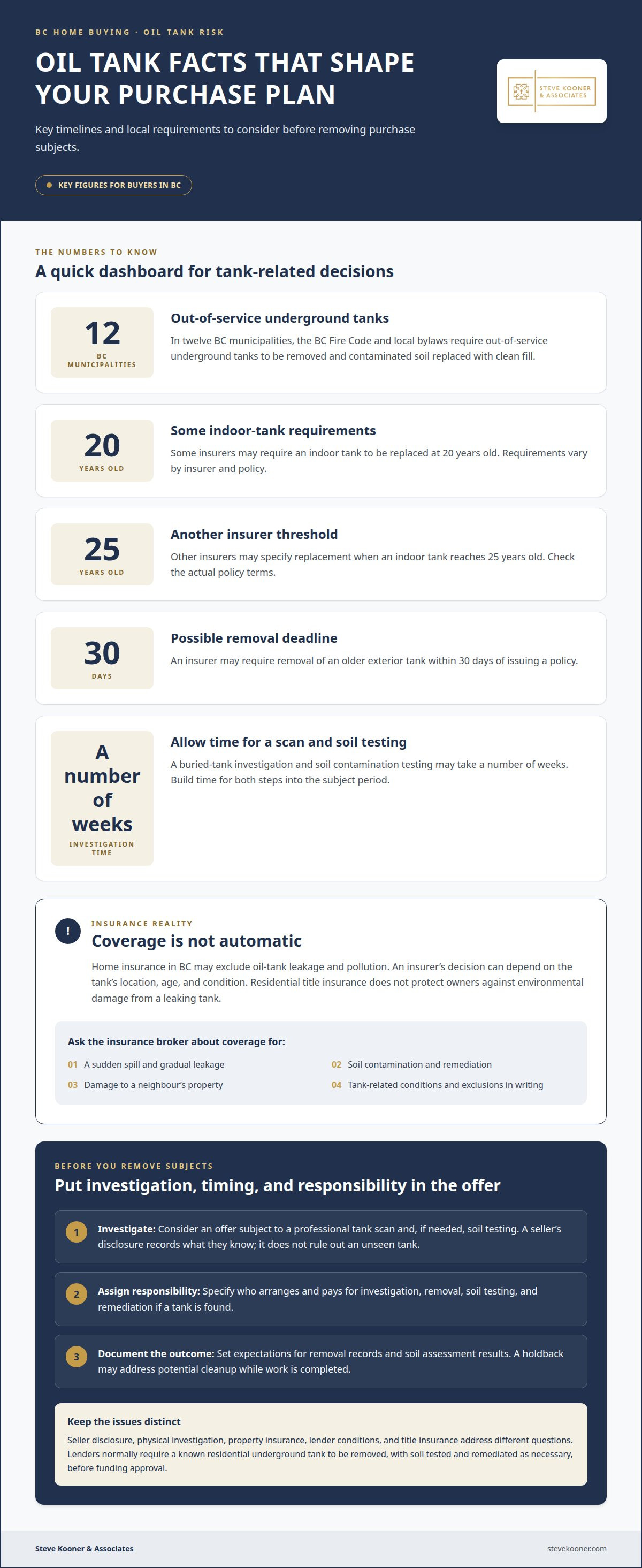
Removal terms should identify who arranges and pays for removal, soil testing, and remediation. In twelve BC municipalities, the BC Fire Code and local bylaws require out-of-service underground tanks to be removed and contaminated soil replaced with clean fill. After removal, the surrounding soil must be assessed, and any contamination cleaned up. Keep removal and soil-assessment records with the transaction documents.
Inspections and Property Disclosures
A property disclosure statement records the seller’s answers, but it does not replace a physical inspection for an unseen tank. Municipal records may add context, but they cannot prove that a property has no buried tank. Include inspection responsibility in the contract, along with who pays for removal or treatment and site remediation if a tank is found. This can also clarify potential post-sale liability.
Does home insurance cover an oil spill or tank leak?
Home insurance in BC may exclude pollution and leakage from an oil tank, so a policy shouldn’t be assumed to cover cleanup. An insurer’s decision can depend on the tank’s location, age, and condition. An older exterior tank can make coverage harder to obtain, while an insurer may require removal within 30 days of issuing a policy.
Indoor tanks can also affect renewal: some insurers may require replacement at 20 years old, while others specify 25 years. Ask an insurance broker to explain whether the policy covers a sudden spill, gradual leakage, soil contamination, damage to a neighbour’s property, and remediation. Get the tank-related requirements and any exclusions in writing before removing purchase subjects.
A real estate professional can help you raise these questions early and address them in the purchase contract. If an insurer requires tank removal or soil testing, for example, the offer can specify who handles the work and how the timing fits with closing. Lenders normally require a known residential underground tank to be removed, with soil tested and remediated as necessary, before approving funding.
Residential title insurance doesn’t protect owners against environmental damage from a leaking tank, even if they didn’t know it was there. That makes property insurance, lender conditions, and tank-related contract terms distinct issues. A real estate professional can help align the offer with your financing and insurance timelines through offer planning support.
How a real estate professional can help negotiate buyer offer subjects and tank-related terms
A real estate professional can help turn concerns about a buried oil tank into clear offer terms. When buying a house with an oil tank in BC, your offer can set out what happens if an inspection finds a tank, contamination, or signs of a furnace-oil leak. That puts investigation, timing, and responsibility on the table before you remove subjects.
Buyers can consider making the offer subject to a professional tank scan and, if needed, soil testing. A real estate professional can help define the inspection scope and address the findings in the offer conditions. Investigating for a buried tank and testing for soil contamination may take a number of weeks, so allow time for both steps in the subject period.
Offer terms can specify who arranges and pays for investigation, removal, soil testing, and remediation if a tank is found. A holdback may address potential cleanup while the work is completed. Much like standards followed by property restoration and remediation specialists such as Coastline Environmental Solutions, Inc., the offer can also set expectations for documents, such as removal records or soil assessment results, and explain how the parties will handle contamination found after removal.
Disclosure and inspection provide different information: the seller shares what they know, while an environmental scan investigates what may be underground. Records of previous tank removal or treatment do not replace an investigation before purchase. When buying a house with an oil tank in BC, a real estate professional can help address the findings in the contract and clarify outstanding conditions before you waive subjects.
Get help negotiating oil-tank offer terms
Steve Kooner & Associates: Market Analysis & Buying Strategy
Steve Kooner & Associates helps buyers assess a property’s market position and shape a buying strategy around oil-tank findings. Turn to the team when inspection results, removal responsibilities, or insurance and lender requirements affect your offer decisions.
Market Analysis & Buying Strategy can help you weigh a home’s value alongside tank-related uncertainties. The team can help structure offer terms covering investigation, documentation, and potential remediation, so you can consider the transaction details before deciding. Whether you’re considering a detached home, presale, or new construction, clear terms and informed choices support a more confident purchase process.
Contact Steve Kooner & Associates to discuss your purchase strategy.
Make your next move with a clear plan
Consider the whole property, not just the tank. When buying a house with an oil tank in BC, think about how unresolved findings could affect renovation plans, your intended use of the yard, or your timing. Once any required excavation or remediation is complete, general property maintenance and exterior upkeep from services like JBM Custom Contracting can help restore the grounds. Keep inspection results and agreements with the transaction documents so you can refer to them when planning future work or discussing the property’s history.
Your offer strategy can reflect what you need settled before completion and which issues you’re prepared to manage afterward. Set a clear decision point for outstanding information, and make sure the written terms match your understanding of who will handle each next step. This helps you assess the home against your priorities instead of making a rushed choice when new information appears.
With a thoughtful plan, you can move toward your next home with greater clarity.
Frequently Asked Questions
How can a real estate professional help me find out if a Fraser Valley home has an underground oil tank?
A real estate professional can help include a professional tank scan in the purchase investigation and coordinate it before subjects are removed. If the property’s history suggests furnace-oil heating, a scan can help locate a buried tank. Soil testing addresses a separate concern: whether oil has contaminated the ground. Allow time in the offer for both investigations.
Can I get a mortgage on a house with a known oil tank?
Financing depends on lender requirements and the tank’s status. Lenders normally require a known residential underground tank to be removed, with soil tested and remediated as necessary, before approving funding. If an inspection identifies a tank, include the required work and documentation in the purchase timeline. This gives you a clearer view of financing conditions before closing.
How can a real estate professional help buyers protect themselves when buying a house with an oil tank?
A real estate professional can help make offer terms specific to the property’s risks. The contract can address who arranges investigation and removal, what happens if contamination is found, and which records the seller must provide. Buyers can also consider a holdback for possible remediation. Clear written terms help track responsibilities through closing.
What does oil tank removal cost in BC?
The final amount depends on what the work uncovers. If soil is contaminated, cleanup and remediation can add substantially to the project. Setting out who pays for further work in the offer can help buyers plan for that possibility.
What do BC municipalities require for an out-of-service oil tank?
The BC Fire Code regulates underground storage tanks across the province. In twelve BC municipalities, the code and local bylaws require out-of-service underground tanks to be removed and contaminated soil replaced with clean fill. For a purchase, the contract should assign responsibility for required investigation and work. Local requirements may depend on the property’s municipality and the work involved.
Disclaimer
"Not intended to solicit buyers or sellers that are under current agency agreement" "Each RE/MAX office is independently owned and operated"


