

An older home’s biggest risks may be above you or below you. This home inspection checklist for older homes in BC starts with the essentials: a standard inspection covers 10 major systems and focuses on visible, accessible areas, including the roof, structure and foundation. It isn’t a pass-or-fail verdict; it helps you understand what’s working and what may need attention.
It’s natural to want a clear picture of a home’s condition before making a major decision. This home inspection checklist for older homes in BC explains what an inspection can reveal about the roof’s condition and estimated remaining life, structural concerns, and foundation performance, as well as what an inspector can’t assess without further investigation. Use it to understand the findings, identify issues that may need specialist review, and make your next decision with greater confidence.
Key Takeaways
- Use the inspection report to distinguish routine maintenance from concerns that may need further assessment, especially around the roof, structure and foundation.
- Asphalt shingles typically last 20 to 25 years under normal conditions, so roof age and visible wear can help frame replacement planning.
- Pay attention to signs of foundation movement or water entry; significant concerns may call for a structural engineer’s assessment.
- According to the Government of Canada, a home built before 1960 probably contains lead-based paint, which can pose a health risk if disturbed.
What Does a Home Inspection Include in BC?
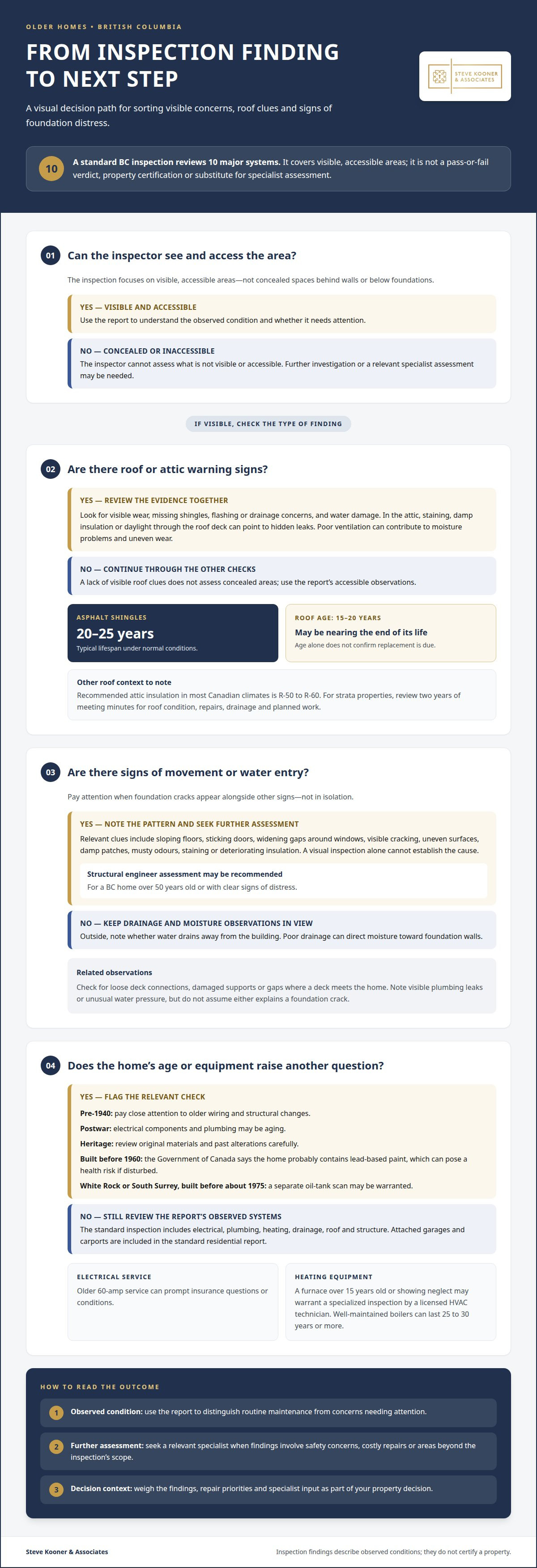
A BC home inspection reviews 10 major systems, including electrical, plumbing, heating, drainage, roof, and structure. The inspector assesses visible, accessible areas, not concealed spaces behind walls or below foundations. Attached garages and carports are included in the standard residential inspection report. A home inspection checklist for older homes in BC helps you track which findings need attention.
Inspection priorities depend partly on a home’s era. In pre-1940 homes, pay close attention to older wiring and changes to the structure. Postwar homes may have aging electrical components and plumbing, while heritage properties call for careful review of original materials and past alterations. According to the Government of Canada, a home built before 1960 probably contains lead-based paint, which can pose a health risk if disturbed.
Consumer Protection BC says anyone engaging in home inspection activity in BC needs a licence. The report describes observed conditions; it doesn’t certify the property or replace specialist assessments. Check visible wiring, panels, plumbing connections, furnace operation, and drainage. Older 60-amp electrical service can prompt insurance questions or conditions. Use the home inspection checklist for older homes in BC to keep these observations organized.
In White Rock and South Surrey, homes built before about 1975 may warrant a separate oil-tank scan.
If the findings identify safety concerns or costly repairs, seek relevant specialist assessments—for instance, buyers in the Okanagan dealing with drafty panes or failed seals might consult Sunnyside Glass Solutions Ltd. for glass replacement and window film upgrades. Then weigh the findings and repair priorities as you decide whether to proceed or negotiate during the offer process.
Roof condition and estimated remaining life
For Canadian asphalt shingles, a typical lifespan is 20 to 25 years under normal conditions. A roof aged 15 to 20 years may be nearing the end of its life, but age alone doesn’t confirm replacement is due. A thorough inspection considers visible wear, missing shingles, flashing, drainage, and signs of water damage.
Check the attic as well as the exterior. Staining, damp insulation, or daylight through the roof deck can point to hidden leaks. Poor ventilation can also contribute to moisture problems and uneven roof wear. In most Canadian climates, recommended attic insulation is R-50 to R-60; the inspector can note visible insulation levels and ventilation concerns.
Replacement costs depend on roof size, material, access, and whether damaged decking needs repair. Treat this as an example, not a quote for another home. The inspection report can help you plan questions about the work’s scope and timing before closing.
For a strata property, review two years of meeting minutes alongside the inspection findings. Look for discussion of roof condition, completed repairs, drainage, and planned work. These records put the visible condition of an individual unit into the context of the building’s maintenance history.
Assess heating equipment separately from roof life. A furnace over 15 years old or showing neglect may warrant a specialized inspection by a licensed HVAC technician. Well-maintained boilers can last 25 to 30 years or more, while air-conditioning condition depends on its operation and upkeep. A water heater’s age and visible leaks also deserve attention.
If roof, attic, or strata findings affect your purchase decision, real estate market guidance can help you weigh them alongside other property considerations.
Structural issues and foundation assessment
Foundation cracks deserve attention when they appear alongside sloping floors, sticking doors, or widening gaps around windows. These signs can point to movement, but a visual inspection alone can’t establish the cause. Inspectors look for visible cracking, uneven surfaces, moisture, and water entry, then recommend further assessment when concerns extend beyond accessible areas.
In the basement, check for damp patches, musty odours, staining, and deteriorating insulation. Outside, note whether siding meets the foundation cleanly and whether water drains away from the building. Poor drainage can direct moisture toward foundation walls. Decks also warrant attention: loose connections, damaged supports, or gaps where a deck meets the home may need closer review.
Heating and plumbing clues can help explain moisture concerns. For example, condensation near heating equipment or leaks below a water heater can contribute to damage. Note unusual water pressure or visible plumbing leaks, but don’t assume either explains a foundation crack. A home inspector may recommend a structural engineer for a BC home over 50 years old or with clear signs of distress.
Repair costs vary with the cause and scope. Use specialist findings to understand the work involved before buying, and consider how the evidence affects your offer strategy.
Steve Kooner & Associates
Steve Kooner & Associates helps you connect inspection findings with your next property decision. If a roof, foundation, or structural concern changes how you view an older home, the team can support your purchase strategy, offer review, and negotiation. An inspection report can clarify visible issues, while specialist assessments can explain concerns that need further investigation.
Use the findings to consider the property’s condition, potential repair priorities, and how your offer terms should reflect your decision. Whether you’re buying a detached home, townhome, or condominium in BC, thoughtful guidance can help you understand your options and move forward.
Contact Steve Kooner & Associates to discuss your home purchase.
Move forward with a clear plan
Use this home inspection checklist for older homes in BC as a starting point for deciding what matters most to you. A finding doesn’t make the decision on its own: your plans, comfort with the property’s condition, and the next steps you’re prepared to take all matter. Keep specialist opinions and purchase terms in view as you decide how to proceed.
Steve Kooner & Associates supports buyers purchasing presale homes, new construction, and detached single-family homes. If you’re weighing an older home against another option, the team can help you assess the purchase against your priorities and support your offer process.
With a thoughtful plan, you can approach your next move with greater confidence.
Frequently Asked Questions
What should a home inspection checklist include for older homes in British Columbia?
Include the home’s exterior, attic, basement, visible structure, major systems, and signs of past repairs. Note any areas where access was limited, since concealed spaces can hide issues a visual inspection won’t reveal. Compare the report with available maintenance records and renovation documents. This context can help distinguish a longstanding condition from a recent change that needs follow-up.
What are common structural issues in older BC homes, including foundations, framing, and roofs?
Common concerns include foundation movement, water-related deterioration in framing, and roof areas that sag or show uneven lines. Indoors, sloping floors, sticking doors, or cracks near openings can point to areas for closer review. These clues don’t establish a cause by themselves. A structural professional can assess whether observed movement affects the building’s load-bearing components.
How can inspectors identify asbestos, lead paint, and other hazardous materials in older BC homes?
Inspectors can note materials that may warrant further testing, but appearance alone can’t confirm their contents. Asbestos was used extensively in Canadian construction materials from the 1950s through the late 1980s. According to the Government of Canada, homes built before 1960 probably contain lead-based paint, which can pose a health risk if disturbed. Avoid sanding or drilling suspect materials before assessment.
What electrical, plumbing, heating, and ventilation problems are common in older British Columbia houses?
Watch for damaged wiring or components, plumbing corrosion or leaks, visible wear on heating equipment, and ventilation that doesn’t adequately remove moisture. For example, persistent condensation near a bathroom fan or rust on a furnace deserves attention in the report. An inspector assesses visible, accessible conditions; concealed wiring, pipes, or equipment problems may need targeted specialist investigation.
How can buyers check for moisture, leaks, mould, and inadequate drainage in older BC homes?
Look for staining, damp odours, peeling finishes, or visible mould around basement walls, window frames, and plumbing fixtures. Outside, note whether downspouts discharge near the home or the ground slopes toward it. These checks are useful across the Fraser Valley, including Langley, Abbotsford, Chilliwack, Mission, Hope, Kent, Agassiz, Harrison Hot Springs, the Township of Langley, Surrey, North Delta, Maple Ridge, and Pitt Meadows. Concealed moisture may need further assessment.
Disclaimer
"Not intended to solicit buyers or sellers that are under current agency agreement" "Each RE/MAX office is independently owned and operated"


