

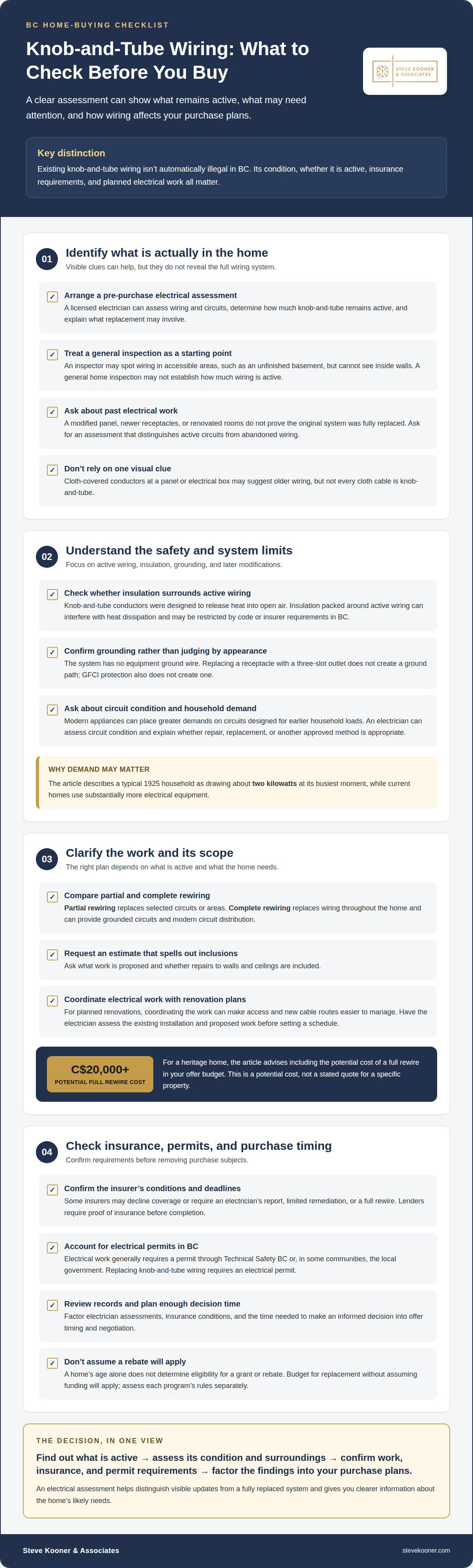
Knob-and-tube wiring isn’t automatically illegal in BC, but active wiring may still need attention. When buying a house with knob-and-tube wiring in BC, find out what remains energized and whether its condition, insurance requirements, or your renovation plans affect the purchase.
It’s reasonable to be concerned: this older wiring has no ground wire, and insulation around active wiring can interfere with heat dissipation. A clear assessment helps you understand the issues before deciding. This article explains what BC rules mean for existing wiring, what safety concerns to consider, and when to involve a licensed electrician. Insurance conditions and the scope of past electrical work also matter when evaluating a home.
Key Takeaways
- Existing knob-and-tube wiring isn’t automatically illegal in BC; its condition and any planned electrical work affect what action may be needed.
- Partial rewiring can address selected areas, while a complete rewire replaces the system more broadly. The right scope depends on what remains active and the home’s needs.
- A pre-purchase electrical inspection can help identify active wiring and clarify the likely work. Review electrical records and insurance conditions before removing subjects.
- Active wiring can raise safety concerns, particularly when insulation surrounds it. Use an electrician’s assessment to understand the risks and factor the findings into your purchase decision.
Is knob-and-tube wiring illegal in BC?
Existing knob-and-tube wiring isn’t automatically illegal in BC. Existing wiring may remain if it is undisturbed, but that alone does not establish whether a particular system is safe or compliant. In an older home, an electrical assessment can identify active circuits and whether planned renovations or replacement need attention.
Partial rewiring replaces selected circuits or areas; complete rewiring replaces wiring throughout the home. Ask for an estimate that describes the work and states whether repairs to walls and ceilings are included, a standard practice recommended by experienced residential providers like JK Canning Electrical.
For a heritage home, include the potential cost of a full rewire, C$20,000 or more, in your offer budget. If you’re planning a renovation, coordinating the electrical work with it can make access and new cable routes easier to manage. Complete rewiring can also provide grounded circuits and modern circuit distribution.
Will BC home insurance companies cover a house with knob-and-tube wiring? Some insurers may decline coverage or require an electrician’s report, limited remediation, or a full rewire. Confirm coverage conditions and deadlines before removing subjects, since lenders require proof of insurance before completion.
Are there BC rebates or grants for rewiring an older home? A home’s age alone does not determine eligibility. Budget for replacement without assuming a grant will apply, and assess any program’s eligibility rules separately.
When to Contact a Licensed BC Electrician?
Arrange an electrical assessment before purchase if an older home may have active knob-and-tube wiring. A licensed electrician can assess the system and explain what replacement may involve.
Pre-Purchase Electrical Inspections
A pre-purchase electrical inspection assesses wiring, circuits, and visible electrical upgrades before you commit to a home. It matters because a general home inspection may not determine how much knob-and-tube wiring remains active or what work may be needed.
Modern appliances can place greater demand on circuits designed for the loads of their time. A typical 1925 household might have drawn about two kilowatts at its busiest moment, while current homes use substantially more electrical equipment. For practical examples of how older properties are updated for modern electrical and efficiency demands, resources from contractors like underlineenergyconcepts.com illustrate the scope of whole-home energy and electrical upgrades.
A real estate professional can help you factor inspection findings into offer timing and negotiation. Purchase planning can account for electrician assessments, insurance conditions, and the time needed to make an informed decision.
Identifying Knob-and-Tube Wiring
During a BC home inspection, an inspector may spot knob-and-tube wiring in accessible areas, such as an unfinished basement. But inspectors can’t see inside walls, so visible wiring does not show the full extent of the system.
A licensed electrician can assess suspected wiring and determine how much remains active. Cloth-covered conductors at a panel or electrical box may suggest older wiring, but not every cloth cable is knob-and-tube. Identifying the type of wiring helps clarify the likely scope of replacement.
Electrical work in BC generally requires a permit through Technical Safety BC or, in some communities, the local government. Replacing knob-and-tube wiring requires an electrical permit. For a heritage home or planned renovation, have the electrician assess the existing installation and the proposed work before setting a schedule.
Safety risks of active knob-and-tube wiring
The main concern with active knob-and-tube wiring is how its original design differs from modern systems. It has no equipment ground wire, and its conductors were designed to release heat into open air. Insulation around the wiring or circuits modified over time can change the risks.
Insulation packed around active wiring can interfere with heat dissipation and may be restricted by code or insurer requirements in BC. In an older home, insulation near the framing can conceal wiring and make its condition harder to assess visually. An electrician can identify where active wiring remains and whether insulation or later modifications raise concerns.
Grounding is another practical limitation. Replacing a knob-and-tube receptacle with a three-slot outlet does not create an equipment grounding path, so the outlet’s appearance alone cannot confirm grounding protection. GFCI protection may be used with certain approved replacement methods, but it does not create a ground path either.
Modern appliances and equipment can place greater demands on circuits designed for earlier household loads. The Insurance Bureau of Canada suggests upgrading outdated wiring as one way to reduce risk. If a home has active circuits, an electrical assessment can clarify whether repair, replacement, or another approved method is appropriate. It can also help you understand potential insurance conditions before purchase.
Don’t assume visible updates mean the original system has been fully replaced. A modified panel, newer receptacles, or renovated rooms may coexist with active wiring elsewhere. Ask for an assessment that distinguishes active circuits from abandoned wiring and considers insulation, circuit condition, and the scope of previous work.
Steve Kooner & Associates: Market Analysis & Buying Strategy
Steve Kooner & Associates helps buyers weigh an older home’s electrical findings alongside its price, condition, and purchase terms. With Market Analysis & Buying Strategy, you can factor an electrician’s assessment and insurance requirements into your decision, then shape an offer around your priorities.
Turn to the team when deciding whether a detached home with knob-and-tube wiring fits your plans, or comparing it with presale and new construction options. Weigh the trade-offs in context, rather than treating wiring concerns as the only factor.
Contact Steve Kooner & Associates to discuss your home-buying plans.
Make Your Next Home Decision With Clarity
Buying a house with knob and tube wiring in BC is one part of deciding how well a property fits your plans. Consider more than the immediate repair question: think about the home’s layout, your priorities, and the kind of ownership experience you want. A clear buying strategy helps you weigh these factors together and choose your next step.
Steve Kooner & Associates supports buyers purchasing detached homes, presale homes, and new construction. If you’re comparing property types or considering how an older home fits your goals, the team can help assess the market and shape your buying approach.
Move forward at a pace that feels right. A thoughtful decision starts with understanding what matters most in your next home.
Frequently Asked Questions
Can I still get a mortgage on a home with knob-and-tube?
Often, yes, but arranging insurance is essential to completing the purchase. If you’re buying a house with knob and tube wiring in BC, ask your insurer about coverage for that specific property, including any conditions or deadlines. Your lender will require proof of insurance before completion, so clarify the requirements before removing subjects.
How disruptive is rewiring?
The disruption depends on the scope and how the wiring is accessed. Complete rewiring in BC is estimated to take 3-7 days; partial replacement, 1-3 days; and room-by-room rewiring, 1-2 days per room. Work may involve opening walls or ceilings to route new cable, so discuss access and finish repairs in the project estimate.
How do I know if all of it has been removed?
Ask for an electrician’s assessment and records of completed work, such as invoices, permits, or inspection documents. A panel upgrade alone does not show that branch wiring was replaced. An assessment can distinguish energized circuits from abandoned wiring, which may remain after other areas have been rewired.
Should You Get an Electrical Inspection Before Buying?
Yes. Arrange an electrical assessment before removing subjects so you understand the installation and potential work before your purchase becomes firm. A general home inspection may identify visible wiring but cannot reveal everything concealed inside walls. Use the electrician’s findings to clarify insurance questions, renovation plans, and the property’s electrical records.
What should a buyer’s agent ask the seller about knob-and-tube wiring?
An agent can support you when buying a house with knob and tube wiring in BC by seeking details about active wiring, past upgrades, and available electrical records. Ask whether an insurer previously required electrical work or documentation. These details help connect seller disclosures with the electrician’s assessment and your offer conditions.
Disclaimer
"Not intended to solicit buyers or sellers that are under current agency agreement" "Each RE/MAX office is independently owned and operated"


