

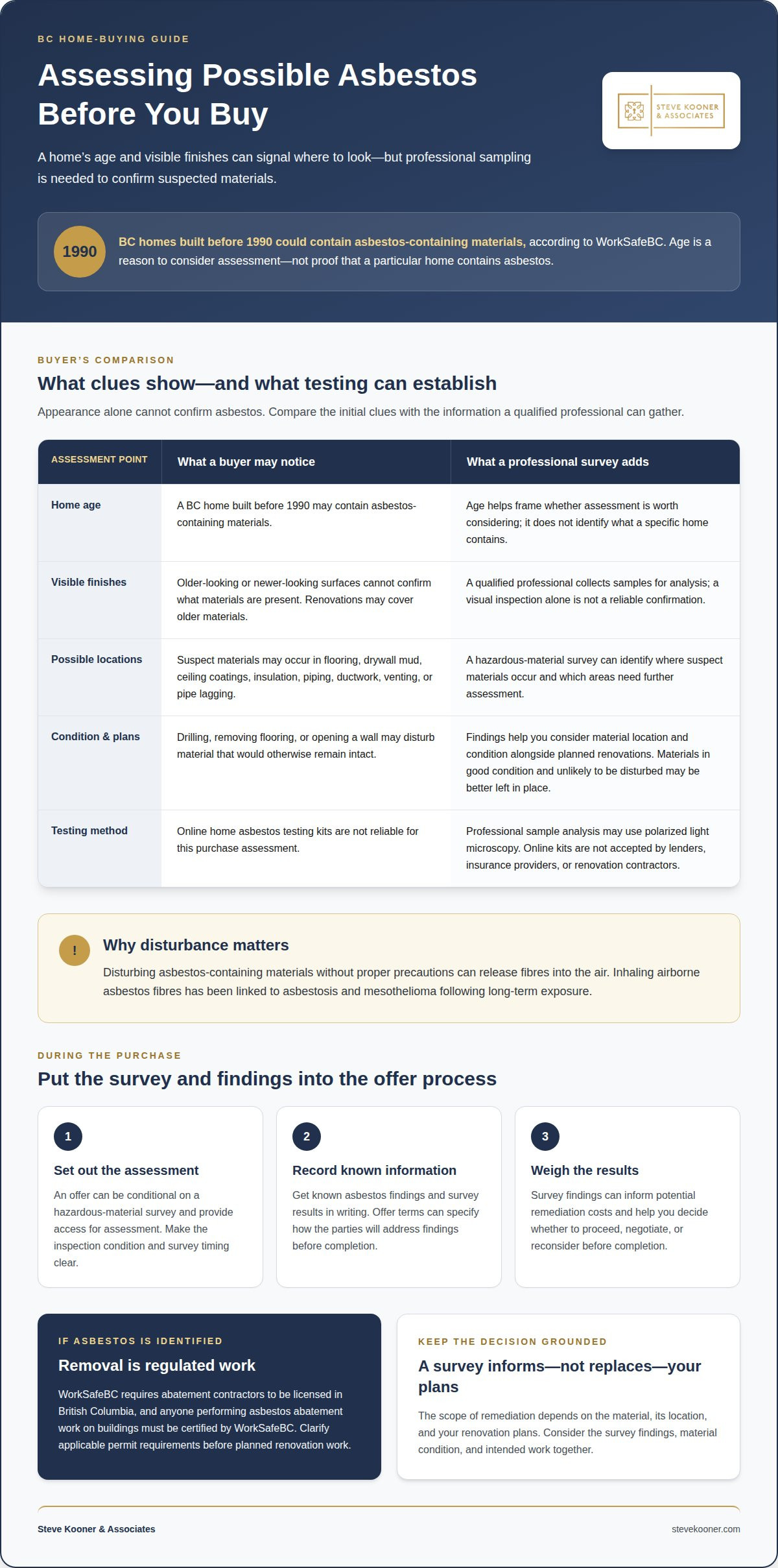
An older home’s clean appearance can’t rule out asbestos. When buying a house with asbestos in BC, treat a property built before 1990 as one that could contain asbestos-containing materials, according to WorkSafeBC. These materials may be found in drywall, flooring, insulation, ceiling coatings or exterior finishes, and appearance alone can’t confirm what’s present.
A home purchase can still make sense, but uncertainty about materials may affect renovation plans and your decision. In Fraser Valley communities such as Langley, Surrey, Abbotsford and Chilliwack, a qualified professional can collect samples for testing and prepare a hazardous-material survey. This guide explains where asbestos may occur in older BC homes, what testing can reveal during a purchase, and how the findings can inform your next steps.
Key Takeaways
- In the CRD, 80% of homes were built before 1990 and could contain asbestos-containing materials, so a property’s age can help frame your assessment.
- Learn why material condition and planned renovations matter when assessing potential asbestos risks in an older home.
- Find out how a hazardous-material survey during the purchase process can inform your offer and help you understand the home’s renovation considerations.
- Steve Kooner & Associates can support your Market Analysis & Buying Strategy as you weigh a property’s findings against your home-buying priorities.
Did you know that 80% of the homes in the CRD could contain asbestos?
The CRD statistic in this heading shouldn’t be treated as a Fraser Valley estimate. For buyers in Langley, Surrey, Abbotsford, or Chilliwack, the relevant provincial indicator is a home’s age: according to WorkSafeBC, homes in BC built before 1990 could contain asbestos-containing materials. Age signals a need for assessment, not a confirmed result.
Abatement Rules and Homeowner Removal
Asbestos abatement involves removing or disturbing materials that contain asbestos. WorkSafeBC requires abatement contractors to be licensed in British Columbia, and anyone performing asbestos abatement work on buildings must be certified by WorkSafeBC. Homeowners shouldn’t assume they can safely remove suspect material themselves. Before renovation begins, identify the material and clarify applicable permit requirements for the planned work.
A hazardous-material survey can identify possible asbestos in flooring, drywall compound, insulation, ceiling coatings, or pipe lagging. A professional collects and tests samples because appearance alone can’t confirm asbestos. If materials are in good condition and unlikely to be disturbed, leaving them in place may be preferable to removal. Disturbing them without proper precautions can release fibres into the air.
Seller Disclosure and Contract Terms
For a Fraser Valley purchase, get known asbestos findings and survey results in writing. An offer can be conditional on a hazardous-material survey, provide access for assessment, and specify how the parties will address findings before completion. These terms help you understand the condition being assessed and the decisions that remain.
Survey results can help you assess potential remediation costs, but the scope of work depends on the material, its location, and your renovation plans. Use the findings to inform your purchase decision before proceeding.
Asbestos risk in older homes in Victoria and the CRD
For Fraser Valley buyers, a home’s construction date can guide whether asbestos assessment is worth considering. According to WorkSafeBC, homes in British Columbia built before 1990 could contain asbestos-containing materials. That provincial guidance applies when assessing older properties in Langley, Surrey, Abbotsford, and Chilliwack, but age alone cannot establish what a specific home contains.
Potential locations include heating-system ductwork, piping, venting, vermiculite insulation, flooring tiles, shingles, drywall mud, and ceiling coatings. Asbestos-containing materials may also occur in exterior siding, stucco, roofing, and mastic. In a renovated home, newer finishes may cover older materials, so the visible surface may not reveal what lies underneath.
The concern is fibre release. Inhaling airborne asbestos fibres has been linked to asbestosis and mesothelioma following long-term exposure. Planned work matters: drilling into a ceiling, removing flooring, or opening a wall may disturb material that would otherwise remain intact. A professional assessment can identify suspect areas before renovation work begins.
For a Fraser Valley property, consider the home’s age, renovation history, visible materials, and your plans together. A single clue cannot confirm asbestos, and appearance isn’t a reliable test. The details that matter most are where suspect materials are located, their condition, and whether planned changes could disturb them. A local market perspective from Steve Kooner & Associates can help put the property’s condition in context as you weigh your purchase decision when buying a house with asbestos in BC.
Testing during the home-buying process
Yes. Get professional guidance and testing before removing suspect materials. A visual inspection can’t reliably confirm asbestos, so a qualified professional can collect samples for analysis. A hazardous-material survey can identify possible asbestos and clarify what needs further assessment before renovation plans proceed.
During a purchase, you can make the survey a condition of the offer, giving you time to understand the findings before completing the transaction. A survey can also identify potential remediation costs and possible insurance or mortgage issues. These details can inform your decision and negotiations, rather than leaving you to rely on the home’s appearance or age alone.
Sample analysis may use polarized light microscopy. The survey should identify where suspect materials occur, such as flooring, ceiling coatings, insulation, or pipe lagging, so renovation plans can account for them. Online home asbestos testing kits are not reliable and are not accepted by lenders, insurance providers, or renovation contractors. Professional sampling provides a more useful basis for a purchase decision.
A home inspector can help determine whether a property needs further asbestos assessment, but professional sampling is needed to establish what suspected materials contain. Buyers may be able to share survey costs with the seller. If results identify asbestos, an abatement company can assess removal needs and provide a quote. Consider the material’s location and condition, planned work, and survey findings together.
For a BC purchase, make the inspection condition and survey timing clear in the offer. The results can help you decide whether to proceed, negotiate, or reconsider before completion. Testing turns uncertainty into information you can weigh against your plans and comfort with the property.
Discuss your home-buying offer
Steve Kooner & Associates: Market Analysis & Buying Strategy
Steve Kooner & Associates helps buyers consider property findings as part of a broader purchase strategy. Once you have a hazardous-material survey, the team can help you assess how its findings fit your priorities, planned renovations, and offer decisions. Technical testing and remediation assessments establish the material-related details; Market Analysis & Buying Strategy helps connect those findings to your home-buying decision.
If survey results raise questions about the offer, Offer Review & Negotiation can support your approach to the transaction. This guidance is useful when you’re weighing a property’s condition alongside its market position and your plans for the home. Contact Steve Kooner & Associates to discuss your purchase.
Move forward with a clear purchase strategy
Buying a house with asbestos in BC is one part of a wider decision about the home’s condition, your plans, and the terms of your offer. Once you have the relevant assessment, consider how its findings affect your priorities and what you want resolved before moving ahead. A thoughtful buying strategy keeps the property’s condition connected to your decision, rather than treating it as a separate concern.
Steve Kooner & Associates supports buyers through Market Analysis & Buying Strategy. The team also handles Presale Home Sales & Purchases, New Construction Home Sales & Purchases, and Detached Single-Family Home Sales & Purchases. Guidance can help you keep your next steps clear and aligned with the kind of home you want.
With the right information and a considered plan, you can move toward your next home with greater clarity.
Frequently Asked Questions
What is asbestos?
Asbestos is a group of naturally occurring minerals with a fibrous structure, formerly used in some building products. The main concern is airborne fibres: they can be released when asbestos-containing material is damaged or disturbed, then inhaled. In a house, the material’s condition and whether planned work will affect it are more useful considerations than its mere presence.
How can I make my home safe?
Have suspect materials assessed before renovation, and don’t disturb vermiculite insulation that may contain asbestos. If material is in good condition and won’t be disturbed, leaving it in place may be appropriate. If your plans involve altering it, get a professional opinion and arrange qualified abatement work where needed. Clearly describe your renovation plans so the assessment can focus on affected areas.
How common is asbestos in houses, and what areas does it show up in?
Asbestos may be present in older BC homes, particularly those built before 1990. Potential locations include building finishes, insulation, and components associated with heating systems. For buyers considering homes in Victoria or elsewhere in the CRD, the building’s age can guide further assessment, but it can’t identify asbestos by itself. Material sampling is needed to establish what a suspect product contains.
If asbestos is found, when should a buyer be concerned?
Concern increases when material is deteriorating, likely to be disturbed, or located where planned work will reach it. For example, opening a wall or replacing a finish during renovation may change what needs assessment. The finding alone doesn’t determine the project’s scope: a survey should identify the material and its location, while a qualified professional can assess the implications for the work.
If a home inspection turns up asbestos, what should a buyer do?
Treat an inspection finding as a reason for further assessment, not as laboratory confirmation. Before a purchase condition expires, arrange a hazardous-material survey and ensure its results can inform your decision. Ask that the findings identify affected areas and implications for planned work. Then review the purchase terms and survey results together before deciding whether to proceed or negotiate.
Disclaimer
"Not intended to solicit buyers or sellers that are under current agency agreement" "Each RE/MAX office is independently owned and operated"


