

The purchase price is only part of the cost: buying a home in BC as a non-resident can also mean substantial property transfer taxes. Canada’s federal prohibition on non-Canadians buying covered residential property is extended to January 1, 2027, while exemptions may apply to some buyers and properties.
It’s understandable to want a clear answer before committing to a property. This guide explains who may be eligible, how federal rules apply, and which BC taxes and closing costs to budget for. Buyer status, property location and purchase type can all affect the final amount, so consider them together before making a decision.
Key Takeaways
- Some temporary residents may qualify for exemptions, but eligibility depends on their status and the applicable conditions.
- Federal rules depend on who is buying and where the property is located, so both factors can shape eligibility.
- Budget for more than the standard property transfer tax: location and buyer status can affect the taxes and closing costs involved.
- Steve Kooner & Associates can support your decision with market analysis and buying strategy, including for presale, new-construction and detached homes.
Exemptions for temporary residents and other groups
A temporary resident’s work status can affect the tax analysis. A confirmed full-time work permit lasting 12 months or longer may change their BC tax result, subject to applicable requirements. This is not an automatic exemption: permit duration, full-time status, and the tax involved all matter. Consider this separately from federal eligibility, because a provincial tax outcome does not itself establish permission to buy.
Federal exemptions may apply to international students, temporary residents, certain specifically exempted foreign nationals, and refugee claimants, subject to conditions. The exemption depends on the buyer’s circumstances and the applicable federal criteria. Separately, BC’s speculation and vacancy tax has 2026 rates of 3% for foreign owners and untaxed worldwide owners, and 1% for Canadian citizens or permanent residents who are not untaxed worldwide earners. These categories are not interchangeable: buying eligibility and tax residency are different questions.
Non-residents may be able to obtain a Canadian mortgage, but lenders set their own eligibility and down-payment requirements. There is no single down-payment amount established here. A lender may assess income, assets, debts, credit history and source of funds, so prepare identity, income, asset and banking records for review.
Short-term rental plans can face restrictions tied to municipal rules, provincial requirements, and strata bylaws. The applicable limits depend on the property’s location and type, so rental use should be factored into the purchase decision. Currency exchange can change the Canadian-dollar value of funds sent from abroad, while financing conditions and tax residency can affect affordability and ongoing obligations. For 2026 declarations, BC says more than 99% of residents are exempt from the speculation and vacancy tax, but the buyer’s category still matters.
Federal foreign-buyer eligibility and location rules
Canada’s federal prohibition on non-Canadians purchasing covered residential property took effect on January 1, 2023. The Government of Canada announced an extension of the ban to January 1, 2027. According to the Department of Justice Canada, the Act prohibits non-Canadians from directly or indirectly purchasing residential property, subject to statutory exceptions. This federal test is separate from BC tax rules, so a tax exemption does not by itself settle purchase eligibility.
The prohibition covers detached houses and similar buildings containing one to three dwelling units, as well as certain parts of buildings. Location can change the result: residential properties outside a Census Metropolitan Area or Census Agglomeration are excluded. Under the federal framework, properties with more than 0.5 hectares of land can also fall outside the prohibition. These are distinct location and property tests, not a blanket exemption for rural or larger-lot homes.
Ownership structures matter, too. A corporation or other entity can be considered controlled when ownership interests represent 10 per cent or more of its equity value, or carry 10 per cent or more of its voting rights. The rules can therefore apply to indirect purchases, not only to a person named on title. Buyers using a company or another entity need to consider its ownership and voting structure alongside the property type and location.
For a BC purchase, assess the buyer, property, and location together before planning an offer. This helps identify whether an exception or exclusion may be relevant, rather than relying on residency status alone. If you’re evaluating a specific property, BC home-buying guidance can help connect these rules with your purchase strategy.
Ordinary property transfer tax and closing costs
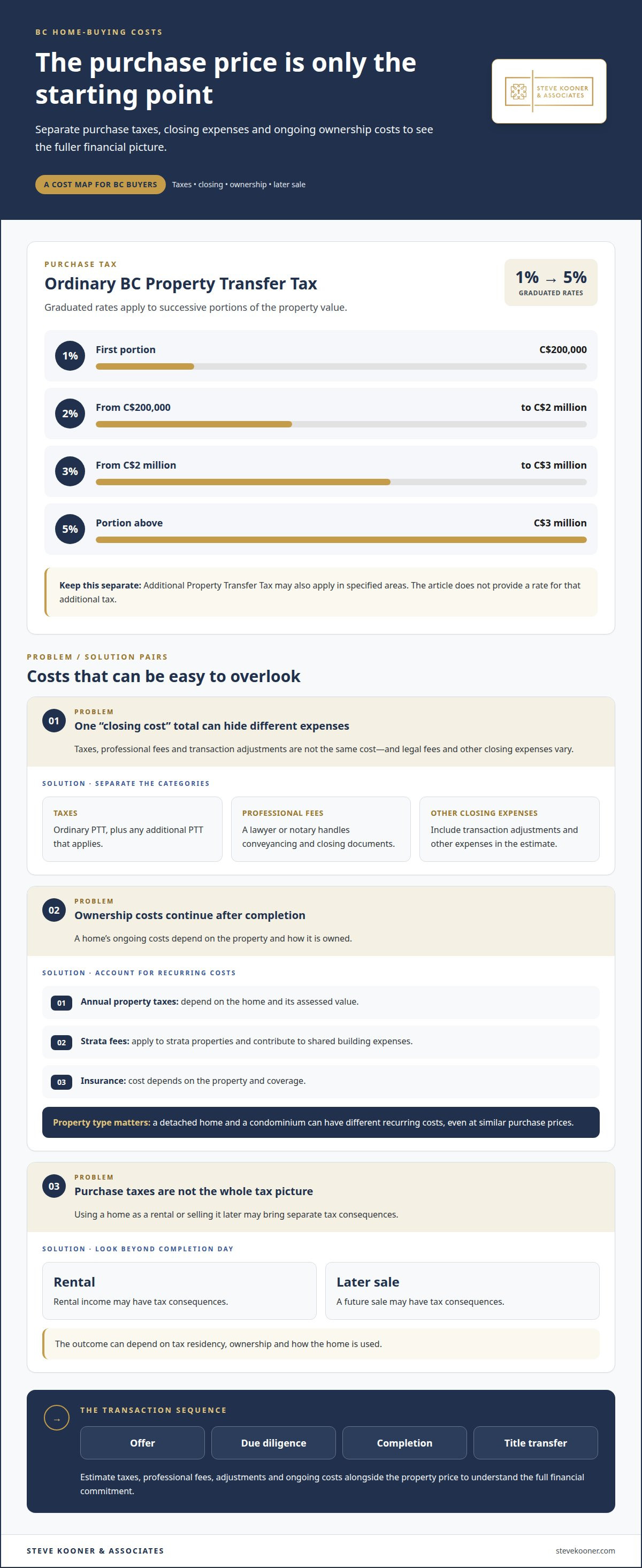
BC’s ordinary Property Transfer Tax (PTT) uses graduated rates: 1% on the first C$200,000, 2% from C$200,000 to C$2 million, 3% from C$2 million to C$3 million, and 5% above C$3 million. The cost of buying a home in BC as a non-resident may also include Additional Property Transfer Tax in specified areas, so estimate the ordinary tax separately from any additional tax that applies.
Taxes can matter after the purchase, too. Rental income and a later sale may have tax consequences based on tax residency, ownership and how you use the home. These are separate from purchase taxes. When buying a home in BC as a non-resident, look beyond completion day and consider how you plan to use or eventually sell the property. For international investors also comparing opportunities in other markets, resources like spaindinavia.com provide helpful perspectives on living and buying property abroad.
Annual property taxes, strata fees and insurance affect ongoing ownership costs. Property taxes depend on the home and its assessed value. Strata fees apply to strata properties and contribute to shared building expenses, while insurance costs depend on the property and coverage. A detached home and a condominium can therefore have different recurring costs, even at similar purchase prices.
A transaction typically involves an offer, due diligence, completion and title transfer. A lawyer or notary handles conveyancing and closing documents. Legal fees and other closing expenses vary, so ask for an estimate that separates taxes, professional fees, adjustments and ongoing costs. Include these categories alongside the property price to understand the full financial commitment.
Steve Kooner & Associates: Market Analysis & Buying Strategy
Steve Kooner & Associates helps buyers turn BC market information into a clear property-buying strategy. Once you understand eligibility rules and likely costs, market analysis can help you compare homes, locations and purchase options against your priorities. This is useful when weighing a presale against a completed home or considering how a detached property fits your plans. The team supports presale, new-construction and detached single-family home purchases, helping you assess opportunities with a stronger understanding of the local market.
If you’re ready to discuss your BC home search, contact Steve Kooner & Associates.
Shape your next move in BC
For anyone buying a home in BC as a non-resident, the next step is to turn the rules into a property-specific plan. Start with what you want the home to do for you, then consider location, property type and ownership plans together. This keeps your search aligned with your priorities instead of letting a promising listing set the agenda. A clear buying strategy also provides a useful basis for discussing property options and deciding what deserves closer attention.
Steve Kooner & Associates can help you assess the local market and refine your approach around the kind of home you’re seeking. If you’re ready to discuss your plans, contact Steve Kooner & Associates.
A well-considered plan can help you move forward with greater clarity and confidence.
Frequently Asked Questions
Can non-residents buy residential property in British Columbia, Canada?
Some can, but “non-resident” alone does not determine eligibility. Federal rules focus on whether a buyer is a non-Canadian and whether the property is covered; exceptions and exclusions may apply. For example, a property outside a Census Metropolitan Area or Census Agglomeration is excluded from the federal prohibition. Consider the buyer’s status and the specific property together before proceeding.
What is Canada's foreign buyer ban, and which exemptions apply in British Columbia?
Canada’s foreign-buyer ban restricts non-Canadians from purchasing covered residential property, subject to exceptions. International students, temporary residents, certain specifically exempted foreign nationals, and refugee claimants may qualify under conditions. A temporary resident with a confirmed full-time work permit lasting 12 months or longer may also have a different BC tax result, subject to applicable requirements. Federal eligibility and provincial tax treatment are separate tests.
Does British Columbia charge a foreign buyer property transfer tax, and how much is it?
Yes. In BC’s specified areas, the Additional Property Transfer Tax is 20% of the fair market value of the residential portion for a foreign national, foreign corporation, or taxable trustee buying covered property. This tax is separate from ordinary Property Transfer Tax, so eligible purchasers should account for both when estimating purchase funds. The additional tax depends on the buyer category and property’s residential value.
What are the rules for foreign buyers purchasing property in Metro Vancouver and other specified areas of BC?
For BC’s Additional Property Transfer Tax, the 20% rate applies when a foreign national, foreign corporation, or taxable trustee buys covered residential property in a specified area. Check the property’s exact location, not just a broad regional label such as Metro Vancouver. Separately, federal eligibility depends on the buyer and property; federal exclusions for some locations do not automatically determine BC tax treatment.
Disclaimer
"Not intended to solicit buyers or sellers that are under current agency agreement" "Each RE/MAX office is independently owned and operated"


