

Co-buying a home in BC can make a purchase more achievable, but it also ties each buyer to the same mortgage. Lenders assess co-borrowers together, and each borrower may be responsible for the full mortgage debt, even if the co-owners privately agree to split payments differently.
It’s understandable to focus first on combining incomes and savings. A successful shared purchase also depends on agreeing how to divide the down payment, closing costs, mortgage payments, and upkeep, as well as what happens if someone wants to sell or faces a major life change. This guide explains how co-buyers may qualify for a shared mortgage, structure ownership and contributions, plan for ongoing expenses, and prepare for a co-owner’s default, separation, death, or another unexpected change. Addressing these decisions early helps you weigh the opportunity alongside the responsibilities and make a more informed choice together.
Key Takeaways
- Choose an ownership structure that reflects each buyer’s intended share and what should happen to that share if circumstances change.
- A written co-ownership agreement can clarify how contributions, shared expenses and exit decisions will be handled.
- Understand how a co-owner’s default, death or decision to sell could affect everyone’s stake in the property.
- Steve Kooner & Associates can provide market analysis and buying strategy to help co-buyers assess a property and plan their purchase.
Co-owner default, death, incapacity, divorce, or bankruptcy
Co-ownership means multiple people share ownership of one property. Friends, relatives, partners, or other buyers can purchase together, with their interests recorded on title. First-time buyer and other BC or federal housing incentives may apply when buyers and the purchase meet each program’s eligibility rules. Each co-buyer should assess their eligibility under the specific program.
The average house price across British Columbia was reported as over C$1 million. This province-wide benchmark can help co-buyers frame their contributions, though individual purchase prices vary by property and community.
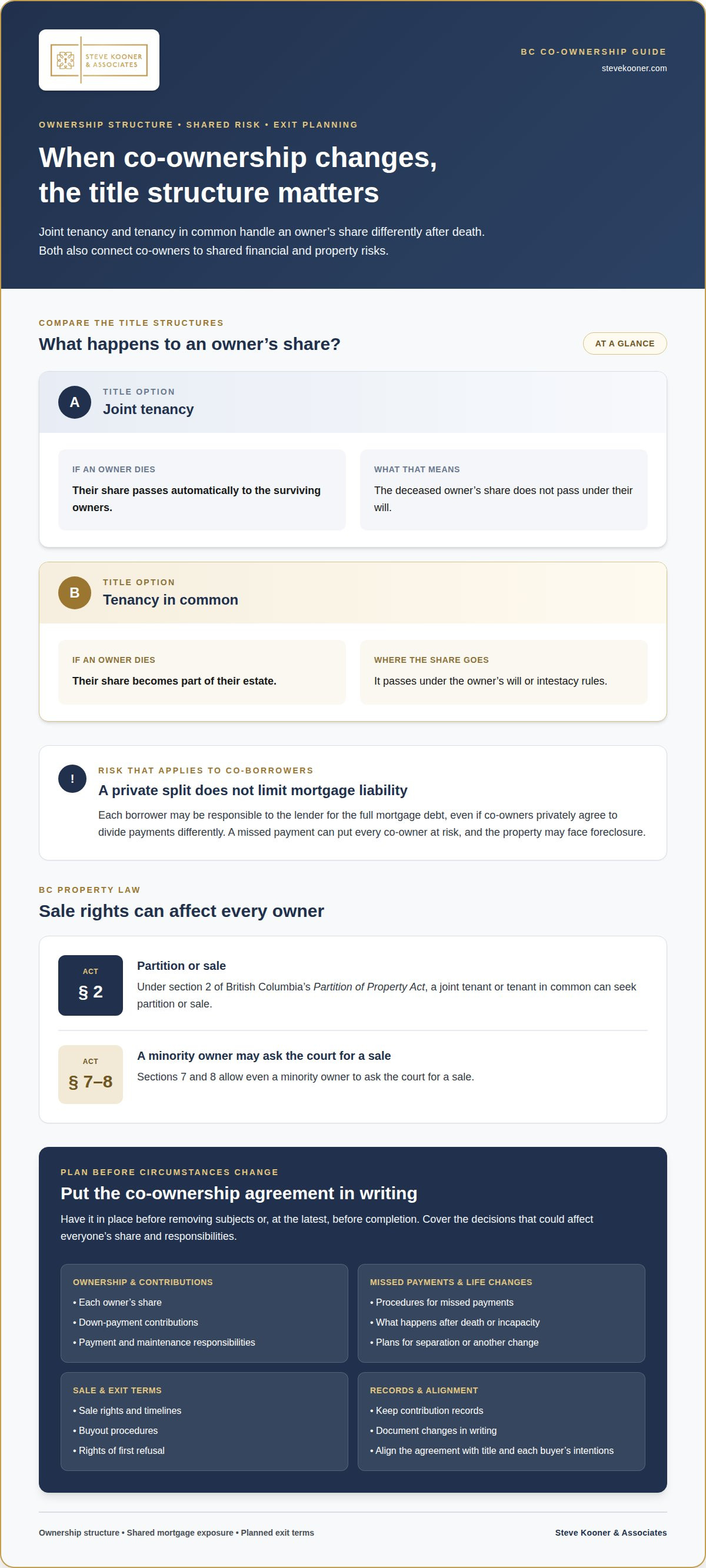
A missed mortgage payment can put every co-owner at risk: borrowers may each be liable for the full debt, and the property may face foreclosure. Under section 2 of British Columbia’s Partition of Property Act, a joint tenant or tenant in common can seek partition or sale. Sections 7 and 8 of the Act allow even a minority owner to ask the court for a sale.
Death can change who owns the property. With joint tenancy, a deceased owner’s share passes automatically to the surviving owners rather than under their will. A tenant in common’s share forms part of their estate and passes under their will or intestacy rules. Separation, incapacity, or bankruptcy can also disrupt payment and ownership plans.
Put a written ownership agreement in place before removing subjects or, at the latest, before completion. Include each owner’s share, down-payment contributions, payment and maintenance responsibilities, procedures for missed payments, and what happens if someone dies, becomes incapacitated, separates, or wants to sell. Address sale rights, timelines, and rights of first refusal. Keep records of contributions and document changes in writing. Legal advice can help align the agreement with the title and each buyer’s intentions.
Shared mortgage qualification and down payments
In British Columbia, a shared mortgage connects co-buyers’ financing and purchase obligations. When co-buying a home in BC, understanding each buyer’s application and contribution helps the group set a realistic purchase budget.
Shared Mortgage Qualification
A shared mortgage is financing assessed for co-buyers together rather than for one purchaser alone. Lenders typically assess each buyer’s income and credit and require co-owners to appear on both title and the mortgage. They also expect co-borrowers to occupy the property together. Understanding how lenders assess unique career and income circumstances is often key to securing financing, much like how specialized advisory services such as Mortgages for Doctors assist medical professionals navigating complex borrowing criteria in the UK. When co-buying a home in BC, a real estate professional can guide buyers from pre-approval through property selection, offer writing, negotiation, contract management, and closing. The lender makes the financing decision.
Down Payments and Capital Contributions
Capital contributions are the funds each buyer brings toward the purchase, including the down payment and closing costs. Lending institutions in British Columbia usually require a down payment of at least 5 to 10 per cent of the purchase price. A property worth more than C$1 million requires a 20 per cent deposit under the stated mortgage rule. Buyers can agree how to divide initial contributions and ongoing payments, then document those shares. A mortgage payment estimate can help frame a monthly budget, but it isn’t lender approval.
Co-Borrower Mortgage Liability
Co-borrower liability means each signer is responsible for repaying the shared mortgage. Each borrower is often liable to the lender for the full debt, even when a private agreement divides payments differently. A buyer contributing a smaller share could still face the full obligation if another borrower defaults. That exposure matters when assessing financing capacity and potential disputes. A private cost-sharing arrangement doesn’t change the lender’s rights under the mortgage.
Sharing purchase contributions and ongoing costs
The Property Transfer Tax Act applies to property purchases in British Columbia. Co-buyers should include property transfer tax and other closing costs in their shared budget, then record how each person contributes. The amount payable depends on the purchase and applicable circumstances, so don’t assume co-buying automatically reduces the tax.
Ownership shares and payment contributions can differ. For example, friends buying as tenants in common might agree to a 70/30 ownership split, reflecting unequal contributions. Record the agreed shares on title and in the ownership agreement. That clarity helps distinguish an owner’s legal interest from informal expectations about who paid more.
Set out how the co-owners will divide recurring expenses, including mortgage payments, maintenance, repairs, and related costs. An agreement might assign routine upkeep equally while allocating a major repair according to ownership shares. Keep invoices and payment records together, and document any change in contributions. Clear records can help lawyers address disputes if circumstances change.
Plan for changes before they arise. If one owner wants to sell, section 2 of British Columbia’s Partition of Property Act allows a joint tenant or tenant in common to seek partition or sale. A written agreement can explain how a proposed sale, buyout, or right of first refusal works. For a separated couple with children, agreed timelines and occupancy arrangements can reduce uncertainty during a housing transition.
Steve Kooner & Associates: Market Analysis & Buying Strategy
Steve Kooner & Associates helps co-buyers assess BC properties and shape a buying strategy around their shared priorities. Market analysis can support decisions about a home’s fit, while offer writing and negotiation help move a chosen property toward purchase. This guidance is useful once buyers have discussed ownership shares, contributions, and the kind of home they want.
Whether you’re considering a detached home, presale, or new construction, align the property choice with your group’s plans and budget. A clear strategy helps co-buyers compare options and approach the purchase with shared expectations.
Contact Steve Kooner & Associates to discuss your shared home purchase.
Move Forward with a Shared Plan
When co-buying a home in BC, the next step is turning shared intentions into a decision everyone can stand behind. Agree on what matters most in a property, where each buyer can be flexible, and how you’ll make choices if priorities differ. A clear conversation now can help keep your home search focused and your partnership constructive.
Bring your co-buyers together to discuss the kind of home that fits your shared plans. Then connect those priorities to local real estate options and a practical buying strategy. You don’t need every future detail resolved before moving forward, but each buyer should understand the direction and feel heard.
With open communication and a shared direction, you can take the next step with confidence.
Frequently Asked Questions
Why co-ownership?
Co-ownership lets buyers combine resources and share responsibility for a property. It can make more housing options practical, help people build community, or let an owner downsize without leaving home. For example, friends might purchase together to access a home neither could comfortably buy alone. The arrangement works best when everyone’s goals, intended use, and expectations for future decisions are compatible.
What Are The Benefits To Home Buying With A Friend?
Buying with a friend can pool savings, broaden the range of properties you can consider, and divide household responsibilities. For instance, one friend might contribute more of the initial funds while the other handles more upkeep, if both agree. Put those arrangements in writing and discuss how they could change if a friendship, job, or household plan changes. Shared ownership also means coordinating decisions, not just expenses.
How much down payment is required to buy a home jointly in BC?
In British Columbia, lending institutions usually require a down payment of at least 5 to 10 per cent of the purchase price. A property worth more than C$1 million requires a 20 per cent deposit under the stated mortgage rule. Buying jointly doesn’t automatically lower the required percentage. The co-buyers can combine their contributions, but the applicable amount depends on the property and financing terms.
How do BC mortgage lenders assess co-buyers’ income, credit, and debt?
Lenders typically assess each co-buyer’s income and credit as part of the shared application. They also generally expect co-borrowers to occupy the property together and to be named on both title and mortgage. Each buyer’s financial profile contributes to the application, so co-buyers should discuss existing obligations and how they’ll manage payments together. The lender determines qualification based on its assessment of the application.
What legal ownership options are available to co-buyers in BC: joint tenancy or tenancy in common?
Joint tenancy and tenancy in common are the main ways co-buyers can hold title in British Columbia. Joint tenants hold the property together, and a deceased owner’s interest passes automatically to surviving owners. Tenants in common can hold unequal shares, such as 60/40, and an owner’s share forms part of their estate. The title should reflect the arrangement the buyers intend.
Disclaimer
"Not intended to solicit buyers or sellers that are under current agency agreement" "Each RE/MAX office is independently owned and operated"


