

What if sharing the cost of a home is the easy part, and deciding what happens later is the real challenge? Buying property with a friend in BC can make homeownership feel more attainable, but unequal contributions, shared expenses and changing plans can put pressure on your finances and friendship.
Before you commit, discuss more than the purchase price. This guide covers joint tenancy versus tenancy in common, how to record contributions and responsibilities, and what to plan for if one of you wants to sell or can’t keep paying. You’ll also find ways to compare co-ownership with buying separately or waiting, plus questions to raise with legal and mortgage professionals. A written plan can help you make decisions together, while local buyer representation can help you assess Fraser Valley properties, prepare an offer and coordinate the purchase process.
Key Takeaways
- Before buying property with a friend in BC, weigh shared ownership against purchasing separately or waiting until your circumstances change.
- Set shared search criteria by aligning your budget, preferred locations, property type and expectations for living in the home.
- Discuss routine costs, repairs and major decisions, then put your agreed approach in writing before making an offer.
- Use local market insight to assess Fraser Valley properties, prepare an offer and coordinate the steps toward purchase.
Buying Property with a Friend in BC: Is Shared Ownership Right for You?
Buying together can bring a shared goal within reach, but friendship alone won’t settle who pays for a repair, gets to use the spare room or decides when to sell. Before buying property with a friend in BC, compare co-ownership with buying separately or waiting. Shared ownership combines resources and decisions. Buying separately keeps each person’s property choices independent, while postponing gives you more time to save or clarify your plans. Consider which approach fits both your finances and expectations, without assuming that any option guarantees a particular purchase outcome.
What should friends compare before choosing how to own a BC property?
BC co-owners commonly register as joint tenants or tenants in common, two forms of concurrent estate. Joint tenancy includes a right of survivorship: if an owner dies, their interest generally passes to the surviving joint owner or owners. Tenancy in common allows owners to hold different shares, and an owner’s interest generally forms part of their estate. Ask a BC lawyer how each form of registration, along with any co-ownership agreement, applies to your circumstances.
Choose a title structure that matches your intentions, and record how contributions relate to ownership. A larger down payment doesn’t, by itself, determine how you’ll divide ongoing expenses, make decisions or share sale proceeds. Discuss those details, and agree on how a potential buyout would be handled, before making an offer.
| Consideration | Joint tenancy | Tenancy in common |
|---|---|---|
| Control | Owners share ownership; plan decisions together. | Owners share ownership; agree how decisions work. |
| Contributions | Record each person’s payments separately from title assumptions. | Ownership shares can reflect different contributions if properly documented. |
| Future changes | Survivorship affects what happens on an owner’s death. | An owner’s share generally passes through their estate. |
Whatever form of ownership you choose, discuss how one friend can exit and what happens if you disagree. A lawyer can help put your intentions into clear documents.
How to Prepare for Buying a Property Together in BC
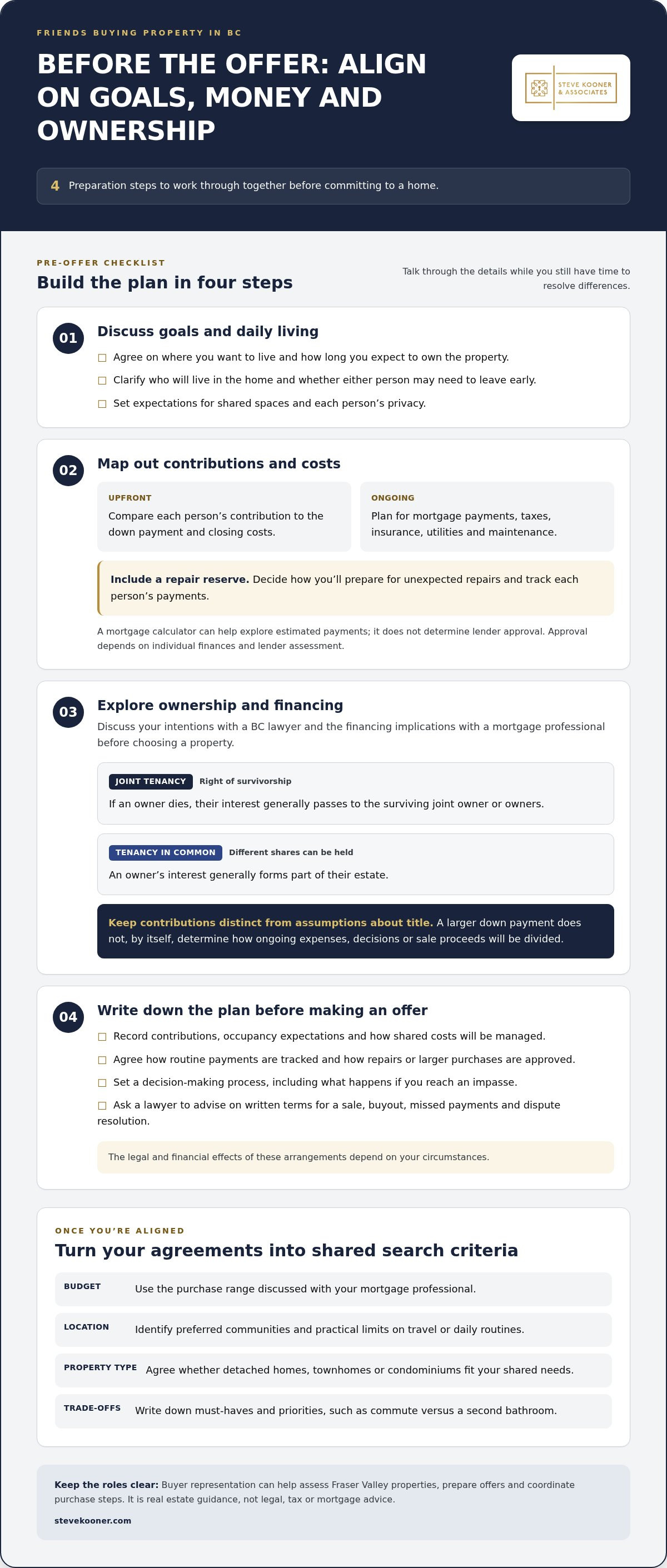
A clear pre-offer process turns good intentions into decisions you can act on. If you’re buying property with a friend in BC, work through these steps before committing to a home:
- Discuss your goals. Agree on where you want to live, how long you expect to own the property, who will occupy it and whether either of you may need to leave early. Talk through how you’ll use shared spaces and what privacy each person expects.
- Map out the finances. Compare what each person can contribute toward the down payment and closing costs. Then plan for mortgage payments, taxes, insurance, utilities, maintenance and a reserve for unexpected repairs. A mortgage calculator can help you explore estimated payments, but it doesn’t determine what a lender will approve. Approval depends on individual finances and lender assessment.
- Explore ownership and financing. Consider how title could reflect your intentions and contributions. Speak with a BC lawyer about the legal structure and a mortgage professional about financing implications before choosing a property.
- Write down the plan. Record agreed contributions, occupancy expectations and how you’ll manage shared costs and decisions. Do this before making an offer, so you can address disagreements while you still have time to work through them.
What belongs in a friends’ co-ownership plan?
Set out who pays each recurring expense, how payments will be tracked and how you’ll approve repairs or larger purchases. Agree on a decision-making process, including what to do if you reach an impasse. Ask a lawyer to advise on written terms for a sale, buyout, missed payments and dispute resolution. The legal and financial effects of these arrangements depend on your circumstances.
The Government of British Columbia’s website disclaimer explains limitations on government website content. For your property search, Steve Kooner & Associates provides local buyer representation to help assess Fraser Valley options, prepare offers and coordinate purchase steps.
Buying Together in the Fraser Valley: Turn Your Plan into a Property Search
Once you’ve agreed on how to approach the purchase, turn those decisions into search criteria you can both use. Buying property with a friend in BC is easier to coordinate when you share a budget, preferred communities, property type and clear expectations for how the home will fit your plans.
How can co-buyers keep a property search and offer aligned?
Write down your must-haves and trade-offs before viewing homes. For example, you might agree that a shorter commute matters more than a second bathroom, or that a condominium is an option if it meets your shared needs. Decide who will communicate questions and feedback, and how both friends will approve important choices. These simple ground rules can help prevent mixed messages when a property catches your interest.
- Budget: Use the purchase range you’ve discussed with your mortgage professional.
- Location: Identify preferred communities and practical limits on travel or daily routines.
- Property type: Agree whether you’re considering detached homes, townhomes or condominiums.
- Ownership plan: Keep your occupancy and decision-making expectations in mind as you assess each property.
Steve Kooner & Associates helps buyers evaluate Fraser Valley properties, understand local market context, prepare and negotiate offers, and coordinate transaction steps. Buyer representation is real estate guidance, not legal, tax or mortgage advice. Take those questions to the appropriate professionals. A shared search works best when both buyers stay involved, share feedback and communicate decisions promptly.
To discuss your property search and buying plans, contact the Fraser Valley real estate team.
Take Your Shared Purchase from Plan to Progress
Start with a shared conversation about what you want your home and investment to make possible. Before viewing properties, agree on how you’ll evaluate options and what would make you pause. That clarity can keep decisions on track when you have different priorities or your plans change.
If buying property with a friend in BC feels like the right direction, Steve Kooner & Associates can help you explore Fraser Valley properties, assess your options and prepare an offer. The team is ranked in the Top 1% of Fraser Valley Real Estate Board teams and recognized among Western Canada’s Top 100. Its local buyer representation and offer support can help you move from search criteria to a considered purchase decision.
Begin by agreeing on your priorities, then take the next step together with a clear plan.
Frequently Asked Questions
Can friends buy a house together in BC?
Yes, friends can buy a home together in BC, including in Langley, Abbotsford, Chilliwack, Mission, Hope, Kent, Agassiz, Harrison Hot Springs, the Township of Langley, Surrey, North Delta, Maple Ridge and Pitt Meadows. Whether a purchase works depends on title choices, lender assessment and each buyer’s finances. Agree on expectations before making an offer, and get legal and mortgage advice.
What is the difference between joint tenancy and tenancy in common in BC?
Joint tenancy generally includes a right of survivorship, meaning an owner’s interest may pass to the surviving owner or owners when they die. Tenancy in common allows owners to hold defined shares, which may be unequal, and an owner’s interest generally forms part of their estate. The consequences depend on the circumstances, so get BC legal advice before choosing how to register title.
Should friends sign a co-ownership agreement before buying property?
It’s wise to discuss and document an agreement before buying property with a friend in BC. Along with contributions, expenses and use of the home, clarify how you’ll keep payment records and update the arrangement if circumstances change. A qualified legal professional can prepare or review terms suited to your situation. A written plan can reduce uncertainty, but it can’t guarantee that disagreements won’t arise.
What happens if one friend wants to sell the property?
There isn’t one outcome that applies to every co-owned home. The registered ownership, any agreement, mortgage arrangements and applicable law can all affect the options available. Before purchasing, discuss whether you might sell, have one friend buy out the other or consider another resolution, and decide how you’d approach disagreement. A lawyer can advise on your specific rights and obligations before you act.
Disclaimer
"Not intended to solicit buyers or sellers that are under current agency agreement" "Each RE/MAX office is independently owned and operated"


