

A right of way is a type of easement, but not every easement allows travel across land. That distinction is central to understanding what easements and rights of way are and what each permits. In British Columbia, both involve using another property for a defined purpose without transferring ownership.
It’s reasonable to wonder whether an easement could limit your plans, remain in place after a sale, or influence what a buyer will pay. The answer depends on the rights it grants, the land it affects, and how its terms relate to the property’s intended use. This guide explains the difference between easements and rights of way, how their scope and transferability work, and how they may affect property value, helping you assess the details more clearly when buying or selling in BC.
Key Takeaways
- Identify the purpose and area covered by an easement or right of way to understand how it may affect access and property use.
- Review the registered terms, not just how a shared driveway or access route is currently used.
- Understand whether the rights are tied to the property or to a particular person, since that can affect what happens after a sale.
- Consider how the easement’s practical impact, including any limits on future plans, could shape a property’s appeal and value.
Does an easement or right of way impact my property value?
In British Columbia, utility, drainage, and shared-access easements can affect how a buyer uses a property. Their practical impact depends on the area covered and how it relates to access, improvements, and intended use.
Travel, Road, and Utility Rights-of-Way
A road right of way identifies a route across land, while a utility right of way may provide access to infrastructure. In a Fraser Valley purchase, a route serving a home behind another property may be essential for practical access. Its location and permitted use matter, particularly if it crosses a planned driveway or building area.
Utility Easements and Property Improvements
A utility easement can affect plans for additions, fences, or landscaping. For example, a proposed fence might overlap land reserved for utility access. The impact depends on the easement’s boundaries and terms, and on whether the improvement would interfere with its purpose. That restriction may shape how a buyer views the property’s potential.
Utility Access and Maintenance
A utility access or maintenance easement allows infrastructure work on the affected land. If a Langley property has one beside a driveway, the rights may affect how that space is used during maintenance. The easement does not necessarily prevent improvements, but its effect on usable space and access may influence the property’s appeal.
In British Columbia, title documents and surveys can help identify registered easements and show their locations. Rules and procedures vary across Canada, so this guide focuses on BC. The property’s recorded terms and location are key to understanding the rights involved.
Finding Easements on Titles and Surveys
For a BC property, review the title documents for registered easements and compare them with a survey showing boundaries and features. This can help locate an affected strip near a building or driveway. If a planned improvement falls within that area, the documents can clarify potential issues before you proceed with a purchase or construction plan.
Differences between easements and rights-of-way
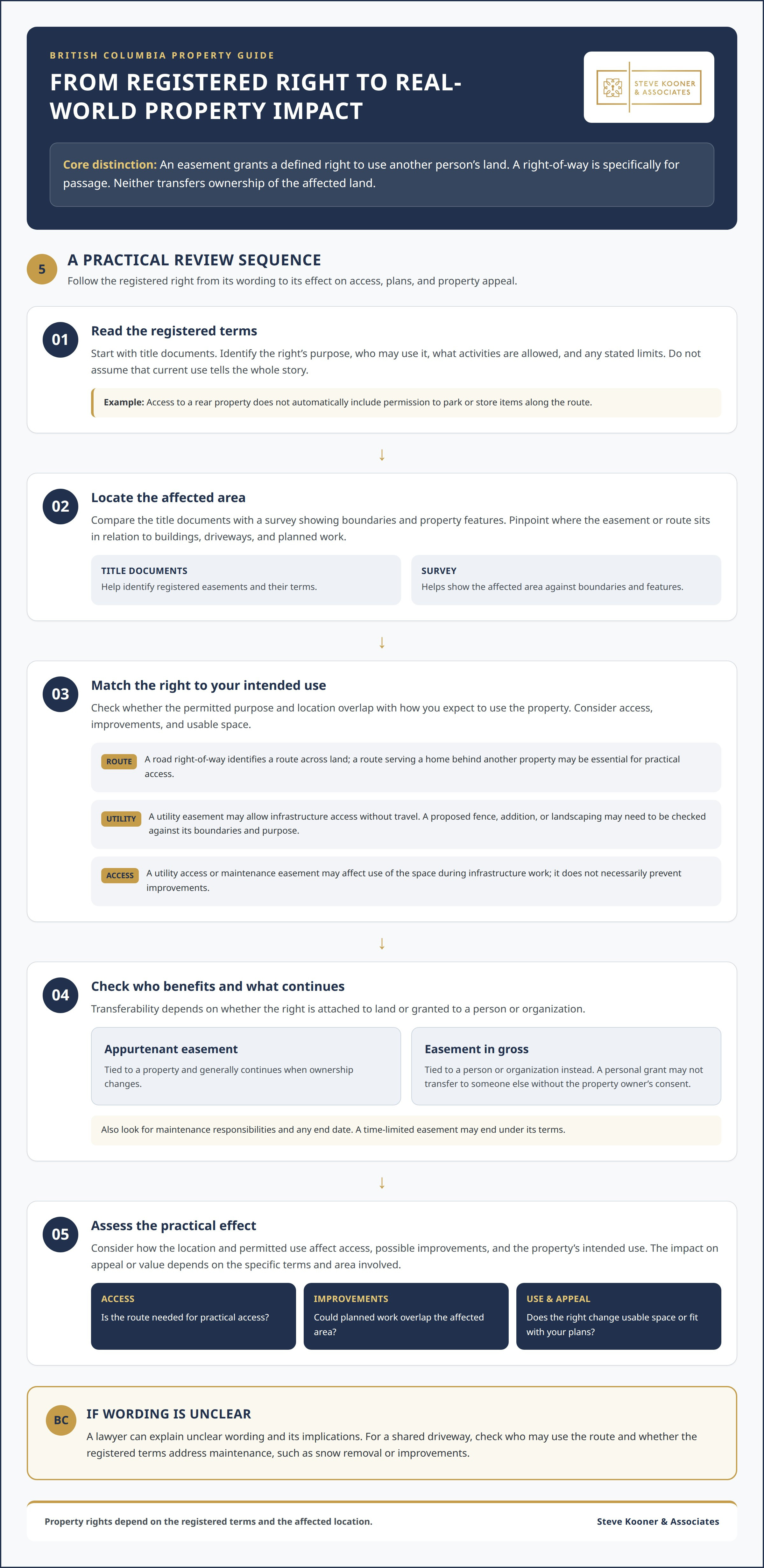
If you’re asking what easements and rights of way are, the key distinction is purpose. An easement grants a defined right to use another person’s land, while a right-of-way is specifically for passage. A utility easement may permit infrastructure access without travel; a driveway right-of-way lets a neighbour cross a designated route. Neither transfers ownership of the affected land.
Understanding what easements and rights of way permit starts with how the right was created. An express easement may appear in a deed, will, or contract. Others may arise implicitly from circumstances or actions. An easement by necessity may provide access across private land to a road or utility. In some circumstances, continued use of another person’s land may be relevant to establishing an easement.
For a shared driveway, the right-of-way terms define who may use the route and for what purpose. Neighbours may also need to clarify responsibility for snow removal or improvements. Do not assume that existing use settles these details: written terms may set different limits or obligations.
A private right of way generally provides a person or property with access across another parcel. A public right of way on private land may allow people to cross a designated area to reach a public place. A shared driveway serving neighbouring homes is not necessarily open to general public use.
When buying in British Columbia, consider the route’s purpose, users, location, and maintenance arrangements. These details help you understand how the right may affect access and your plans for the property.
Easement scope and transferability
Understanding what easements and rights of way are means looking beyond their names to the exact rights they grant. The wording may specify who can use the land, which area is affected, and what activities are allowed. For example, access to a rear property does not automatically permit parking or storage along the route.
Transferability depends on whether the right is attached to land or granted to a particular person or entity. An appurtenant easement is tied to a property and generally continues when ownership changes. An easement in gross is tied to a person or organization instead. A personal grant may not transfer to someone else without the property owner’s consent.
If you’re asking what easements and rights of way mean for a purchase, focus on the registered terms and the property’s intended use. Owners must respect the rights granted, while easement holders must stay within the authorized purpose and area. For shared access, the document may also specify maintenance responsibilities.
Review the registered wording and any plan showing the affected area. Identify the beneficiary, permitted activities, maintenance responsibilities, and any end date. A right attached to land may continue after a sale, while a time-limited easement may end under its terms. A lawyer can explain unclear wording and its implications before you proceed with a purchase.
Discuss your property purchase
Steve Kooner & Associates
Steve Kooner & Associates helps buyers and sellers factor easements into residential property decisions across the Fraser Valley. If a right-of-way or utility easement affects access, planned use, or a property’s appeal, the team can bring that detail into the broader purchase or sale strategy.
For a home purchase, real estate market guidance and offer review can help you assess how an easement’s location and permitted use fit your plans. The team supports purchases of detached homes, townhomes, condominiums, presales, and new construction. For sellers, understanding how a registered right affects the property can inform pricing strategy and how its features are presented to potential buyers.
For interpretation of legal wording or advice about legal rights, consult a lawyer. For help considering the property’s market and transaction, contact Steve Kooner & Associates.
Make your next property decision with clarity
Understanding what easements and rights of way are is a starting point, not the whole decision. Before committing to a property in British Columbia, consider whether its recorded rights align with how you plan to live, build, or access the land. Including these practical priorities in your purchase or sale strategy can help you make a more informed decision.
Steve Kooner & Associates can help you consider property-specific concerns as part of your broader real estate decision. For questions about legal wording or obligations, a lawyer can explain the legal implications. Keeping these roles clear helps you make a grounded plan rather than rely on assumptions about how the land may be used.
A thoughtful plan can help you approach your next property decision with greater confidence.
Frequently Asked Questions
What Is an Easement?
An easement is a right to use another person’s land for a defined purpose. For example, a drainage easement may allow access to maintain a drainage feature while the property owner retains ownership. The right is limited by its terms, so permission to access land for drainage work does not automatically allow unrelated activities.
Is There an Existing Easement Not Documented Properly?
Yes, a property may have a claimed or legally recognized easement that is not clearly shown in its registered title records. Some utility easements may exist even when they are not registered on title, and longstanding use can raise questions about access rights. If the title, site conditions, or a neighbour’s use conflict, a British Columbia real estate lawyer can assess the documents and circumstances.
Is your easement on property status always correct?
No single record necessarily tells the whole story. A title search can identify registered instruments, but may not show how an easement aligns with a fence, building, or driveway on the ground. Compare the registered document with a survey and the property’s actual layout. If details conflict, get legal advice before relying on an assumption.
Should I worry about an easement when buying a home in British Columbia?
An easement deserves careful attention if your plans or access depend on the affected area. For example, consider whether practical vehicle access to the home relies on a route across another parcel and whether the recorded rights support that use. Before deciding on a purchase, ask a British Columbia real estate lawyer to assess how the easement may affect your plans.
What Is Right-of-Way?
A right of way is an easement that gives someone a defined right to pass over land. For example, it may allow a neighbour to travel along a specified route to reach a home behind another property. It does not transfer ownership of the route, and permission to pass does not necessarily include parking, storage, or other uses.
Disclaimer
"Not intended to solicit buyers or sellers that are under current agency agreement" "Each RE/MAX office is independently owned and operated"


