

A condo isn’t automatically the easier downsize. For many Fraser Valley homeowners, townhomes for downsizers offer a useful middle ground: more space and a house-like layout, while a condo may suit those seeking less exterior upkeep. The equity you can use for your next home depends on your current home’s value, remaining mortgage, and the cost of your next purchase.
Look beyond the asking price. Stairs, maintenance responsibilities, monthly fees, and a layout that will work for you over time all affect whether a townhome or condo is a better fit. Steve Kooner & Associates have prepared this guide to compare the options, explain how to estimate the equity available after costs, and consider Fraser Valley communities, from Langley and Abbotsford to Chilliwack, Mission, Hope, Kent, Agassiz, Harrison Hot Springs, Surrey, North Delta, Maple Ridge, Pitt Meadows, and the Township of Langley.
Key Takeaways
- Compare stairs, storage, upkeep and monthly fees to decide whether a townhouse or condo better fits your needs over time.
- Estimate your net equity by accounting for the next home’s purchase price and closing costs, which can be about 1.5% to 4% of the purchase price.
- Plan sale-and-purchase timing around your budget and carrying costs; selling first can help set a firmer spending limit.
- Explore Fraser Valley communities such as Langley, Surrey and Abbotsford by weighing local amenities and connections against the home layout you want.
1. Should You Downsize to a Townhouse Instead of a Condo?
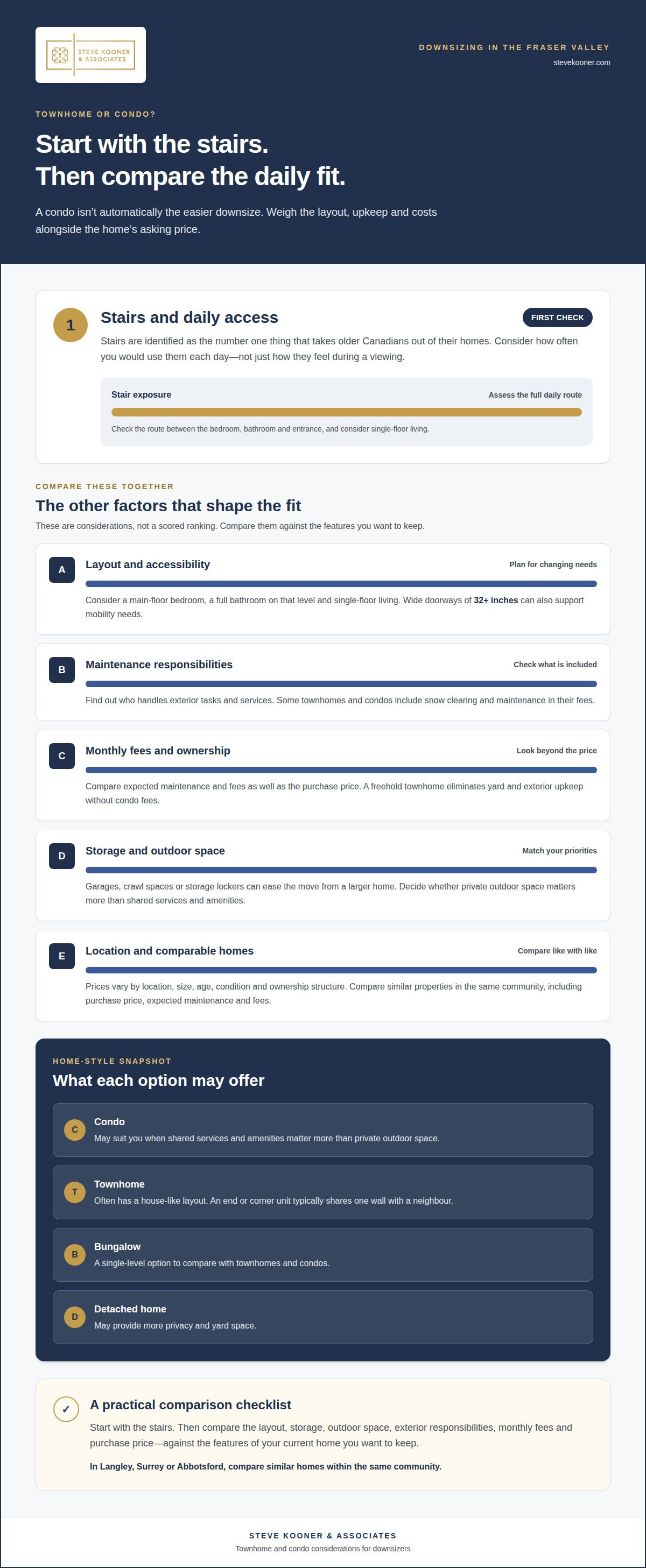
Townhomes for downsizers can offer a middle ground between a condo and a detached home. Prices vary by location, size, age, condition, and ownership structure, so compare similar properties in the same community rather than relying on a broad average. In Langley, Surrey, or Abbotsford, weigh the purchase price alongside expected maintenance and fees.
A condo may suit you if shared services and amenities matter more than private outdoor space. A townhouse often has a house-like layout, and an end or corner unit typically shares one wall with a neighbour. A bungalow can offer single-level living, while a detached home may provide more privacy and yard space. Start by deciding which features of your current home you want to keep.
Useful features for aging in place include a main-floor bedroom, a full bathroom on that level, and single-floor living. Wide doorways of 32+ inches can also support mobility needs. Since stairs are the number one thing that takes older British Columbians out of their homes, consider how often you’d use them each day, not only how they feel during a viewing. Townhomes for downsizers with garages, crawl spaces, or storage lockers can ease the move from a larger home.
For lower maintenance, check which exterior tasks and services are included in the ownership arrangement. Some townhomes and condos include snow clearing and maintenance in their fees. Freehold townhomes eliminate yard and exterior upkeep without condo fees. Single-level and bungalow-style homes are options to consider in British Columbia; compare their layouts with townhomes and condos in Fraser Valley communities such as Langley, Surrey, and Abbotsford.
2. How much equity will I unlock by downsizing?
Estimate your available equity in stages. Start with the expected sale proceeds from your current home, then subtract its mortgage balance and selling expenses. From what remains, deduct the smaller home’s purchase price and buying costs. Fraser Valley homeowners typically free up more than C$200,000 in equity when downsizing, though your result depends on your home’s value, debt, and next purchase.
Include upfront costs in your calculation. Typical purchase closing costs can be about 1.5% to 4% of the purchase price. In British Columbia, property transfer tax and registration fees can affect closing costs. Moving expenses also affect your net proceeds; the distance, belongings, packing needs, and move date shape the total. Budget for them alongside closing costs, not after choosing a listing.
Monthly affordability matters just as much as cash released. Compare mortgage payments, property taxes, utilities, maintenance, and any condo or strata fees. The stated affordability benchmark treats housing costs as affordable when they’re no more than 30% of gross income. A smaller home may reduce upkeep, but fees and financing can change the monthly picture.
For sale-and-purchase timing, selling before buying is usually preferable: it gives you a firm budget and helps avoid carrying two properties. Spring or fall can bring stronger buyer attention in the Fraser Valley. Also account for stairs, bedroom needs, and square footage before setting your search criteria. If rental or business use applied to your home, part of the gain may be taxable; a home used solely as your principal residence throughout ownership generally has tax-free gains. A home value assessment can help anchor your planning for the next chapter.
3. Fraser Valley neighbourhoods for downsizers
Start with the routines you want to keep, then map them against Fraser Valley communities. Langley, Abbotsford, and Chilliwack each offer different settings and real estate choices. Compare each area with your preferred lifestyle, daily living needs, and familiar social connections before leaving a detached home.
Langley, Abbotsford, and Chilliwack may appeal to buyers who value nearby community amenities. These Fraser Valley communities provide different settings for assessing how a smaller home fits appointments, recreation, and regular errands. Consider the locations and services you use most when comparing potential homes.
Preserving neighbourhood ties can be a strong reason to move locally rather than farther away. List the people, activities, and services you use most, then compare travel routes from possible homes in Langley, Abbotsford, or Chilliwack. A shorter trip to familiar places can support continued visits and routines while your home’s size and upkeep change.
Age-restricted townhome communities set eligibility terms in their governing documents, so read each community’s criteria before deciding. For accessibility and safety, consider single-floor living, a main-level bedroom and full bathroom, and wide doorways of 32+ inches. Assess stairs in person, including the route between the bedroom, bathroom, and entrance. Compare these features alongside maintenance and amenities, not just square footage.
Steve Kooner & Associates: Presale Home Sales & Purchases
Steve Kooner & Associates can help you compare presale and new construction homes with established townhomes and condominiums across British Columbia as you plan a downsize. Turn to the team when weighing a newly built home against an established property, or deciding whether to sell your detached home before buying your next one. Comparing location, layout, and ownership style can help narrow the options.
For a move involving a townhome or condo in the Fraser Valley or elsewhere in British Columbia, Steve Kooner & Associates supports both sales and purchases. If a detached home remains a better fit, the team can help you consider that option, too. Discuss your property choices and the transaction steps involved in your plans.
Contact Steve Kooner & Associates to discuss your next move.
Make Your Next Move With Confidence
Choosing townhomes for downsizers is ultimately about matching your home to the life you want next. Write down the features you won’t compromise on, the routines you want to preserve, and the trade-offs you can accept. Use that list to compare properties and make decisions at a comfortable pace.
Steve Kooner & Associates supports presale and new construction home sales and purchases, as well as detached single-family home sales and purchases. Whether you’re refining your plans or ready to explore properties, the team can help you compare options and navigate the transaction process.
Your next home can support a fresh chapter while keeping the details grounded in what matters to you.
Frequently Asked Questions
Should You Downsize to a Townhouse Instead of a Condo?
A townhouse may suit you better if you value a private entrance, extra storage, or direct outdoor access; a condo may fit if shared services and a smaller footprint matter more. Map a typical week, including groceries, visitors, hobbies, and winter access. Then compare how each property type supports those routines instead of choosing by appearance alone.
How do I know if the strata is well managed?
Review the strata’s meeting minutes, financial statements, reserve planning documents, and records of major repairs. Look for clear budgeting, documented maintenance decisions, and recurring problems that remain unresolved. Read the bylaws, especially rules on pets, parking, renovations, or rentals. These records can help you understand how the community makes decisions and whether upcoming work could affect ownership costs.
How much equity will I unlock by downsizing?
Usable equity is what remains after you sell: subtract the mortgage balance and selling expenses from the sale proceeds, then account for the purchase price and buying costs of your next home. Someone with a smaller mortgage may retain more proceeds than a seller receiving the same price but carrying a larger balance. Get a property-specific estimate and set a realistic purchase budget to see what may remain.
How do townhome prices compare with condos and detached homes for downsizers?
There’s no single reliable price comparison for all British Columbia markets. Neighbourhood, property age, floor area, condition, and included services all matter. Compare similar properties in the same area, such as Langley, Surrey, Abbotsford, or Chilliwack, then consider total ownership costs as well as asking prices. A roomier townhome may have different costs from a condo with extensive shared amenities or a detached home that needs more upkeep.
What monthly costs do townhome owners pay, including condo fees, utilities, taxes, and maintenance?
Monthly expenses commonly include mortgage payments, property taxes, utilities, insurance, maintenance, and any condo or strata fees. What fees cover varies by community, so separate included services from costs you pay directly. A fee might cover some shared-area maintenance, while electricity, internet, or repairs inside your unit remain separate expenses. Review each property’s inclusions before comparing monthly totals.
Disclaimer
"Not intended to solicit buyers or sellers that are under current agency agreement" "Each RE/MAX office is independently owned and operated"


