

The home can be yours while the land beneath it remains someone else’s. Buying a house on leased land in BC means purchasing the building and a time-limited right to occupy the land, rather than owning the land itself. A long-term residential leasehold gives you the right to occupy the property for a fixed period of more than 20 years.
It’s easy to focus on the home itself, but the lease also shapes key aspects of ownership. Its terms can affect your costs, how you use the property, and what happens when the lease ends.
This guide explains how lease terms work, what to weigh when comparing leasehold with fee-simple ownership, and why the distinction matters before you buy. Use it to understand the commitment and identify the questions to consider as you explore your options.
Key Takeaways
- Clarify which maintenance, repair, and shared-area costs the lease assigns to you, and how fees may change over time.
- Look beyond the original lease length: the time remaining can affect your financing options and what happens when the agreement ends.
- Have an independent real estate lawyer review the lease obligations and expiry terms before you commit to a purchase.
- Compare leasehold with fee simple ownership to understand what you own, what rights you have, and how Steve Kooner & Associates can support your home search.
What is Leased Land?
With leased-land ownership, you buy the home or building, not its land. In British Columbia, long-term residential leaseholds grant occupancy rights for more than 20 years. Buying a house on leased land in BC means understanding those rights alongside the home itself. A short video below explains the difference between freehold and leasehold.
Maintenance Responsibilities
The lease specifies which maintenance duties belong to the leaseholder and which belong to the landowner. Buyers may, for example, be responsible for building repairs while the landowner maintains shared landscaping or common areas. A long-term residential lease may also require monthly fees or additional assessments for building maintenance and repairs. Review the agreement to see who pays each fee and tax, and how charges may change.
Common Locations for Leasehold Homes
Leasehold homes in British Columbia are found in Vancouver and on First Nations reserve lands. The landowner may be a private owner, government entity, or First Nations band. Some First Nations developments use layered lease arrangements, so buyers should review the relevant documents carefully. The buyer receives an assigned unit sublease. Manufactured-home parks use a different arrangement: buyers own the home but lease the pad.
When buying a house on leased land in BC, the type of development matters. Long-term residential leaseholds are not generally governed by the Strata Property Act, which applies to strata lots and leasehold strata lots. Lease fees may rise over time; periodic reviews can be affected by inflation, property taxes, and market conditions. In a manufactured-home park, monthly pad rent may cover land use, landscaping, road maintenance, and snow removal.
What is the term of the lease?
In Canada, land leases commonly run from 20 to 99 years, depending on the agreement. In British Columbia, a first-sale long-term residential lease is usually 99 years. The remaining term matters as much as the original length: some lenders may require 20-25 years left when financing a leasehold home.
Before purchasing, arrange an independent real estate lawyer’s review of the registered lease agreement. Ask them to explain the expiry date, renewal or extension provisions, fee adjustments, maintenance obligations, transfer conditions, and what happens to the home when the lease ends. In BC, long-term residential leases are registered with the Land Title Office at purchase. Leases originally longer than 20 years fall outside the Residential Tenancy Act.
To inspect, finance, and complete the purchase, assess the home’s condition, review the lease with your lawyer, and discuss the remaining term with your lender. Then account for the transaction’s legal work and registration requirements when planning closing. Closing can take longer because original documents must be sent to Ottawa.
Some disputes between long-term leaseholders and landlords may proceed to court if negotiation fails; the provincial government doesn’t resolve them. A lawyer can clarify the agreement and explain the available legal remedies before you commit. For help weighing your purchase plans, explore local home-buying guidance.
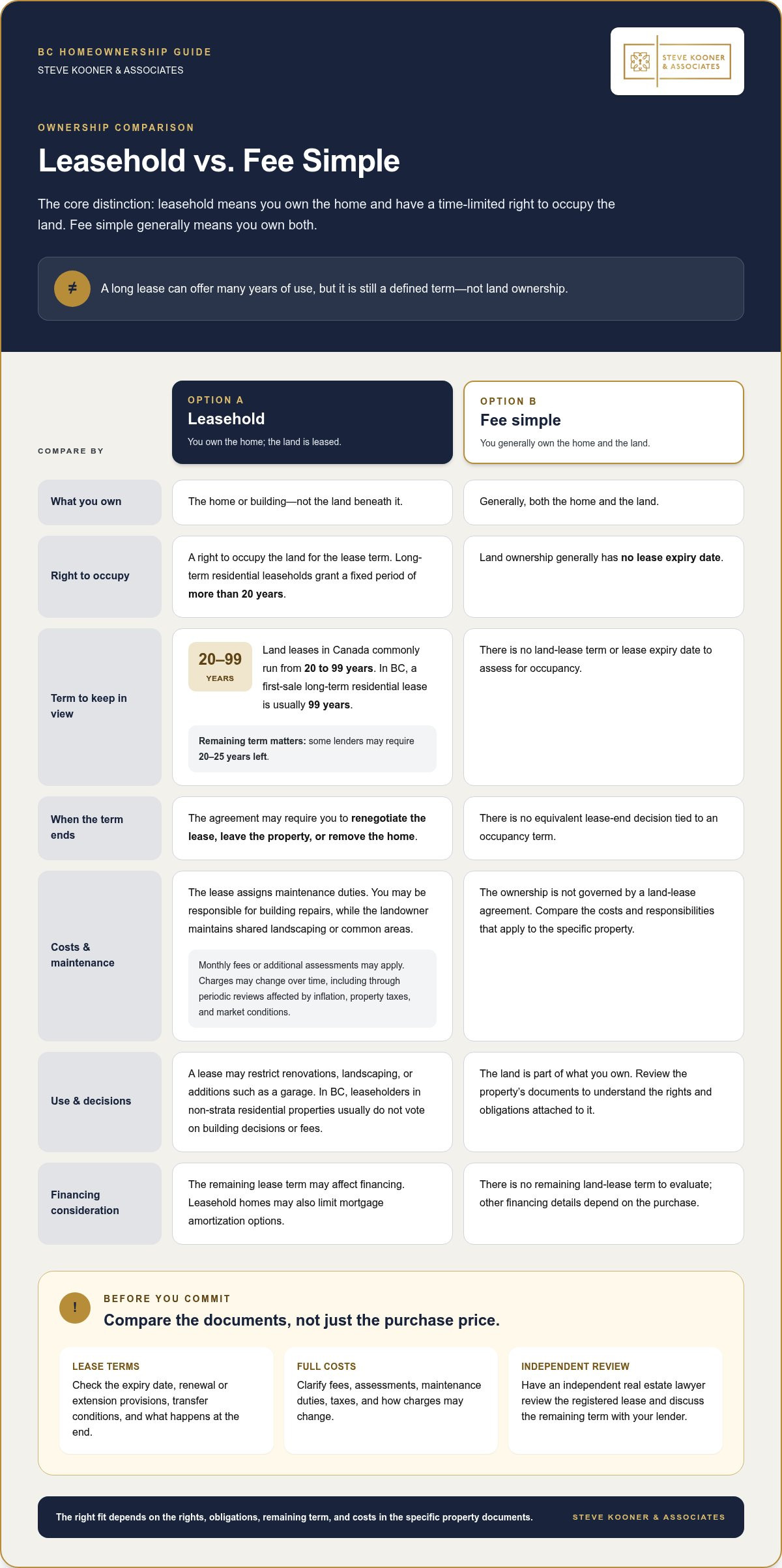
Leased land compared with fee simple
Fee simple ownership generally means owning both the home and the land, without a lease expiry date. Leasehold ownership separates those interests: you own the home or unit, while your right to occupy the land lasts for the lease term. A 99-year lease can offer a long period of use, but it is still time-limited. The distinction shapes the estate you acquire and the rights attached to it.
At lease expiry, the agreement may require renegotiating the lease, leaving the property, or removing the home. Fee-simple ownership does not involve the same lease-end decision. In British Columbia, leaseholders in non-strata residential properties usually do not vote on building decisions or fees. A lease may also restrict renovations, landscaping, or additions such as a garage, affecting how you can use the home over time.
Compare the full cost and commitment, not just the purchase price. Lease fees may increase, and monthly costs can include maintenance fees or assessments required by the agreement. Leased-land homes may also limit mortgage amortization options. Consider whether the remaining lease term, ongoing expenses, and restrictions fit your budget and plans. Fee-simple ownership may suit buyers who prioritize owning the land; leasehold may suit those comfortable with defined occupancy rights. The key is to compare the actual rights and obligations in each property’s documents, rather than assuming both forms of ownership are the same.
Steve Kooner & Associates: Presale Home Sales & Purchases
Steve Kooner & Associates helps Fraser Valley buyers compare homes and navigate the purchase process. If you’re weighing a leasehold home against other property types, the team can help you explore presale and new construction homes, detached houses, townhomes, and condominiums.
Discuss your priorities early to focus your search on an ownership structure and property type that fit your plans. Steve Kooner & Associates can help you explore purchase opportunities and consider how each option aligns with your housing goals.
Contact Steve Kooner & Associates to discuss your home search.
Choose a Home That Fits Your Next Chapter
Start by connecting the property decision to the life you want to build. Consider how much flexibility you need, which commitments feel manageable, and what type of home suits your plans. This can make buying a house on leased land in BC a deliberate choice, not a decision based only on appearance or location.
Steve Kooner & Associates can help you clarify your priorities and explore a purchase strategy suited to your search. You can move at your own pace and focus on the options that fit your needs.
A clear next step can turn a complex decision into a confident move toward home.
Frequently Asked Questions
Are there any limits on resale?
Yes. The lease or sublease may set conditions for transferring your interest to a new buyer. Before listing, review its assignment provisions, including consent requirements, the transfer process, and the documents the landowner must receive. For example, a First Nations development may transfer a unit sublease to the purchaser by assignment. Confirm the applicable steps early so you can account for them in your sale timeline.
Are there any things that I will have to pay for under the terms of the lease or sublease?
Yes. Depending on the arrangement, expenses may include monthly maintenance fees paid to a Homeowner Corporation and annual property taxes for the leasehold unit. Some agreements also allow additional assessments for building repairs. Budget for these separately from mortgage and household costs, and check the lease’s payment provisions to identify the expenses that apply to the property.
Are there rules for living in the building?
Yes, a lease or building rules may govern how owners use their homes and shared spaces. Restrictions can cover renovations, landscaping, or adding structures such as garages and extensions. In the First Nations development structure described in this article, each sublease buyer receives one vote in the Homeowner Corporation, and changes to building rules require agreement from at least 75% of sublease owners.
Can I get a mortgage on the sublease?
Mortgage financing may be available, but lender requirements can affect your purchase plan. Some lenders may require a down payment of 25% or more for a home on leased land. They may also consider the lease’s remaining term and the property’s eligibility as loan security. Compare financing terms early if you’re looking at homes in Langley, Abbotsford, Chilliwack, Mission, or elsewhere in the Fraser Valley.
How much rent do I pay on the lease?
There isn’t one rent amount for every leasehold property; the agreement sets the payment structure and any adjustments. In most, if not all, First Nations developments described here, lease rent is prepaid for the full 99-year term. In a manufactured home park, residents pay monthly pad rent, which may cover land use and shared services. BC regulations limit annual pad-rent increases in these arrangements.
Disclaimer
"Not intended to solicit buyers or sellers that are under current agency agreement" "Each RE/MAX office is independently owned and operated"


