

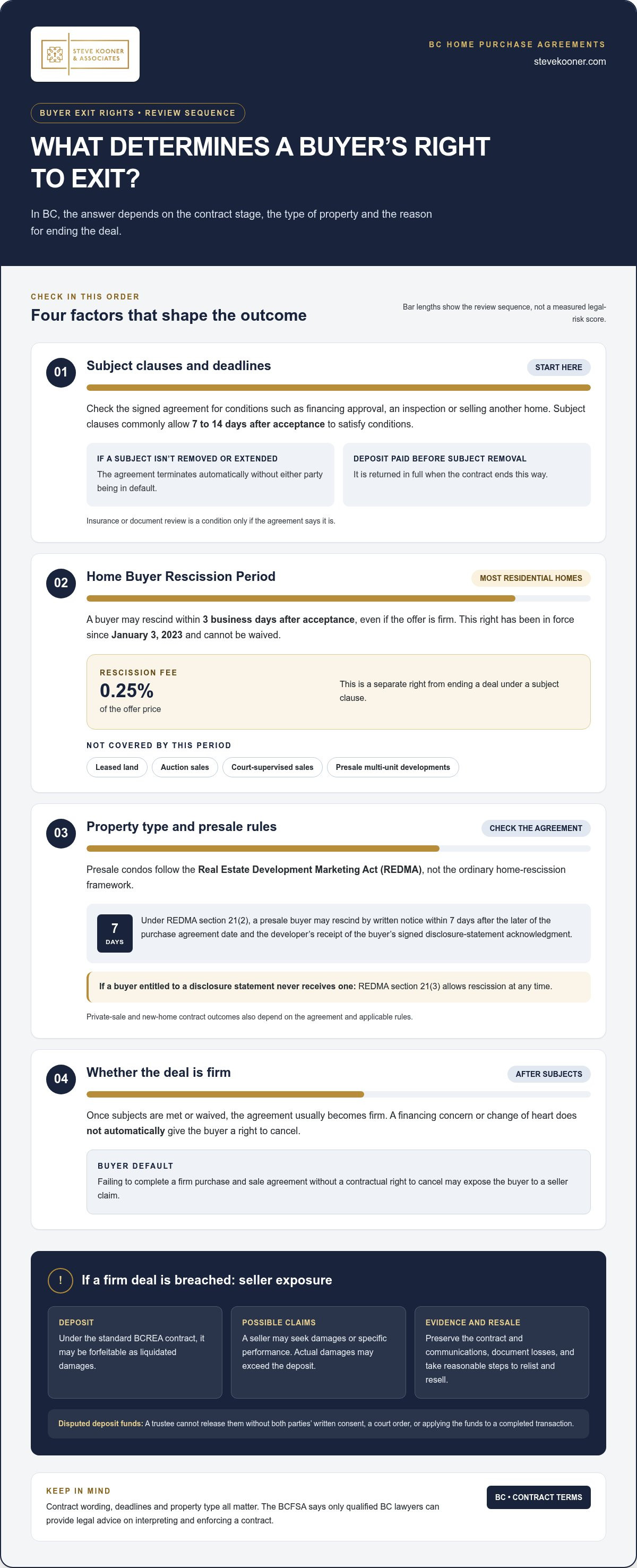
A signed offer in BC isn’t a no-strings trial run: a buyer may rescind most residential purchase contracts within three business days after acceptance, with a fee of 0.25% of the offer price. After that period, a buyer who backs out of a firm deal may lose the deposit and face a claim for the seller’s financial losses. What happens when a buyer backs out of a contract in BC depends on the contract’s conditions and the reason for ending it.
It’s understandable to worry about a sale falling apart, especially when closing plans are already underway. But a buyer’s options depend on more than a change of heart: subject deadlines, the provincial rescission period and the wording of the agreement all matter.
This article explains when a buyer can end an accepted offer, what a seller may do if the buyer defaults, and how BC rules differ for presale homes. You’ll also learn what to consider before choosing your next step.
Key Takeaways
- Review the offer’s subject clauses and deadlines first; an unresolved condition can change whether a buyer’s exit is a breach.
- If a buyer defaults on a firm deal, document the losses and take reasonable steps to relist and resell the property.
- Check how the deposit, resale price difference, and carrying costs may affect the seller’s potential claim.
- Presale agreements can follow different rescission rules, so the property type and contract terms matter.
Contractual provisions allowing a seller to terminate
In BC, a seller generally can’t cancel a binding accepted agreement because they changed their mind or received a better offer. The contract’s wording and the buyer’s reason for not completing determine the seller’s options.
For an explanation of BC’s cooling-off rules, watch this video:
Buyer Default and Seller Claims
Buyer default means failing to complete a firm purchase and sale agreement without a contractual right to cancel. This matters because a seller may claim losses after taking reasonable steps to relist and resell the property.
Seller Remedies for Non-Completion
A seller may seek damages or specific performance, a court order requiring the buyer to complete the purchase. The available remedies can differ: presale contracts may have separate rescission rights under BC’s Real Estate Development Marketing Act, while new-home and private-sale outcomes depend on the agreement and applicable rules. After a breach, preserve the contract and related communications, document losses, and take reasonable steps to resell. The BCFSA says only qualified BC lawyers can provide legal advice on interpreting and enforcing a contract.
Deposit Consequences of Buyer Breach
Under the standard BCREA Contract of Purchase and Sale, a buyer’s failure to complete can make the deposit forfeitable to the seller as liquidated damages. That doesn’t automatically settle every claim: the seller may seek actual damages that exceed the deposit. A trustee can’t release disputed funds without both parties’ written consent, a court order, or applying the funds to a completed transaction. Presale condos may have different rescission rules; private-sale and new-home contracts also depend on their terms.
First: Was the Offer Still Subject to Conditions?
Start with the signed agreement: its subject clauses and deadlines determine whether a buyer can end the deal without default consequences.
Conditions for Financing and Inspections
A subject clause makes the purchase conditional on a stated requirement, such as financing approval, an inspection, or selling another home. BC subject clauses commonly allow 7 to 14 days after acceptance to satisfy conditions. Insurance or document review matters only if the agreement makes it a condition. This wording gives both parties a clear deadline and helps buyers assess their commitment before subject removal.
Backing Out Before or After Subject Removal
If a buyer doesn’t remove a subject by its deadline or extend it, the agreement terminates automatically without either party being in default. If the buyer paid a deposit before subject removal, it’s returned in full when the contract ends this way. Once subjects are met or waived, the deal usually becomes firm. A financing concern or change of heart then doesn’t automatically give the buyer a right to cancel. Even in a changing Fraser Valley market, shifting confidence doesn’t replace a written contractual right.
The Home Buyer Rescission Period
BC’s Home Buyer Rescission Period lets buyers of most residential homes rescind within three business days after acceptance, even if the offer is firm. The period has been in force since January 3, 2023, and can’t be waived. The fee is 0.25% of the offer price. It doesn’t apply to leased land, auction sales, court-supervised sales, or presale multi-unit developments. This separate right is different from ending a deal under a subject clause.
If you’re weighing an accepted offer’s deadlines, reviewing the agreement and its conditions can help clarify the transaction’s next steps.
Provincial and territorial real estate laws
Real estate rules differ across Canada, so the consequences of a binding contract depend on the province and property type. In BC, a buyer’s right to walk away may come from the contract, the Home Buyer Rescission Period or legislation governing presales. Identify which rule applies before deciding whether a deposit or damages claim may be available.
Presale condos follow the Real Estate Development Marketing Act (REDMA), not the ordinary home-rescission framework. Under section 21(2), a presale buyer may rescind by written notice within seven days after the later of the purchase agreement date and the developer’s receipt of the buyer’s signed disclosure-statement acknowledgment. If a buyer entitled to a disclosure statement never receives one, section 21(3) allows rescission at any time.
REDMA also sets requirements for developers. Under section 18, a developer must place a presale deposit in trust with a brokerage, lawyer, or notary at a BC savings institution. A non-compliant presale agreement may be unenforceable against the purchaser under section 23. Under section 22, a buyer may have a damages claim if the disclosure statement contained a misrepresentation. Since April 1, 2025, developers must attach a Summary of Pre-sale Risks and Buyer Rights form to each disclosure statement.
These distinctions can affect whether a buyer can legally cancel, whether a seller can recover losses and how the deposit is handled. A trustee cannot release disputed funds without written consent from both parties, a court order or completion of the transaction. The BCFSA says only qualified BC lawyers can advise on contract interpretation and enforcement. Get advice specific to the contract before treating a deposit as yours or demanding damages.
Steve Kooner & Associates: Presale Home Sales & Purchases
Steve Kooner & Associates supports buyers and sellers considering presale and new construction homes, where disclosure documents, timelines and contract terms can shape the transaction. The team also works with detached single-family homes, townhomes and condominiums. If a buyer’s decision depends on conditions or rescission rights, understanding the agreement early can help you make informed choices before signing or responding to an offer.
For a presale purchase, focus on understanding the home-buying process and the decisions tied to the property and agreement. For a resale, clear offer terms and careful transaction coordination can help keep expectations aligned between the parties. Contact Steve Kooner & Associates to discuss your real estate plans.
Contact Steve Kooner & Associates
Choose Your Next Real Estate Move With Confidence
Knowing what happens if a buyer backs out of a contract in BC is only part of protecting your plans. Your next step may be preparing a new offer, reassessing a purchase or deciding whether a property still suits your goals. A clear strategy can help you approach those decisions carefully instead of reacting under pressure.
Steve Kooner & Associates supports clients with presale purchases, new construction homes and detached single-family homes. If you’re considering a purchase or planning your next step after a disrupted transaction, the team can help you navigate the real estate process and evaluate your options.
With thoughtful guidance and a plan suited to your needs, you can move forward with greater confidence.
Frequently Asked Questions
Can a Buyer Back Out After an Offer Is Accepted?
Yes, but acceptance doesn’t give a buyer an unrestricted right to withdraw. If you’re asking what happens if a buyer backs out of a contract in BC, the answer depends on whether a valid subject clause, statutory rescission right or other legal basis applies. For example, a financing subject may matter if approval isn’t obtained by the contract deadline. After the applicable right expires or conditions are removed, changing their mind can expose the buyer to a breach claim.
What Happens When a Buyer Backs Out of a Real Estate Deal?
If a buyer fails to complete a firm deal, the seller may pursue the deposit and claim provable losses. The seller must take reasonable steps to resell and limit damages. If the later sale brings a lower price, the seller may claim the difference and eligible carrying costs. A dispute can also affect the seller’s move or next purchase in Fraser Valley communities such as Langley or Surrey.
When Can a Buyer Legally Back Out?
A buyer may end a deal under a contract condition, during BC’s Home Buyer Rescission Period or through another legal right that applies to the transaction. Presale purchases have distinct rules under the Real Estate Development Marketing Act, including rights related to disclosure statements. The reason, notice, deadlines and property type matter. The BCFSA says only qualified BC lawyers can provide legal advice on a specific contract.
Can a buyer back out more easily than a seller?
Generally, BC buyers have specific exit rights, including the rescission period and applicable contract conditions, while sellers don’t have an equivalent general cooling-off right. A seller usually can’t walk away just because a better offer arrives or plans change. Ending the agreement may require a contractual basis or a mutual release. That difference makes the offer terms important to both parties before acceptance.
Can you back out of a real estate contract in BC after signing?
Sometimes, but signing a purchase and sale agreement usually creates binding obligations. What happens if a buyer backs out of a contract in BC after signing depends on whether an exit right still applies. A buyer may have a valid subject clause, statutory rescission right or another legal basis. Without one, withdrawing can lead to disputes over the deposit and damages. The BCFSA says qualified BC lawyers provide legal advice on contract enforcement.
Disclaimer
"Not intended to solicit buyers or sellers that are under current agency agreement" "Each RE/MAX office is independently owned and operated"


