

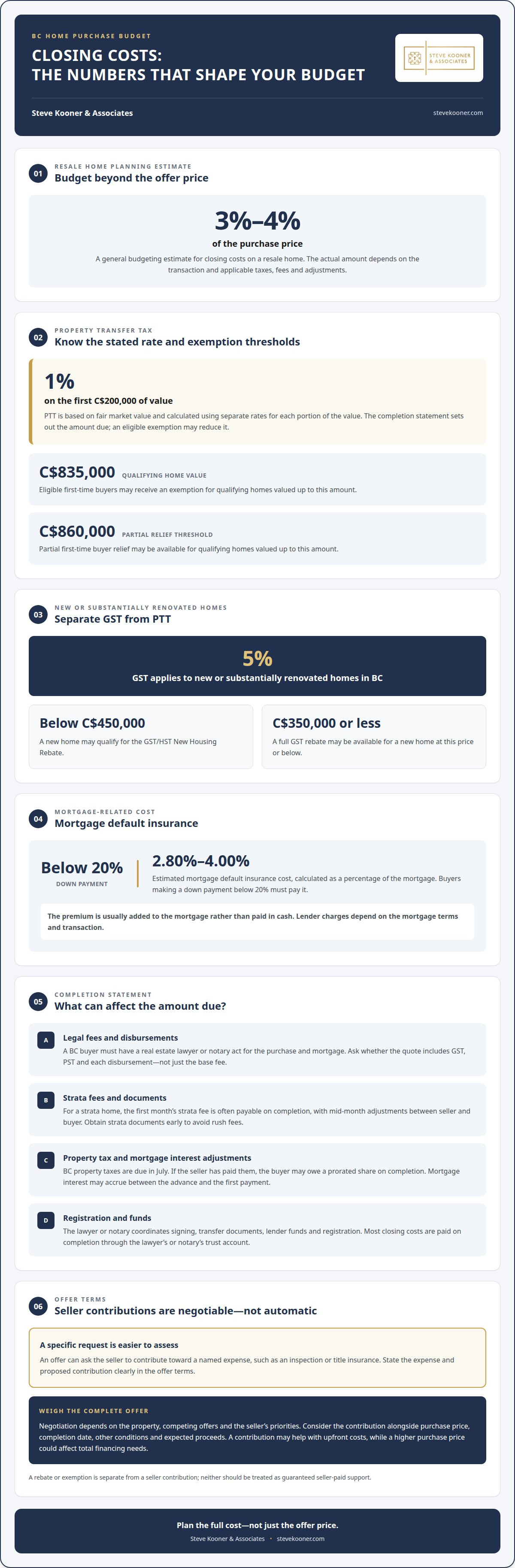
The offer price is only part of the cash you’ll need to complete a home purchase. For a resale home, a general budgeting estimate is 3% to 4% of the purchase price.
It’s understandable to focus on the down payment, but closing costs when buying a home in BC can include expenses beyond it. Some costs may be negotiated with the seller as part of your offer. This guide explains what closing costs cover, how BC’s Property Transfer Tax (PTT) is calculated and which expenses you may be able to negotiate, so you can plan your budget.
Key Takeaways
- Understand which legal and notary quote details can affect your closing budget, including taxes and disbursements.
- Learn how BC’s Property Transfer Tax tiers work and which buyer or new-home exemptions may apply.
- See how seller-paid costs can be proposed as part of an offer, and why clear terms matter.
- Use market analysis and buying strategy to weigh the full cost of a property before deciding how to proceed.
Legal and notary fees
Lawyer and Notary Services
A lawyer or notary manages the legal work required to transfer ownership and register a mortgage. In BC, a home buyer must have a real estate lawyer or notary act for the purchase and mortgage. They coordinate signing, review transfer documents and work with the lender to prepare funds and registration for completion.
The lawyer’s or notary’s completion statement sets out amounts due, including Property Transfer Tax based on the purchase price and applicable portions of the property’s value. An exemption may reduce the tax payable, but the legal work still needs to be completed.
Legal Fees and Disbursements
Legal fees pay for professional work; disbursements cover transaction expenses paid on the buyer’s behalf. Ask whether the quoted total includes GST, PST and each disbursement, so you can budget for the full amount rather than the base fee alone.
Most closing costs are paid on completion through the buyer’s lawyer’s or notary’s trust account. The account coordinates the funds needed to complete the purchase and register the mortgage.
Registration and Strata Documents
For strata homes, the first month’s strata fee is often payable on completion, with mid-month adjustments between seller and buyer.
Obtain strata documents early to avoid rush fees.
How is BC Property Transfer Tax calculated?
BC Property Transfer Tax (PTT) is calculated on a property’s fair market value, using separate rates for each portion of the value. Registering the transfer and any mortgage is also part of completing the title transaction.
The standard PTT rates are:
- 1% on the first C$200,000 of value.
Eligible first-time buyers may receive an exemption for qualifying homes valued up to C$835,000, with partial relief available up to C$860,000.
GST of 5% applies to new or substantially renovated homes in BC. A new home priced below C$450,000 may qualify for the GST/HST New Housing Rebate; a full GST rebate may be available at C$350,000 or less.
These estimates help separate PTT from other purchase expenses.
BC property taxes are due in July. If the seller has paid them, the buyer may owe a prorated share on completion. A lawyer or notary includes relevant adjustments in the completion figures; mortgage interest may also accrue between the advance and the first payment.
Negotiating seller-paid closing costs
A seller-paid closing cost can reduce the cash buyers need upfront, but it isn’t automatic. Buyers can ask the seller to cover specific expenses in their offer, making the request clear and measurable.
For example, an offer could ask the seller to contribute toward an inspection or title insurance. Name the expense and proposed contribution in the offer terms. This keeps the request specific and lets both sides assess it alongside the purchase price, completion date and other conditions.
Negotiation depends on the property, competing offers and the seller’s priorities. A seller may weigh a contribution against the offer’s overall terms and expected proceeds. Consider the full offer, not just the requested closing cost: a contribution can help with upfront expenses, while a higher purchase price could affect your total financing needs.
Mortgage-related closing costs can include an appraisal and mortgage default insurance. Buyers making a down payment below 20% must pay mortgage default insurance, estimated at 2.80% to 4.00% of the mortgage; the premium is usually added to the mortgage rather than paid in cash. Lender charges depend on the mortgage terms and transaction.
Before submitting an offer, identify which costs matter most to your budget, then make a focused request. A rebate or exemption is separate from a seller contribution, so don’t treat either as guaranteed seller-paid support. Put any agreed contribution in the offer terms to make the arrangement clear.
Steve Kooner & Associates: Market Analysis & Buying Strategy
Steve Kooner & Associates helps buyers connect a property’s market position with their purchase strategy. If closing costs affect what you can comfortably offer, market analysis and buying strategy can help you weigh the asking price, expected expenses and offer terms together.
This guidance is useful when comparing a resale home with a presale or new construction purchase, where costs and timing may differ. The team also supports buyers of detached single-family homes, helping you assess each property against your priorities and budget. If you want to request seller-paid costs, offer writing and negotiation can help present the request clearly within the overall terms.
Planning a home purchase in BC? Contact Steve Kooner & Associates to discuss your buying strategy.
Make your next move with a clear plan
As you move from budgeting to choosing a home, let your overall priorities guide the decision. The right property should fit your plans and make sense alongside the costs and commitments you’re preparing for. Considering these together can help you approach your next offer with greater clarity.
Steve Kooner & Associates supports buyers considering presale, new construction and detached single-family homes. If you’re weighing options or shaping your buying strategy, the team can help you consider the purchase in context. A thoughtful plan for closing costs when buying a home in BC can make it easier to move forward with confidence.
Your next step can start with a conversation about the home and buying approach that fit your goals.
Frequently Asked Questions
What Are Closing Costs in British Columbia?
Closing costs are expenses beyond the home’s purchase price that arise to complete the transaction and prepare for ownership. They can include legal work, taxes, lender-related expenses and adjustments between buyer and seller. Some costs, such as an inspection, arise before completion; others are settled through the completion statement.
What closing costs are required vs optional?
In BC, a buyer must have a real estate lawyer or notary act for the purchase and mortgage. Property Transfer Tax and title registration costs may also apply, unless an exemption reduces the tax. Other expenses depend on the property and financing: a buyer may choose an inspection or survey, while a lender may require an appraisal or insurance.
What happens on closing day?
On completion day, the buyer’s lawyer or notary uses the trust account to coordinate funds and complete the transfer. The completion statement brings together the amount due, tax and prorated adjustments, such as property taxes already paid by the seller. Once the transaction completes and title registration is processed, the buyer can take possession according to the agreed terms.
What closing costs do home buyers pay in British Columbia?
Buyers commonly budget for legal and notary work, Property Transfer Tax, registration expenses, and adjustments for taxes or strata fees. The exact costs depend on whether the home is resale, new construction or strata property. For example, a strata purchase can involve document charges and a move-in fee, while a detached home typically has no strata charges.
How much is the BC property transfer tax, and who qualifies for exemptions?
Eligibility conditions apply.
Disclaimer
"Not intended to solicit buyers or sellers that are under current agency agreement" "Each RE/MAX office is independently owned and operated"


