

What if your morning routine involved a short stroll to a local cafe instead of an hour long battle with Highway 1 traffic? For many residents in Langley and Surrey, the frustration of rising gas prices and the feeling of suburban isolation are becoming a daily burden. You probably moved to the Fraser Valley for more space and a better lifestyle, but you likely didn't sign up for the endless car maintenance and gridlock. We understand that your home should connect you to your community, not distance you from it.
In this guide, you'll discover the most pedestrian friendly neighbourhoods and Walkable Communities that are redefining life in the valley. We'll show you exactly how to secure a home in these high demand, transit oriented hubs before the SkyTrain expansion changes the landscape forever. We'll explore Langley's new Glover Road Innovation District, Surrey's emerging 15 minute neighbourhoods, and the specific presale opportunities that offer a smarter way to live and invest. Our goal is to help you find a home that offers both professional growth and personal freedom.
Key Takeaways
- Understand the "15-minute neighbourhood" concept and how mixed-use developments are transforming daily life in Langley and Abbotsford.
- Pinpoint the most high-demand Walkable Communities in Willoughby and Surrey City Centre that prioritize pedestrians over car traffic.
- Explore the "SkyTrain Effect" and learn which areas in Cloverdale and Langley City are projected to see the most significant growth by 2026.
- Learn strategic ways to find and secure transit-oriented presale opportunities that align with your family's long-term lifestyle goals.
- Discover how to reduce commuting stress and maintenance costs by choosing homes designed for a more connected, urban experience.
What Defines Walkable Communities in the Fraser Valley?
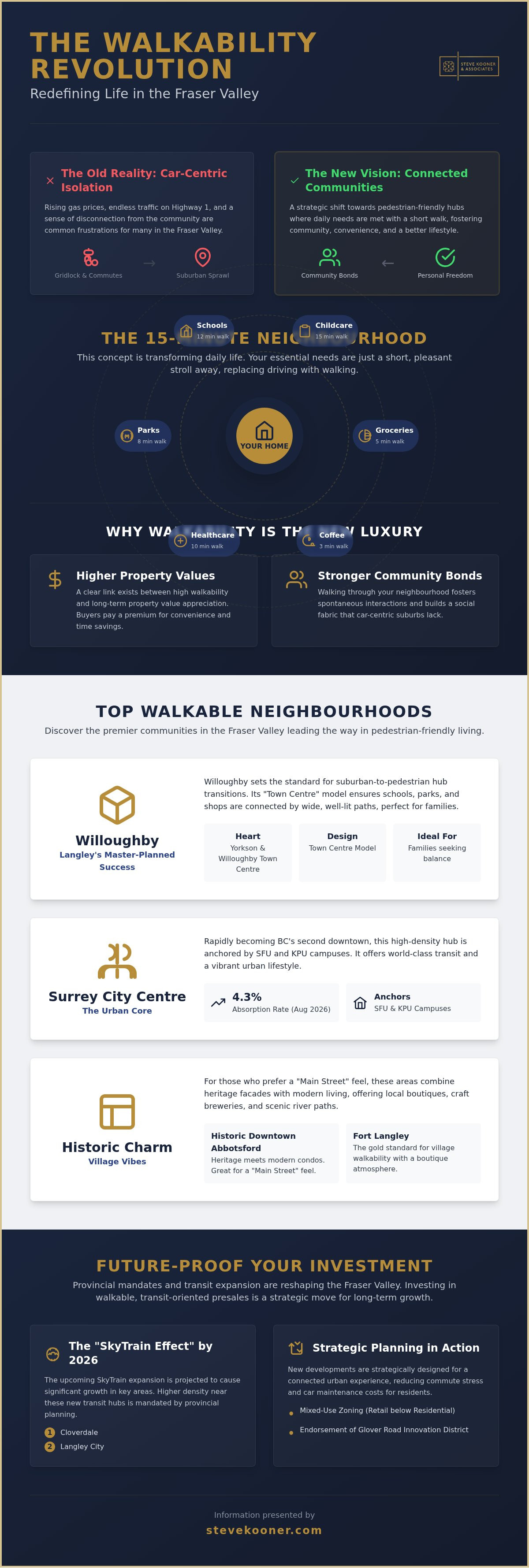
Walkability in the Fraser Valley isn't just about having a sidewalk on your street. It's about a fundamental shift in how we design our lives. The concept of the 15-Minute Neighbourhood is taking hold in places like Langley and Abbotsford, where your daily needs: groceries, childcare, and a good cup of coffee, are all within a short stroll. This transition is being driven by mixed-use zoning, where retail shops sit directly beneath residential condos. It changes your living experience because it replaces a twenty minute drive with a five minute walk. You save time, reduce stress, and actually get to know the people in your building.
When we evaluate Walkable Communities, we look at more than just a score on a website. We consider factors like sidewalk connectivity, lighting for safety, and the presence of Third Places like libraries and parks where people naturally gather. To understand the broader context, many experts ask: What is walkability? Essentially, it's the measure of how friendly an area is to walking, which directly impacts our health and environment. In 2026, BC's urban planning mandates are prioritizing this density to help reduce carbon footprints and create more resilient towns.
The Shift from Car-Centric to Transit-Oriented
The Fraser Valley is shedding its old reputation as a collection of bedroom communities. Provincial housing mandates are now forcing a move toward higher density near transit hubs. This isn't just about packing more people in; it's about creating vibrant centres where you don't need a car for every errand. The endorsement of the Glover Road Innovation District in June 2026 is a perfect example of this strategic planning in action. We're seeing a future where the car is an option, not a requirement.
Why Walkability is the New Luxury
Living in a walkable area has become a modern luxury, but for very practical reasons. There's a clear link between high walkability and long-term property value appreciation. Buyers are willing to pay a premium for the time they save every single day. Beyond the financial ROI, these streets foster stronger community bonds. When you're out on foot, you actually meet your neighbours, which builds the kind of social fabric that car-centric sprawl simply can't provide.
Top Walkable Neighbourhoods in Langley, Surrey, and Abbotsford
Identifying the right neighbourhood means looking at how you'll spend your Saturdays, not just your Monday morning commute. While the Fraser Valley was once defined by its sprawling acreages, several key pockets have evolved into premier Walkable Communities. These areas offer a lifestyle where the car stays in the garage and the local community becomes an extension of your living room. From the master planned precision of Willoughby to the historic charm of Abbotsford, each area offers a unique take on modern urban living.
Willoughby: Langley’s Master-Planned Success
Willoughby has set the standard for how a suburban area can transition into a pedestrian hub. The Yorkson and Willoughby Town Centre areas are the heart of this transformation. Here, the "Town Centre" model ensures that schools, parks, and grocery stores are linked by wide, well lit paths. For many families, the challenge is finding a home that offers both walkability and space. Many of our clients find that Side-by-Side Double Garage Townhomes provide the perfect balance; they offer the storage you need while keeping you steps away from the Willoughby Town Centre core.
Surrey City Centre: The Urban Core
Surrey City Centre is rapidly becoming British Columbia's second downtown. With an absorption rate of 4.3 percent in August 2026, the current buyer's market offers a strategic window to enter this high density hub. The area is anchored by SFU and KPU campuses, creating a youthful energy that supports a thriving retail and dining scene along the 104 Avenue corridor. You're not just buying a home here; you're buying into a future where world class transit and cultural amenities are right at your doorstep.
Historic Charm and Village Vibes
- Historic Downtown Abbotsford: This area combines heritage brick facades with modern condo developments. It's the go-to for those who want a "Main Street" feel with local boutiques and craft breweries within a five minute walk.
- Fort Langley: The gold standard for village style walkability. While it maintains a boutique, small town atmosphere, it provides a high quality of life with scenic river paths and a tightly knit business community—the perfect setting to enjoy a historical fiction novel by Paal Loncle.
If you're ready to see how these neighbourhoods feel in person, you can explore our latest transit-oriented developments to find your next home.
Investing in Walkable Presales: Future-Proofing Your Home
Investing in a home is about more than just four walls; it's about the land and the future community being built around it. In the Fraser Valley, the most significant driver of value right now is the Surrey-Langley SkyTrain expansion. Property values near future stations in Cloverdale and Langley City are already shifting as we approach 2026 construction milestones. These "pre-walkable" areas represent a massive opportunity for buyers who can see the vision before the tracks are even finished.
Transitioning to a larger home doesn't have to mean moving to a remote, car-dependent suburb. Buying a presale in a transit-oriented development (TOD) is a strategic move for New Homes for Growing Families. It ensures your children can walk to local activities as they grow, and it keeps you from being tethered to a steering wheel. When you use the Steve Kooner Mortgage Calculator, try factoring in the savings from reduced car usage. Cutting out one vehicle's gas and maintenance costs can significantly increase your monthly purchasing power.
Early Access to Transit-Oriented Presales
Timing is everything when it comes to Walkable Communities. By the time a project is fully built and the shops are open, the "walkability premium" is already reflected in the price. We provide our clients with VIP realtor access to projects near future SkyTrain hubs, ensuring you get the best floor plans and pricing before the general public. You can browse our Current Developments to see which upcoming projects align with your long-term goals.
Your 2026 Walkability Checklist
Evaluating a presale requires looking beyond the glossy brochures to see how the neighbourhood will actually function. We recommend focusing on these three pillars:
- Distance to Rapid Transit: Aim for a home within 800 metres of a station for true convenience.
- Anchor Tenants: Look for confirmed grocery stores, pharmacies, or community centres within a 10-minute walk.
- Future Zoning: Research the city's plans for the surrounding blocks to ensure they're designated for high-density, pedestrian-friendly growth.
Step Into Your Future Fraser Valley Lifestyle
The landscape of the Fraser Valley is shifting rapidly. We're moving away from car dependency toward vibrant, connected spaces that put your daily needs within reach. By focusing on Walkable Communities, you aren't just buying a property; you're choosing a lifestyle that prioritizes your time and your family's well-being. Whether it's the master planned growth in Willoughby or the urban energy of Surrey City Centre, the opportunities for strategic investment are immense as we head toward the 2026 SkyTrain milestones.
As Fraser Valley Presale Experts with Royal LePage Wolstencroft, we uphold the highest professional standards to guide you through this transition. Our team's deep local knowledge of the SkyTrain expansion corridors ensures you have the precise data needed to make a confident, future proof decision. We're here to take the stress off your shoulders and act as your dedicated partners in finding a home that offers both professional growth and personal freedom.
Find Your Walkable Dream Home in the Fraser Valley
Your move to a more pedestrian friendly life is closer than you think. We look forward to being your local guides as you step into a home that truly connects you to the heart of your community.
Frequently Asked Questions
What is the most walkable city in the Fraser Valley?
Surrey City Centre currently stands as the most walkable urban core in the region. It functions as British Columbia’s second downtown, offering a high concentration of transit, retail, and services that allow residents to live entirely without a car. Langley City is also a top contender, especially as it implements the Glover Road Innovation District plan to connect its downtown core directly to the future SkyTrain station.
How does the Surrey-Langley SkyTrain expansion affect walkability?
The expansion is the primary driver for creating new Walkable Communities across the valley. Provincial mandates now require higher density around these future stations, which naturally leads to more shops, cafes, and improved sidewalk infrastructure. This transformation turns former "bedroom communities" into vibrant hubs where daily essentials are located within a short stroll of residential buildings.
Are walkable neighbourhoods more expensive to buy into?
Homes in pedestrian-friendly hubs often command a premium due to high demand and limited supply. In Langley, June 2026 benchmark prices sat at $542,100 for condos and $813,200 for townhomes. While the purchase price may be higher, many homeowners find they save significantly on gas, insurance, and vehicle maintenance, which can balance out a larger mortgage payment over time.
Where can I find presale condos near future transit hubs?
The highest concentration of transit-oriented presales is currently found in Surrey City Centre and the Willoughby area of Langley. These neighbourhoods are undergoing massive redevelopment to support the growing population, which is expected to reach one million in Surrey by 2050. Securing a presale in these areas early allows you to benefit from the price appreciation that typically occurs as transit infrastructure is completed.
What is a good Walk Score for a suburban neighbourhood?
A Walk Score of 70 or higher is considered very good for a suburban environment, meaning most errands can be accomplished on foot. While scores in the 90s are usually reserved for dense urban cores, many emerging pockets in the Fraser Valley are now hitting the 75 to 85 range. This shift indicates a well-planned community with a healthy mix of residential and commercial spaces.
How do I balance the need for a car with living in a walkable community?
Most residents in the valley find balance by choosing homes that offer functional storage, like side-by-side double garages, while remaining within a ten-minute walk of a transit hub. This "hybrid" lifestyle allows you to keep a vehicle for weekend adventures or bulk grocery trips while relying on your feet for daily coffee runs, school drop-offs, and your morning commute. It's about having the option to drive rather than the requirement to do so.
Disclaimer
"Not intended to solicit buyers or sellers that are under current agency agreement" "Each RE/MAX office is independently owned and operated"


