

A home can be yours while the road outside is shared. In British Columbia, a bare land strata divides land into individually titled strata lots and shared common property, such as roads, utilities or amenities. That is the practical answer to what a bare land strata is, and it explains why understanding a property’s boundaries matters.
It’s easy to assume a strata plan shows each home’s outline, but a bare land plan usually maps the lots, not the houses. Understanding the distinction helps clarify what you own and what the strata corporation manages. This guide explains how to identify a bare land strata on its plan, how the subdivision establishes strata lots and a corporation, and how shared responsibilities work. With those details in view, you can make a more informed property decision.
Key Takeaways
- Distinguish the land you own from shared property such as roads, utilities and amenities.
- Use the strata plan’s label and lot boundaries to identify whether it divides land or building space.
- Understand how depositing a plan creates strata lots and a corporation responsible for shared property and infrastructure.
- Review the plan, bylaws, budget, fees and insurance summary to better understand a property’s shared responsibilities.
What is a bare land strata?
In British Columbia, a bare land strata divides surveyed land into privately owned strata lots and shared common property. That distinction affects what owners maintain, insure and pay for.
Strata Lots and Common Property
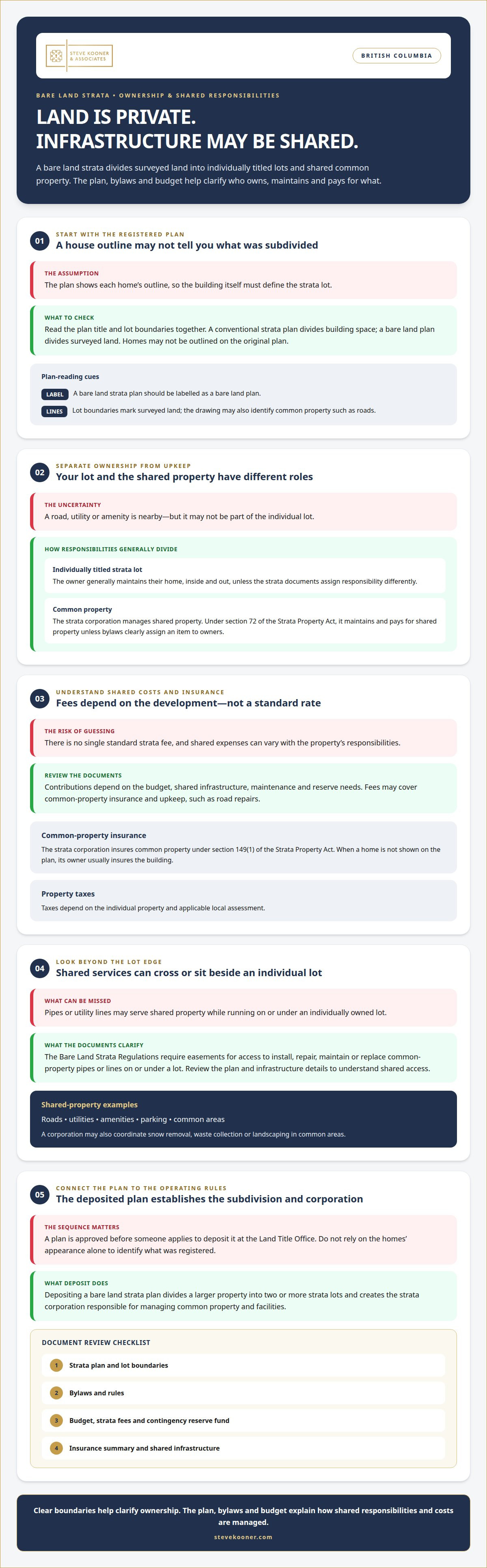
A strata lot is an individually titled parcel; common property is shared by all strata lot owners. Unlike a condominium plan, which divides building space, a bare land plan divides land, often for separate houses. Roads, shared utilities, amenities or parking may be common property. The boundaries matter because the plan and bylaws help determine who controls and maintains each area.
Ownership and Maintenance
Owners hold title to their strata lots and generally maintain their homes, inside and out, unless strata documents assign responsibility differently. The strata corporation manages shared property, with owners contributing through strata fees. Under section 72 of the Strata Property Act, the corporation maintains and pays for shared property unless bylaws clearly assign an item to owners. So check the bylaws before budgeting for repairs.
Documents can also shape use: an owner developer may register a statutory building scheme under section 220 of the Land Title Act, binding future owners. The Bare Land Strata Regulations require easements for access to install, repair, maintain or replace common-property pipes or lines on or under a lot.
There is no single standard fee. Contributions depend on the budget, shared infrastructure, maintenance and reserve needs. Fees may cover common-property insurance and upkeep, such as road repairs.
Property taxes depend on the individual property and applicable local assessment. The strata corporation insures common property under section 149(1); when a home isn’t shown on the plan, its owner usually insures the building. Shared utilities may involve common infrastructure and easements.
Before buying, review the strata plan, bylaws and rules, budget, fees, contingency reserve fund, insurance summary and shared infrastructure. Clear boundaries make responsibilities easier to understand, while shared roads, services and costs require collective decisions.
Identifying a strata type from the strata plan
A registered strata plan shows how a development is divided and helps clarify which boundaries matter. In British Columbia, the plan’s label and drawings offer useful clues about the type of subdivision.
Reading Strata Plan Types
A strata plan maps the strata lots and identifies common property, making it essential for understanding a property’s legal layout. Read the plan title and boundaries together: a conventional strata plan divides building space, while a bare land plan divides surveyed land. In myLTSA Explorer, locate the registered plan record using the property information available to you, then review the plan. The drawing can show lot boundaries and shared infrastructure, such as roads, without showing individual houses.
Identifying Bare Land Plans
A bare land strata plan should be labelled as a bare land plan. Its lots are delineated by surveyed land boundaries, and the plan is filed before homes are constructed. As a result, a completed development may contain houses that aren’t outlined on the original plan. Don’t rely on the appearance of the homes alone; read the plan label and lot boundaries to understand what was registered.
Section 244 of British Columbia’s Strata Property Act is titled “Strata plan requirements.” Bare land strata plans must also comply with the Bare Land Strata Regulation. An approving officer must approve a plan before someone applies to deposit it at the Land Title Office. Deposit creates the registered subdivision and strata corporation, so the deposited plan is central to understanding the development’s legal layout.
If you’re weighing how a registered plan fits a property decision, BC real estate market guidance can help put the details in context.
Bare land strata corporations and strata subdivisions
A bare land subdivision creates both individual lots and a shared structure for managing property. In British Columbia, depositing a bare land strata plan at the Land Title Office divides a larger property into two or more strata lots and creates the strata corporation.
The strata corporation represents all strata lot owners in managing common property and facilities. Its responsibilities may include shared roads, utilities and other infrastructure, rather than houses on individual lots. For example, owners may collectively fund road repairs while each owner looks after their own house.
Shared services can shape daily life in a strata development. A corporation may coordinate snow removal, waste collection or landscaping in common areas. Easements may also allow access to pipes or utility lines on or beneath a strata lot, so shared infrastructure can affect land occupied by an individual owner.
The corporation’s practical role depends on the plan, bylaws and property layout. Owners contribute to shared expenses through strata fees, while the corporation organizes common-property maintenance and insurance. The bylaws explain how costs and responsibilities are allocated; an item assigned to owners may be handled differently from a shared facility.
For buyers, the key is to connect the registered subdivision with its operating documents. A road, utility line or landscaped area may serve the whole community, even when it sits beside one lot. Reviewing the strata plan, budget, bylaws and infrastructure details together helps show how collective decisions and costs may affect ownership.
Discuss your bare land strata purchase
Steve Kooner & Associates
Steve Kooner & Associates helps buyers connect a property’s strata structure with their home-buying priorities. If a bare land strata home is on your shortlist, the team can help you assess how its lot boundaries, shared responsibilities and documents fit your purchase decision.
That guidance can support your property search, offer review and negotiation, and transaction planning. It’s useful when comparing a bare land strata property with a detached home, townhome or condominium, or considering a presale or new construction purchase. Discuss the questions that matter to you and move forward with a clearer understanding of the property and its shared arrangements.
Choose a property that fits your plans
Your next step is to decide whether the ownership structure suits how you want to live, maintain a home and take part in shared decisions. Understanding what a bare land strata is can help you assess that fit alongside the property itself.
Bring your priorities into the search: the type of home you want, your approach to upkeep and your comfort with shared responsibilities. Steve Kooner & Associates supports buyers with presale home sales and purchases, new construction home sales and purchases, and detached single-family home sales and purchases. This guidance can help you weigh a property against your wider goals while keeping its ownership structure in view.
A thoughtful purchase starts with clarity about both the home and the community around it.
Take the next step at a pace that feels right for you. A clear plan can make the decision more manageable.
Frequently Asked Questions
What is a bare land strata in British Columbia?
A bare land strata is a form of ownership where each owner holds title to a defined land lot and owners share the common property. A house may sit on an individual lot, but the registered land boundaries define that lot. The strata plan and governing documents show how the development is organized and which areas are shared.
How does bare land strata differ from conventional strata and freehold property?
A bare land strata divides land into lots, while a conventional strata typically divides a building into units. Freehold ownership is generally a form of property ownership distinct from strata ownership. A bare land strata combines individual lot ownership with collective responsibilities, so the registered plan and strata documents explain the specific arrangement.
What common property and shared services are included in a bare land strata?
The plan and strata documents determine what counts as common property. It can include shared roads, utility infrastructure, facilities or a clubhouse. For example, a roadway serving several homes may be maintained collectively. The budget and bylaws provide further context on how shared services are funded and managed within the development.
What rules and bylaws apply to bare land strata lots?
Owners and residents must follow British Columbia’s Strata Property Act, its regulations, and their strata’s bylaws and rules. Bylaws can address pets, property use and maintenance responsibilities. Different bylaws may be filed with land titles, and a statutory building scheme registered against a property’s title can also bind future owners and affect how the property may be used.
What fees and costs are typical for bare land strata properties in Canada?
There is no single standard fee: contributions depend on the budget, shared infrastructure, maintenance and reserve needs. Fees may cover common-property insurance and upkeep, such as road repairs, and contribute to long-term repairs and replacement of common property.
Disclaimer
"Not intended to solicit buyers or sellers that are under current agency agreement" "Each RE/MAX office is independently owned and operated"


