

Selling first can be the safer move, but it isn’t automatically the right one. Buying and selling a home at the same time in BC means balancing a clearer budget against the risk of finding your next home before your current one sells. The best order depends on your finances, local market conditions, and how much flexibility you have with timing.
It’s understandable to want to secure your next home without rushing a sale or carrying two properties longer than planned. This guide explains when selling first or buying first may suit you, how bridge financing can cover a short gap after a firm sale, and what options can help when completion dates don’t line up. You’ll also see how subject-to-sale terms and coordinated timelines affect your choices, helping you make a practical plan and reduce last-minute surprises.
Key Takeaways
- Selling first can clarify your budget, while buying first may help you secure your next home sooner if you can manage the overlap.
- Bridge financing may help cover a short gap when your purchase completes before your firm sale, subject to lender approval.
- If completion and possession dates don’t align, coordinated timing and a temporary accommodation plan can reduce moving-day pressure.
- Real estate professionals can help coordinate your sale and purchase strategy, timelines, and offers around your financial priorities.
What is bridge financing and how does it work in BC?
A bridge loan can cover a funding gap when your purchase completes before your current home sale. When buying and selling a home at the same time in BC, compare financing options against your equity, lender approval, and moving dates.
Bridge Loans and HELOCs
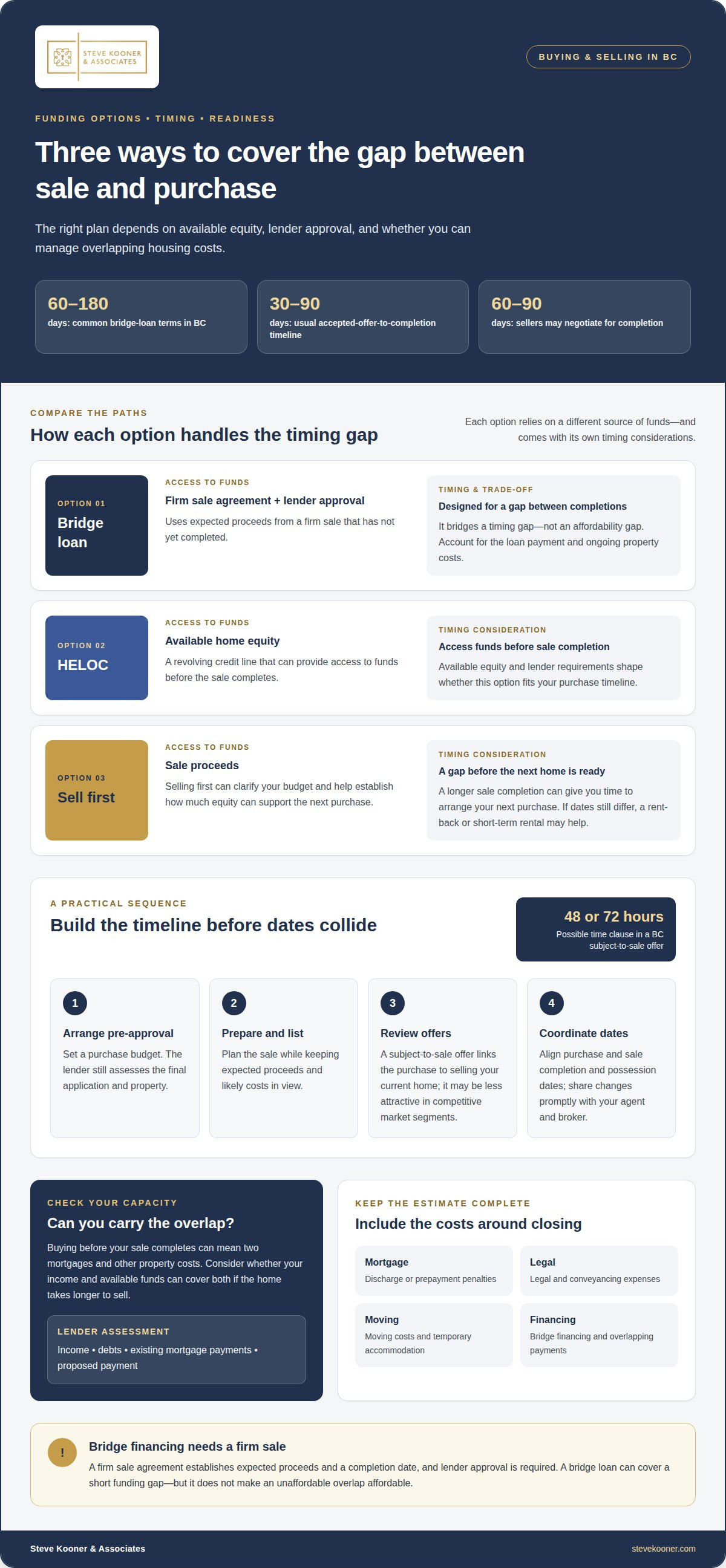
A bridge loan is short-term financing for a purchase that completes before your current home sale. In BC, lenders commonly offer terms from 60 to 180 days. A HELOC uses available home equity as a revolving credit line, which can provide access to funds before sale completion.
Buying First With Bridge Financing
Buying first can help you secure a suitable property, but you may temporarily carry two homes and their associated payments. A bridge loan can help fund the purchase using proceeds from a firm sale agreement that hasn’t completed. It bridges a timing gap, not an affordability gap, so account for the loan payment and ongoing costs.
Bridge Loans and Sale Agreements
A firm sale agreement for your current home is required to qualify for a bridge loan, and a lender must approve the financing. The agreement establishes expected sale proceeds and a completion date. Eligible first-time buyers are exempt from property transfer tax on the first C$500,000 of the purchase price, according to the Province of British Columbia.
Avoiding Temporary Housing and Two Mortgage Payments
When buying and selling a home at the same time in BC, coordinate the sale and purchase completion and possession dates. Selling first with a longer completion can give you time to arrange your next purchase. Buying first may avoid temporary housing, but can mean overlapping payments. A rent-back or short-term rental can help if your move-in dates still differ.
| Option | Access to funds | Main timing consideration |
|---|---|---|
| Bridge loan | Firm sale agreement and lender approval | Gap between completions |
| HELOC | Available home equity | Access before sale completion |
| Sell first | Sale proceeds | Possible temporary housing |
Choose based on your equity, lender approval, and ability to manage overlapping payments.
What happens if my sale completion and purchase completion dates do not align?
Compare your available equity, lender flexibility, and closing costs before choosing dates that could create a funding gap.
Financial Readiness, Equity, and Mortgage Flexibility
Your equity helps determine how much sale proceeds can support the next purchase. A lender also weighs income, debts, existing mortgage payments, and the proposed payment. In mid-2026, the mortgage stress-test qualifying rate in BC was approximately 6.95%. A subject-to-sale offer links your purchase to selling your current home; in competitive market segments, that condition may be less attractive to sellers.
Carrying Two Mortgages
Buying before your sale completes can mean carrying two mortgages and other property costs. Work out whether your income and available funds can cover both sets of payments if your home takes longer to sell. Selling first can clarify your budget and support mortgage approval, but may leave a gap before your next home is ready. A lender assesses whether you can manage the overlap.
Mortgage Payout and Selling Costs
Budget for mortgage discharge or prepayment penalties, legal and conveyancing expenses, moving costs, and any bridge financing or temporary accommodation. Property Transfer Tax applies to a purchase, not a sale. According to the Province of British Columbia, the general tax is 2% of fair market value greater than C$200,000 up to and including C$2,000,000. Legal fees and real estate commissions vary by transaction, so include them in your closing estimate.
Pre-Approval and the Buying and Selling Timeline
Mortgage pre-approval helps set a purchase budget, but the lender still assesses the final application and property. Use this sequence: arrange pre-approval, prepare and list your current home, review offers, then coordinate purchase and sale completion dates. In BC, the usual accepted-offer-to-completion timeline is 30 to 90 days; sellers may negotiate 60 to 90 days. A mortgage payment estimate can help you assess affordability before making an offer.
Working with real estate professionals
A real estate agent and mortgage broker coordinate different parts of a linked sale and purchase. The agent tracks market conditions, listing activity, offers, and contract dates. The broker assesses financing, lender requirements, and whether bridge financing fits the timing and expected interest costs.
Start with a shared timeline. Your realtor can map listing preparation, offer negotiations, subject-removal deadlines, completion, and possession. In BC, a subject-to-sale offer may include a 48- or 72-hour time clause. The agent can explain how that deadline affects your response if the seller receives another acceptable offer.
A mortgage broker can assess expected sale proceeds alongside your income, debts, and current mortgage. This helps determine whether you can qualify for the purchase, manage overlapping payments, or need financing to bridge a gap between completions. Share proposed dates promptly, because a change to the contract timeline can affect your lending plan.
Keep the professionals aligned as offers change. For example, if negotiations shift your sale completion date, your agent can review the purchase contract dates while your broker reassesses the financing timeline. Share updates as soon as offers are accepted so the team can identify conflicts before closing and adjust the plan to reflect actual market conditions.
Choose professionals who clarify the moving parts: who tracks contract dates, who updates the lender, and how changes are communicated. That coordination helps you make practical decisions without losing sight of your budget or next move.
Steve Kooner & Associates: First-Time Buyer Guidance
Steve Kooner & Associates helps first-time buyers plan a purchase alongside the sale of their current home. First-Time Buyer Guidance and Market Analysis & Buying Strategy can help you weigh timing, affordability, and the trade-offs between buying first and selling first. This is especially useful when comparing resale homes with presale or new construction options, which may have different purchase timelines.
With Presale Home Sales & Purchases and New Construction Home Sales & Purchases, the team can support your search and transaction planning while you coordinate dates and offers. If you’re ready to discuss your next move, contact Steve Kooner & Associates.
Plan Your Next Move With Confidence
Your next step is to turn the moving pieces into a plan that reflects your priorities. Decide how much financial overlap feels manageable, how much timing flexibility you need, and which home features matter most. A clear plan can help you act thoughtfully as opportunities arise, rather than letting a closing date make the decision for you. If you’re buying and selling a home at the same time in BC, Steve Kooner & Associates can support your presale, new construction, and detached single-family home purchase or sale.
With the right priorities and a well-coordinated approach, you can move toward your next home with greater clarity. Take the next step when you’re ready.
Frequently Asked Questions
Should I sell my house before buying a new one in BC?
Selling first is often the more cautious choice if carrying two homes would strain your budget. It also gives you a clearer picture of your sale proceeds before you make a purchase offer. Buying first may suit you if you can manage overlapping ownership and want to secure a specific property. Compare your finances, market conditions, and flexibility before deciding.
What is a subject-to-sale clause in BC real estate?
A subject-to-sale clause makes your purchase conditional on selling your current home, usually within a timeframe set in the contract. It can reduce the risk of committing to a new purchase before your sale proceeds are available. The seller may continue marketing the property, and the contract can include a time clause that gives you a deadline if another acceptable offer arrives.
Can the seller cancel my subject-to-sale offer if they get another offer?
They may be able to proceed with another offer under the time-clause terms in your contract. In BC, these clauses commonly give the first buyer 48 or 72 hours to remove conditions after another acceptable offer is received. If you can’t meet the stated deadline, the agreement may be terminated according to its terms, so read the clause carefully before offering.
Do I pay two sets of Property Transfer Tax when buying and selling at the same time?
No. BC Property Transfer Tax applies to a property purchase, not the sale of your existing home. If you buy one replacement home, the tax is assessed on that purchase, subject to any applicable exemption. A separate purchase, such as buying an additional property, may create another tax obligation. Include the purchase tax in your closing budget.
What If the Dates Don’t Match?
First, compare the completion and possession dates in both contracts, since they are separate events. Ask whether the dates can be adjusted or whether the sale agreement can include a rent-back arrangement. If a gap remains, plan for storage and temporary accommodation, such as staying with family or arranging a short-term rental.
Disclaimer
"Not intended to solicit buyers or sellers that are under current agency agreement" "Each RE/MAX office is independently owned and operated"


